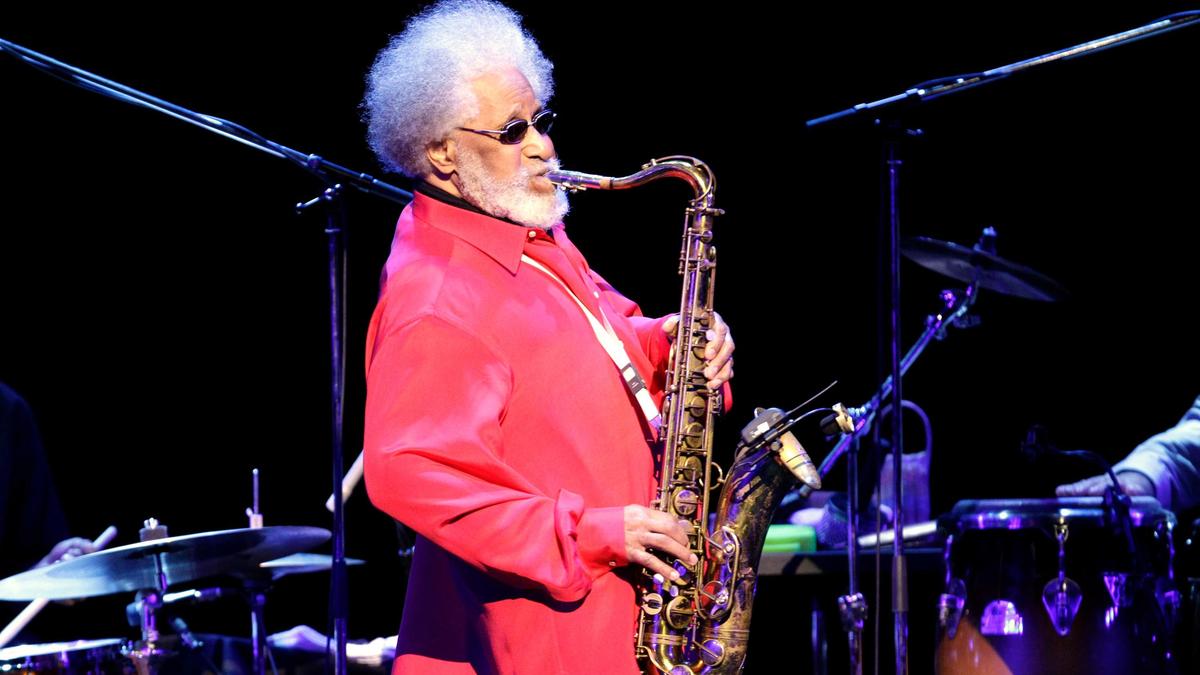
The world just lost a giant. Sonny Rollins, the legendary tenor saxophonist often called the "Saxophone Colossus," has died at the age of 95. He was the last standing titan from the golden age of modern jazz. When you listen to today's improvised music, you're hearing his DNA, whether the player realizes it or not.
Losing Rollins means losing a direct link to the rooms where bebop was born. He didn't just play jazz. He reshaped it through sheer willpower, intellectual rigor, and an individual sound that felt like a force of nature. For decades, he stood as a living monument to creative uncompromising freedom.
His passing leaves a massive void. Yet, his life offers a masterclass in relentless self-improvement that extends far beyond music.
The Shockwave of Saxophone Colossus
Rollins wasn't just another talented horn player in a crowded New York scene. He became the benchmark. By the mid-1950s, his aggressive, muscular tone and thematic approach to improvisation changed how musicians approached the saxophone.
His 1956 album Saxophone Colossus remains a definitive jazz recording. Listen to "St. Thomas" or "Blue 7." He didn't just run scales over chord changes. He took tiny melodic fragments and turned them inside out, building massive, logical structures on the fly.
Many critics at the time compared his improvisational style to classical composing. He possessed a rare ability to maintain total structural awareness while playing at blistering speeds. He made the avant-garde sound accessible and the accessible sound profound.
Walking Away at the Peak of Fame
Most musicians catch a wave of success and ride it until the wheels fall off. Rollins did the opposite. In 1959, while topping every jazz poll and commanding top dollar at clubs, he walked away.
He stopped performing publicly for two years. Why? He felt his playing didn't match the praise he received. He wanted to fix flaws in his technique, experiment with new fingerings, and find a fresh musical direction.
Living in a cramped Lower Manhattan apartment, he needed a place to practice without disturbing his neighbors. He found it on the pedestrian walkway of the Williamsburg Bridge.
Rain or shine, day or night, Rollins stood on that bridge playing into the wind. He blasted his horn against the roar of tugboats and subway trains. This legendary sabbatical resulted in his 1962 comeback album, aptly titled The Bridge.
Think about that choice. It takes incredible humility to pause a brilliant career to practice in isolation on a windy bridge. That tells you everything about his dedication to the craft.
The Unforgiving Pursuit of Perfection
The Williamsburg Bridge sabbatical wasn't a one-time publicity stunt. Rollins walked away from the music business multiple times throughout his life. He took another extended break in the late 1960s to study yoga, meditation, and Eastern philosophy in India.
These gaps in his discography baffled promoters, but they kept his music vital. He refused to become a nostalgia act. He never wanted to repeat past successes just to cash a paycheck.
He notoriously disliked most of his own live recordings. Sound engineers would capture a performance that left audiences weeping with joy, and Rollins would walk off stage complaining about his reed or his phrasing. He chased an idealized sound inside his head that always stayed one step ahead of him.
How to Explore the Rollins Discography Right Now
If you want to understand why his loss is felt so deeply, stop reading about him and go listen. Skip the generic greatest hits playlists. Start with these three specific albums to understand his evolution.
First, queue up Saxophone Colossus (1956). It shows Rollins at his most confident, commanding a classic quartet with Max Roach on drums.
Second, listen to Way Out West (1957). He dropped the piano entirely, choosing a trios-only format with just bass and drums. This move stripped away the harmonic safety net, giving him total freedom to roam. It was a radical choice that changed jazz ensemble dynamics forever.
Third, put on The Bridge (1962). You can hear a leaner, more introspective tone shaped by those lonely nights practicing over the East River.
True artistic greatness requires an obsession with growth. Sonny Rollins proved that mastery isn't a fixed destination you reach and then stop. It's a continuous, sometimes painful process of tearing down what you know to build something better. Keep his records spinning, study his work ethic, and never stop practicing on your own metaphorical bridge.