The rain in northeastern Democratic Republic of Congo does not fall; it assaults. It thounces against the corrugated iron roof of a makeshift isolation ward in Beni, creating a din so loud that Dr. Jean-Jacques Muyembe has to lean close to hear his own clinicians. But the noise outside is nothing compared to the silence gathering within the villages just a few kilometers away. It is the silence of a population retreating into the shadows.
When an Ebola outbreak strikes, the medical textbook dictates a swift, clinical choreography. Identify the patient. Isolate them. Trace every contact. Ring-vaccinate the perimeter. Wash. Rinse. Repeat until the virus runs out of human fuel.
But textbooks are written in sterile rooms. They do not account for the sound of gunfire at midnight. They do not factor in a population that has endured three decades of massacres, or the profound, entirely logical mistrust of any official in a crisp blue vest who rolls into town promising salvation.
This is what happens when a biological crisis collides with a human one. The virus is deadly, yes. But the panic, the politics, and the historical trauma are the true vectors.
The Friction of Reality
To understand why the response to one of the world's most lethal pathogens grinds to a halt, you have to look at a map not defined by topography, but by fear.
Imagine a health worker named Alphonse. This is a composite scenario, but every detail is pulled from the daily logs of teams on the ground. Alphonse wakes up at dawn. He has a list of twelve names in a village near Butembo. These are people who sat next to a dying woman on a wooden minibus three days ago. They need the rVSV-ZEBOV vaccine. If Alphonse can find them within the window, the chain breaks. The virus stops.
He sets out on a motorbike. Within twenty minutes, he hits a checkpoint manned by a local militia group, one of dozens operating in the Kivu region. They demand a tax. Alphonse negotiates, his heart hammering against his ribs. He passes, but an hour is gone.
When he finally reaches the village, the doors are locked.
The inhabitants have fled into the dense canopy of the surrounding forest. Why? Because the day before, a rumor swept through the market that the white trucks belonging to the international aid agencies were actually bringing the disease to harvest local organs.
To an outsider, this rumor sounds absurd. To a local who has watched armed groups kill their family members while the international community looked on for thirty years, it makes perfect sense. Why would the world suddenly care about a fever when it never cared about the machetes?
The aid workers are baffled. They have the science. They have the refrigeration units that keep vaccines at sub-zero temperatures in the middle of a tropical jungle. They have the funding. Yet, they are failing.
The Perfect Storm of Intersecting Crises
An epidemic does not happen in a vacuum. It requires a specific geometry of misery to truly explode. In this region, three distinct crises have fused into a single, insurmountable barrier.
First, there is the geographical nightmare. The epicenter sits in a dense, highly mobile population zone. People cross borders constantly into Uganda and Rwanda for trade, family, and survival. Tracking a virus when the hosts change jurisdictions daily is like trying to map the ripples in a public swimming pool during an earthquake.
Second, the security situation is volatile to the point of paralysis. Allied Democratic Forces (ADF) rebels launch sporadic, brutal night raids on civilian centers. When a town is attacked, the health response halts entirely. Safe burial teams cannot move. Contact tracers hide.
Consider what happens next: a single night of violence can erase three weeks of meticulous epidemiological tracking. While the responders are pinned down in their compounds by tracer fire, the virus moves in the dark. It finds new bodies. It hitches a ride on a motorbike taxi to the next commune.
Third, and perhaps most critically, is the weaponization of the disease by local politicians. During election cycles, rumors are currency. Some factions claim the outbreak is a government conspiracy designed to suppress the local vote, leading to health centers being targeted and burned to the ground.
Science cannot combat a burning clinic.
The Error of the Sterile Approach
The international community arrived with a heavy hand. They brought military escorts, high-tech isolation pods, and strict protocols. They treated the outbreak as an engineering problem. Change the input, fix the output.
But humans are not variables in an equation.
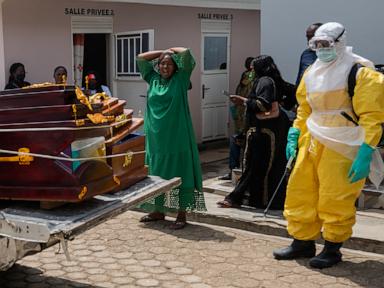
When a person falls ill with Ebola, they bleed. They vomit. They lose control of their bodily functions. In local culture, to leave a dying relative alone in a plastic tent, forbidden from touching them, forbidden from washing their body before burial, is a fate worse than death itself. It is a betrayal of ancestral duty.
When the response teams insisted on taking bodies away in body bags, families began hiding their sick. They buried their dead at night under the floorboards of their homes.
The very mechanisms designed to contain the pathogen ended up driving it underground.
Redefining the Frontline
The turning point in any complex humanitarian crisis rarely comes from a laboratory. It comes from an admission of ignorance.
The response only begins to recalibrate when the high-tech machinery steps back and local voices take the lead. It turns out the most effective tool against a hemorrhagic fever is not a new antibody cocktail, though those help. It is tea.
It is sitting down with the traditional healers, the women who run the markets, and the youth leaders who control the streets. It is acknowledging that their suspicion is justified. It is adapting the protocols so that a husband can wear a protective suit and hold his wife’s hand through the final hours, rather than watching her die through a pane of heavy vinyl.
Trust is a slow-growing crop, and Ebola is a fast-moving fire. The race is to see which one can cover the ground first.
The rain in Beni eventually stops, leaving behind a thick, suffocating humidity that sticks to the skin. In the quiet that follows, a small team of local health workers prepares to enter a neighborhood that turned them away with stones the previous week. They are not accompanied by armed guards this time. They carry no clipboards. They only bring a willingness to listen to the anger of a forgotten people, hoping that this time, the door stays open.