The espresso cost one euro and twenty cents yesterday. Today, it costs one euro and fifty cents.
To an outsider, thirty cents is a fraction of a thought. It is the change left at the bottom of a pocket, forgotten until laundry day. But in Milan, thirty cents is a fracture line. It is the distance between sitting down at a wooden table and standing at the counter because sitting carries a service tax. It is the mathematical proof that a paycheck is shrinking while the world outside demands more. For a different look, consider: this related article.
The air in northern Italy carries a familiar chill in late autumn, but this year the cold feels different.
The Sound of Empty Pockets on the Streets of Milan
news Related reporting regarding this has been provided by The Guardian.
The air in Milan smells of diesel, damp stone, and an unmistakable, rising panic.
It is late autumn, and the storefronts along the grand boulevards are lit with warm, inviting glows that feel entirely out of reach for the people standing on the pavement. The city pulses with its usual relentless energy, yet underneath the hum of traffic and the chatter of tourists, a different sound is beginning to take over. It is the rhythmic chanting of thousands of citizens whose monthly wages evaporate before the bills are even paid.
Consider Marco. He is a hypothetical composite, yes, but he stands for thousands who walk these very streets. Marco wakes up at five in the morning, puts on a blue overall, and spends eight hours managing logistics in an industrial warehouse outside the city center. By the time he returns home to his small, drafty apartment in Bologna, his lower back aches with a familiar, dull throb. He sits at his kitchen table, opens a stack of brown envelopes, and stares at numbers that simply do not add up. Gas prices have doubled. The local bakery now charges nearly double what it did two years ago for a simple loaf of bread. His rent ticks upward with the inflation rate, but his paycheck remains stubbornly, cruelly frozen.
When the cost of simply staying alive outpaces the money earned from a hard day's work, something snaps.
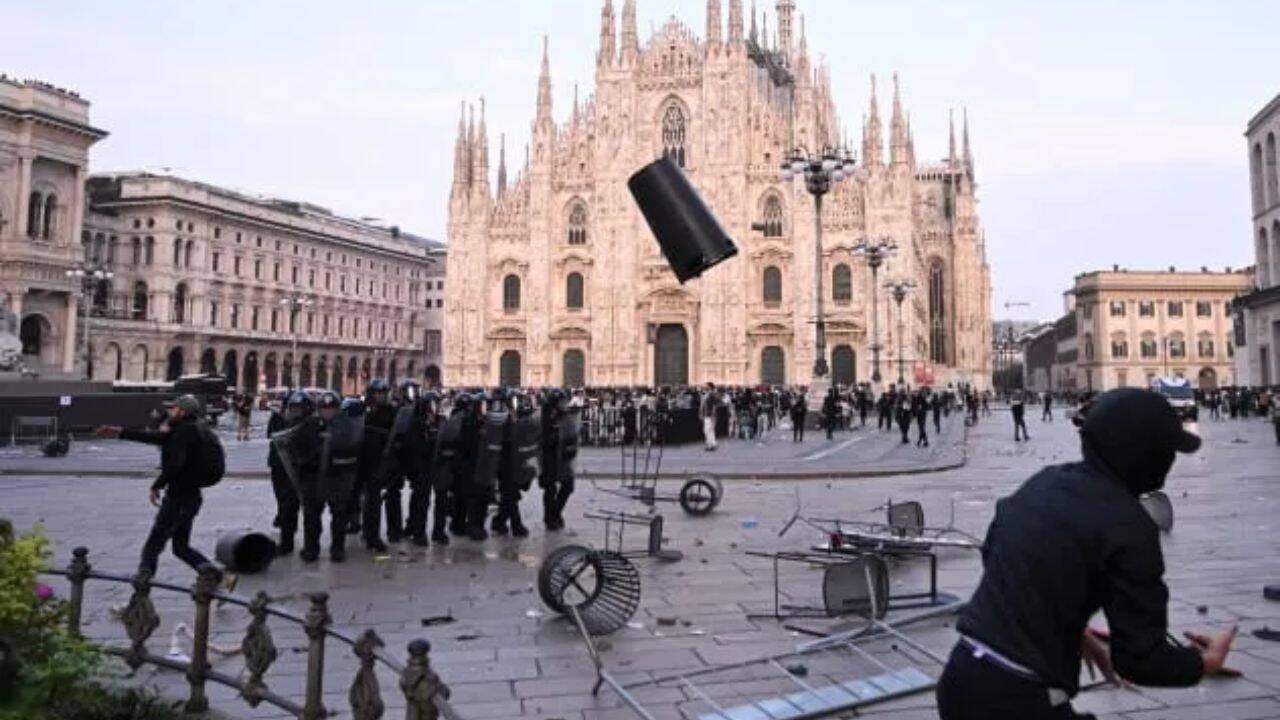
That snap echoed across Italy as protests erupted in Milan and Bologna, turning central plazas into flashpoints of economic frustration. Police in riot gear stood shoulder-to-shoulder, holding lines against crowds waving banners that spoke of empty refrigerators and impossible utility bills. Sirens cut through the damp evening air. Smoke drifted from flares. Shouts bounced off historic stone facades that have witnessed centuries of upheaval, yet this modern crisis is fought with a different kind of weapon: absolute desperation.
Economists look at this through the cold lens of consumer price indexes, supply chain bottlenecks, and monetary policy adjustments made by central banks. They talk about percentages and fiscal buffers as if people’s lives were equations on a chalkboard. But numbers do not bleed. Numbers do not feel the hollow ache in a parent's stomach when they have to tell their child that a school trip is out of the question this year.
The reality on the ground is stark. Inflation acts as an invisible tax, robbing purchasing power from the hands of those who can least afford to lose a single euro. When wages stagnate while the baseline cost of survival climbs vertically, the social contract begins to fray at the edges.
People are tired. They are tired of being told to tighten belts that are already pulled to the final notch.
As the sun sets over the cobblestones of Bologna, the police lines slowly disperse, and the chants fade into the evening murmur. The tear gas clears, but the underlying problem remains entirely untouched, simmering beneath the surface of everyday life. The bills will arrive again next month. The refrigerators will still be half-empty. And the streets will remember the exact sound of a city demanding a future it can actually afford.