The loudest thing in a combat zone isn't a detonation. It is the relentless, mechanical scream of a diesel engine.
For decades, military advancement meant making things bigger, heavier, and violently louder. If you have ever stood near a standard military vehicle, you don't just hear the engine; you feel it rattling the fillings in your teeth. The ground vibrates. The air smells thick with unburnt fuel. For a soldier tucked inside that steel box, or a scout hiding in a treeline a kilometer away, that noise is a giant, invisible beacon broadcasting a single message to the enemy: We are here.
At the Eurosatory 2026 defense exhibition in Paris, a heavy silence challenged that entire philosophy.
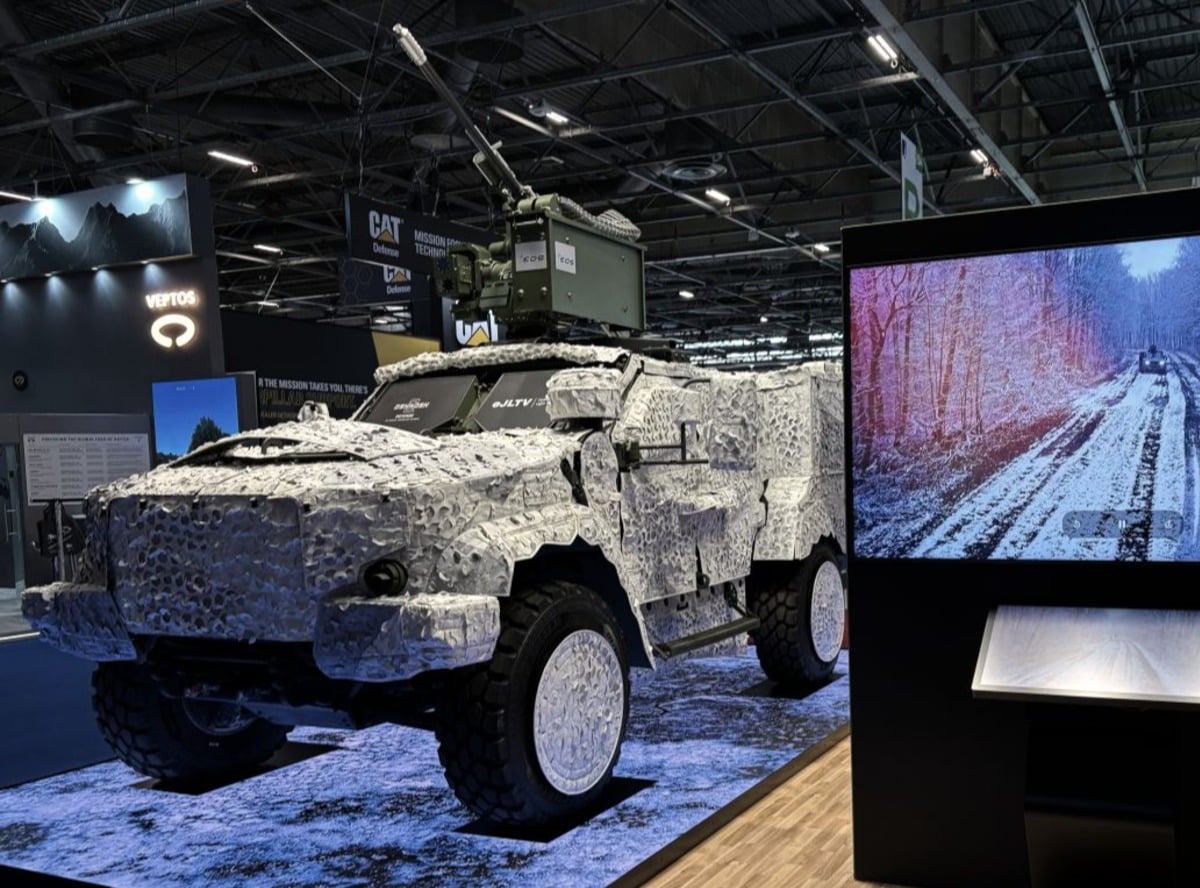
Oshkosh Defense rolled out its Joint Light Tactical Vehicle (JLTV) variant, but the crowd surrounding it wasn't listening to a roaring engine. They were listening to nothing at all. The vehicle was operating in "silent mode."
This shift changes the very nature of tactical movement. To understand why a quiet truck matters, you have to leave the brightly lit convention halls of Paris and step into a hypothetical patch of dense, contested woodland at three o'clock in the morning.
The Fatal Flaw of the Diesel Echo
Consider a four-person reconnaissance team. Let’s call the team leader Sergeant Miller.
Miller’s squad is tasked with monitoring a vital crossroads. They are riding in a standard, heavy-diesel tactical vehicle. The mission relies entirely on surprise. But as they approach the drop-off point, the realities of internal combustion betray them.
A diesel engine can be heard from miles away in a quiet rural setting. The acoustic signature travels through valleys, bounces off hillsides, and alerts even the most poorly equipped adversary long before headlights appear.
But sound is only half the betrayal. The other half is heat.
Traditional military engines run hot. Thermal imaging optics, now standard equipment even for non-state actors and cheap commercial drones, see that engine block as a blinding, glowing sun against the cool backdrop of the night. Miller’s team isn't just loud; they are glowing.
The JLTV showcased at Eurosatory tackles this exact vulnerability by introducing a lithium-ion hybrid-electric powertrain. The system allows the vehicle to completely shut down its conventional diesel engine while maintaining full operational capacity.
When the hybrid system takes over, the acoustic signature drops to near zero. The thermal signature plummets.
If Miller were driving this hybrid variant, the approach would look entirely different. A kilometer out from the objective, he flips a switch on the dashboard. The diesel engine dies. The sudden absence of vibration inside the cabin is jarring. The vehicle glides forward using stored electrical energy. To an observer in the bushes, the only sound is the faint crunch of tires on gravel and the low hum of the electric drive. On a thermal scope, the blazing hot engine block begins to cool rapidly, blending into the ambient temperature of the surrounding environment.
Silence becomes armor.
Powering the Invisible Command Post
The evolution of modern military technology has created an insatiable appetite for electricity. A tactical vehicle is no longer just a truck with a machine gun mounted on top. It is a rolling supercomputer.
Between anti-drone jamming systems, long-range thermal sensors, encrypted satellite communication arrays, and battlefield management displays, a parked vehicle draws an immense amount of power.
Historically, keeping those systems alive meant "extended idling." A vehicle would sit in a hidden position for hours, its massive diesel engine running just to keep the alternator spinning and the batteries charged.
The consequences of idling are brutal:
- Fuel Depletion: A idling fleet burns through thousands of gallons of fuel just standing still, straining logistical supply chains.
- Mechanical Wear: Hundreds of hours of idling clog filters and degrade engine components, forcing mechanics to work overtime.
- Total Exposure: The constant drone of the engine ensures the position can never truly be hidden.
The hybrid architecture demonstrated in Paris flips this dynamic completely. The large lithium-ion battery pack acts as a silent generator.
Imagine Miller’s team reaching their observation post. They park. The engine remains off, but the screens stay bright. The jammers continue to sweep the skies for hostile drones. The thermal cameras keep scanning the horizon. The vehicle can maintain this "silent watch" posture for hours on end without burning a single drop of fuel or making a peep.
If the battery level drops below a specific threshold, the diesel engine kicks back on automatically, running just long enough to recharge the cells before slipping back into absolute quiet. It is a ruthless efficiency born of survival.
The Weight of Reality
It is easy to get swept up in the techno-optimism of an exhibition floor. The glossy brochures make every innovation seem flawless. But anyone who has ever had to fix a piece of machinery in the mud knows that complexity is the enemy of reliability.
The introduction of high-voltage hybrid systems to the battlefield brings genuine, agonizing complications.
Lithium-ion batteries are heavy. In a vehicle category where every pound matters—where extra weight means less armor protection or fewer supplies—adding a massive battery pack is a dangerous compromise. Designers must balance the desire for silent operation against the raw physics of payload capacity.
Then there is the question of volatility. Combat vehicles get shot at. They hit improvised explosive devices. A lithium-ion battery pack under catastrophic stress can experience thermal runaway, a self-sustaining fire that burns at thousands of degrees and is notoriously difficult to extinguish.
The engineering feat celebrated at Eurosatory isn't just that the vehicle can run on electricity; it is that the system has been ruggedized to survive the violent, unforgiving realities of a war zone. The battery enclosures must withstand impacts, deep water fording, and extreme temperature fluctuations from Arctic cold to desert heat.
The Logistics of Peace and War
Beyond the immediate tactical advantages for a soldier like Miller, the quiet shift in vehicle design points toward a massive, sweeping change in military logistics.
The greatest vulnerability of any modern army is its tail. For every tank or armored vehicle on the front line, there is a vulnerable line of fuel trucks stretching back to a supply depot. These convoys are prime targets. By reducing the amount of fuel burned during transit via regenerative braking, and virtually eliminating fuel consumption during stationary idling, hybrid technology shortens that vulnerable logistical tail.
It is a strange irony. The pursuit of a deadlier, more survivable combat vehicle has resulted in a machine that is, by civilian standards, remarkably green.
Yet, nobody on the floor at Eurosatory was talking about carbon offsets or emissions targets. The metrics that matter here are measured in distance, decibels, and survival rates.
The crowd in Paris eventually thinned out, moving on to the next display of flashing lights, larger missiles, and heavier armor. But the quiet truck remained, a stark reminder that power on the modern battlefield no longer belongs to the entity that can make the most noise.
It belongs to the one that can disappear.
The vehicle sat under the pavilion lights, perfectly still, completely silent, watching the room through its sensors while drawing nothing but a quiet breath of stored energy.