Diplomatic showdowns rarely happen in real-time on live microphones, but a high-stakes security forum in Seoul just changed that script. Philippine Defense Secretary Gilberto Teodoro Jr. didn't wait for a closed-door meeting to address Beijing. Instead, he held up a handwritten note passed to him by a Chinese military attaché, read its contents aloud to the entire room, and called out what he labeled as open coercion. Beijing fired back immediately, accusing Manila of theatrical lies. This explosive exchange exposes the raw friction defining the South China Sea conflict right now.
Inside the Seoul Defense Dialogue Showdown
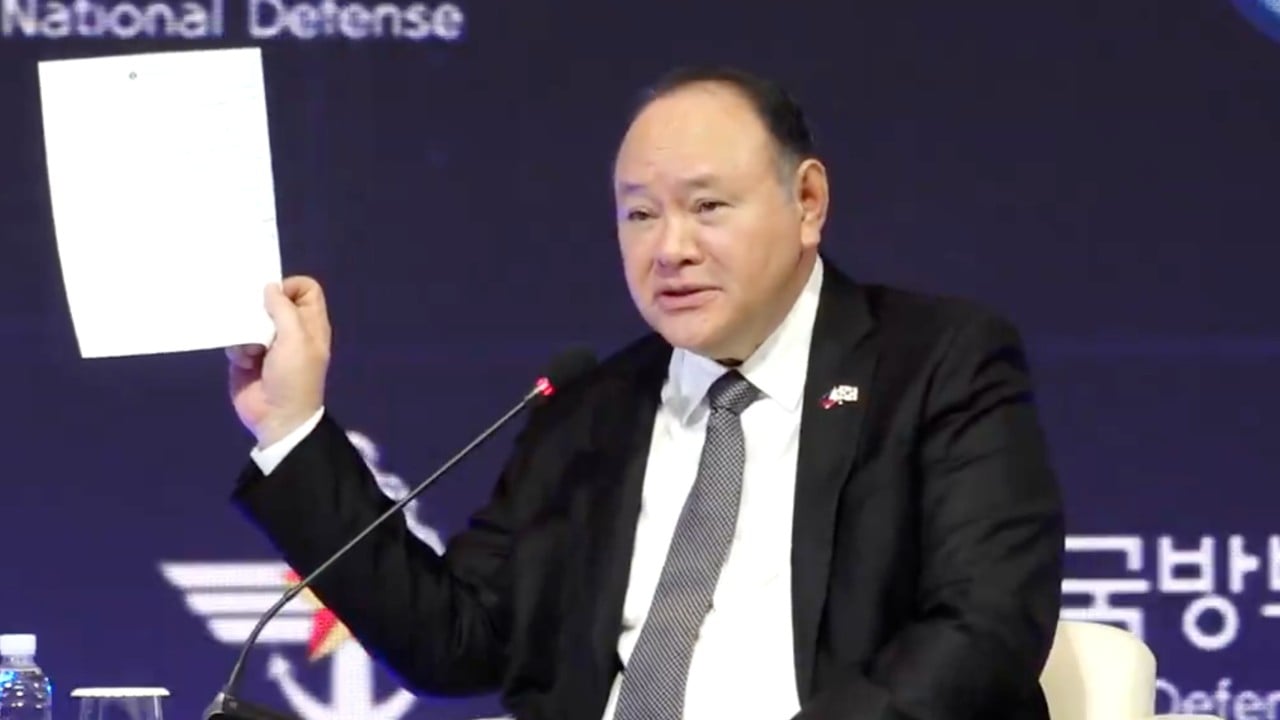
The confrontation took place during a panel session at the Seoul Defense Dialogue. While addressing regional maritime disputes, Teodoro paused mid-speech. He pulled out a paper passed through staff from the Chinese delegation.
"I have a note here," Teodoro told the audience. "I think this is from China. You should have joined. May I read it?"
What followed was a public airing of a diplomatic communication that was never meant for the open floor. The note reiterated Beijing's absolute rejection of the landmark 2016 South China Sea arbitration ruling. It claimed the ruling—which invalidated China's expansive nine-dash line under the United Nations Convention on the Law of the Sea (UNCLOS)—was illegal, null, and void.
Teodoro didn't flinch. He used the moment to dissect the internal contradiction of the message. He pointed out that dismissing UNCLOS while attempting to use its mechanisms when convenient makes a mockery of international law. He also slammed the delivery method itself, calling it deeply disrespectful to the South Korean forum hosts and international diplomatic norms.
Beijing Responds With Accusations of Theatrics
Beijing wasted no time pushing back against the public rebuke. Chinese Foreign Ministry spokespersons labeled Teodoro's actions as pure theatrics and self-promotion. According to Beijing, Manila is the party actively violating UNCLOS by weaponizing the 2016 arbitral award to distort dispute settlement mechanisms.
The official stance from Beijing remains unchanged. They view the arbitration as a political tool engineered against Chinese interests. By telling Philippine representatives to stop lying and cut out provocations, China is signaling that public call-outs at multilateral summits will only harden diplomatic lines rather than soften them.
Yet, the defensive posture tells a different story. Handing clandestine notes to defense chiefs on international stages implies that traditional backchannels are failing. When quiet diplomacy breaks down, ministers resort to microphone diplomacy.
Why This Confrontation Matters for Regional Security
For years, skirmishes in the South China Sea remained confined to the water. Coast guard blockades, water cannon incidents, and dangerous maneuvers near disputed reefs like Second Thomas Shoal dominated headlines. This incident proves the fracture lines have expanded firmly into the diplomatic and legal arenas.
Teodoro made a point to tell the audience that the situation has long moved past standard grey-zone tactics. He labeled current actions as straightforward coercion, bullying, and aggression. By holding onto the note as a souvenir, he turned a private maneuver into a permanent symbol of defiance.
The fallout from Seoul means international forums are no longer safe spaces for polite friction. Smaller nations facing maritime pressure are learning that public exposure is an effective shield against unilateral intimidation. Expect fewer whispered warnings behind closed doors and far more open microphone clashes as maritime sovereignty battles grind forward.