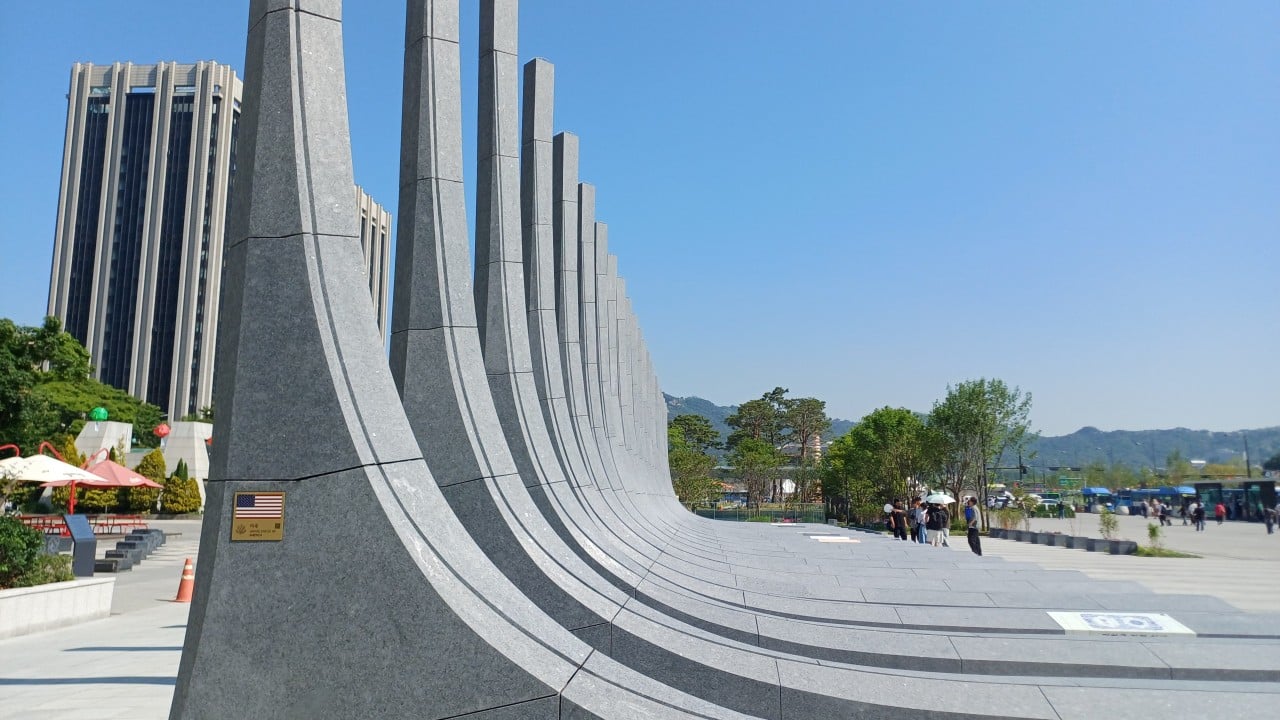
Memorials aren't just blocks of stone or steel. They're public statements about who we think we are and what we’re willing to remember. When the South Korean government unveiled the winning design for a new Korean War memorial, they expected a symbol of solemnity. Instead, they got a PR nightmare. Critics haven't been kind, comparing the curved, white structures to bleached whale bones or the ribcage of a dead animal. It’s a mess.
If you think this is just about aesthetics, you’re missing the point. This clash gets to the heart of how a nation handles its trauma. South Korea is a country that moved from total devastation to global tech dominance in a few decades. That speed leaves scars. Now, the government wants to honor the past, but the public isn't buying the vision. They see a design that feels cold, alien, and frankly, a bit unsettling.
Why the Whale Bone Comparison Stuck
The project in question is the memorial for the UN veterans of the Korean War. It’s supposed to be a place of reflection. The architect’s vision involved thin, white arches stretching across a wide plaza. On paper, it probably looked elegant. In reality, people saw a graveyard for sea giants.
Words matter, but visual metaphors matter more. When a public space reminds people of a skeleton, the "peace" message dies instantly. It shifts from a celebration of life and sacrifice to a reminder of decay. South Koreans are vocal about their public spaces. They don't want abstract art that requires a degree in architecture to appreciate. They want something that feels grounded.
The backlash isn't just from "K-netizens" looking for something to complain about. It includes veterans’ groups and historians who feel the design lacks the weight of history. It feels light. It feels flimsy. For a war that claimed millions of lives and split a peninsula in half, "flimsy" is an insult.
The Problem With Modern Minimalism in War Remembrances
We're seeing a trend globally where memorials are becoming more abstract. Think of the Vietnam Veterans Memorial in D.C. or the Holocaust Memorial in Berlin. They don't use statues of soldiers charging into battle. They use geometry and silence.
South Korea tried to follow this path. The problem? Abstract art is risky. It’s open to interpretation, and if the interpretation is "dead whale," the architect has failed. You can't force people to see "soaring spirits" when they see "bleached ribs."
I've seen this happen in other cities. A municipality spends millions on a "forward-thinking" design, only for the locals to give it a mocking nickname within a week. Once the nickname sticks, the original meaning is gone. You’re no longer visiting the "Arc of Peace." You’re visiting the "Big Ribs."
A History of Contested Spaces in Seoul
Seoul is a city built on top of itself. Every time you dig a hole for a skyscraper, you hit a layer of history. This makes building memorials inherently political.
Look at Gwanghwamun Square. It has been redesigned and shifted more times than most people can count. Every administration wants to put its own stamp on the city’s identity. One leader wants more green space; another wants more historical statues. The public is stuck in the middle of this tug-of-war.
The current controversy over the war memorial is just the latest chapter. It’s a symptom of a deeper tension. South Korea is trying to find a way to honor its traditional past while maintaining its "cool, modern" global image. Sometimes, those two goals don't play nice.
Why Veterans Are Skeptical
If you're a veteran, you want to see your struggle acknowledged. You want something that says "this was hard, and it mattered."
- The design feels too commercial.
- It lacks traditional Korean motifs.
- The scale feels off compared to the surrounding buildings.
These aren't just minor gripes. They represent a fundamental disconnect between the designers and the people the monument is meant to serve. When you design for a competition jury, you design for "the wow factor." When you design for a veteran, you design for the heart.
The Cost of Getting Symbolism Wrong
This isn't just a local spat. South Korea is a global cultural powerhouse. Everything they do—from K-pop to urban planning—is under a microscope. A "failed" memorial in the heart of the capital is a bad look. It suggests a lack of cohesion.
There's also the financial side. These projects cost billions of won. When the public hates the result, it’s seen as a waste of taxpayer money. People start asking why that money wasn't spent on veteran benefits or healthcare instead of "scary white bones."
It’s a valid question. If the symbolism doesn't resonate, the monument is just expensive clutter. It becomes a place people avoid rather than a destination for education.
How Other Nations Get It Right
The most successful memorials are the ones that lean into the environment. They don't try to fight the landscape; they become part of it.
The Korean War Veterans Memorial in Washington, D.C., uses 19 stainless steel statues. They look like they're moving through the brush. It’s haunting. It’s literal. You don't have to guess what it’s about. You see the fear and the determination on the soldiers' faces.
In contrast, the Seoul design feels like it could be a shopping mall installation in Dubai or Singapore. It lacks "the soul of the place." If you can move a memorial to a different country and it still "works," then it probably didn't have much to say about the original event anyway.
What Happens When the Government Refuses to Pivot
Usually, when these controversies hit, the government tries to "explain" the art. They hire experts to go on TV and talk about "negative space" and "the juxtaposition of light and shadow."
It never works.
If you have to explain a memorial, it’s already broken. The best ones hit you in the gut the moment you see them. They don't need a pamphlet. By doubling down on a design that the public has dubbed "the whale bones," the South Korean authorities risk creating a landmark of resentment.
They should listen. It’s okay to admit a design doesn't fit the mood of the people. Architecture should be a conversation, not a lecture.
The Reality of Public Art in 2026
We live in a visual culture. A memorial isn't just a physical object; it’s a backdrop for photos, a spot on a map, and a meme. If your memorial looks like a skeleton, it will be memed as a skeleton.
Architects need to stop designing for other architects. They need to design for the grandmother who lost her brother in the war. They need to design for the student who only knows the conflict through textbooks.
The South Korean war memorial conflict shows that we still care about our history. That’s the silver lining. People wouldn't be angry if they didn't care. They want something better because they believe the memory of the war deserves better.
If you're following this story, keep an eye on whether the planners actually make changes. Usually, they'll tweak the lighting or add some trees to "soften" the look. But you can't hide a skeleton with a few bushes.
The next step for the city is clear. Pause the project. Hold a town hall that actually matters. Bring the veterans into the room before the concrete is poured. If you want to build something that lasts for centuries, you can afford to wait a few months to get it right. Stop building for the "aesthetic" and start building for the people who actually lived the history.