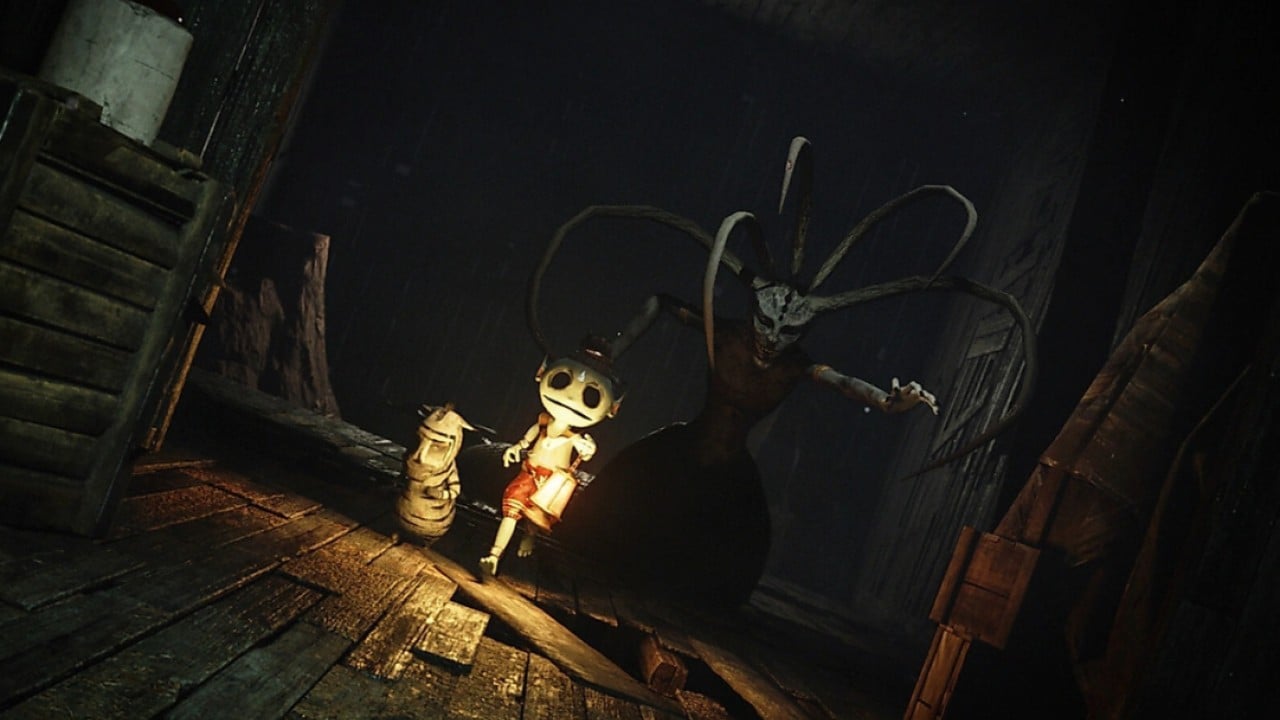
For decades, interactive horror ran on a predictable, Western-approved loop. Players walked through dimly lit Victorian mansions, abandoned American asylums, or foggy European villages, shooting zombies or hiding from chainsaw-wielding maniacs. That formula is dying. Southeast Asian horror games—anchored by breakout hits from Indonesia, Thailand, Taiwan, and Malaysia—have captured global storefronts by replacing tired gothic tropes with deeply rooted local folklore, colonial-era trauma, and oppressive tropical claustrophobia.
The shift is not a fluke of algorithmic luck or a passing streamer fad. It represents a structural realignment in how independent studios build, market, and monetize fear across borders. By weaponizing regional taboos and architectural familiarity rather than chasing Hollywood imitation, developers in Jakarta, Bangkok, and Taipei turned cultural specificity into their sharpest commercial asset.
The Economics of Digital Scares
Building a photorealistic open-world action title requires nine-figure budgets and thousands of contractors. Horror requires neither. A small team in Bandung or Chiang Mai can achieve atmospheric dread with smart lighting, spatial audio, and psychological pacing rather than brute-force graphical fidelity.
This low barrier to entry intersected with two massive market shifts over the past decade: the democratization of Unreal Engine and Unity, and the rise of reaction-driven streaming culture. YouTube creators and Twitch broadcasters need games that generate immediate, visceral facial expressions and genuine panic. A slow-burn Western psychological thriller often dies on stream because viewers get bored during twenty minutes of reading lore notes. A first-person encounter with a floating head trailing glowing organs—the Krasue in Thailand or the Kuyang in Indonesia—delivers instant visual shock that translates across every language barrier on earth.
Consider the trajectory of Digital Happiness, an independent studio based in Bandung, Indonesia. When they launched DreadOut in 2014, the domestic PC gaming market in Indonesia was virtually nonexistent, dominated by free-to-play internet cafe titles and mobile games. The studio relied on crowdfunding and Steam Greenlight to reach international audiences. When major Western creators played the game, the visibility triggered millions of downloads. DreadOut proved a vital economic thesis: a Southeast Asian studio did not need a local console install base to build a profitable, globally recognized intellectual property.
Why Western Horror Felt Stale
To understand why players flocked to titles like Home Sweet Home (Thailand), Pamali (Indonesia), and Detention (Taiwan), you have to look at the exhaustion baked into mainstream horror.
Western horror relies heavily on Judeo-Christian demonology, slasher cinema conventions, and post-apocalyptic science fiction. After thirty years of Resident Evil and Silent Hill imitators, veteran players know the exact rhythm of a haunted hospital. They recognize the visual cues. They know where the jump scare hides before they turn the corner. Predictability is fatal to fear.
Southeast Asian horror operates on an entirely different psychological frequency. In much of the region, the supernatural is not treated as an abstract cinematic monster; it is woven into daily social etiquette, rural geography, and animist tradition. Ghosts are rarely mindless beasts. They are tragic, bound by specific curses, or triggered by the violation of mundane social rules.
In StoryTale Studios' Pamali: Indonesian Folklore Horror, the core mechanic is not combat or puzzle-solving—it is behavioral restraint. The title itself translates to "taboo." Players explore an ordinary Indonesian house, and the environment reacts to minor infractions: whistling at night, clipping nails after dark, disrespecting ancestral heirlooms, or leaving doors open.
For a Western player, this creates an acute sense of paranoia. You do not know the rules of the house, which means every mundane interaction carries lethal weight. You cannot rely on genre muscle memory because the threat is governed by a cultural operating system you do not understand.
The Architecture of Claustrophobia
Atmosphere does half the heavy lifting in horror, and Southeast Asian developers hold a massive geographical advantage. Western audiences rarely see authentic representations of tropical urban density or rural jungle isolation in interactive media.
When Yggdrazil Group released Home Sweet Home in 2017, the game stood out immediately because its environments felt lived-in rather than constructed on a Hollywood backlot. The fluorescent-lit university hallways, cramped shophouses, rusted metal shutters, and concrete stairwells looked unmistakably Thai. The visual clutter—tangled overhead power lines, spirit houses tucked into corners, faded signage, tiled floors stained by humidity—created an uncanny realism.
This architectural honesty extends to Indonesian titles like Pulang: Insanity and Ghost Parade, as well as Malaysian projects like Paper Ghost Stories: Third Eye Open. Instead of sterile corridors, players navigate dense kampung neighborhoods, overgrown rubber plantations, and crumbling colonial estates.
Sound design reinforces this spatial trap. Traditional Southeast Asian instruments—the metallic, hypnotic resonance of the gamelan, the piercing wail of the serunai, or eerie Javanese and Thai chanting—trigger an immediate uncanny response in unaccustomed ears. Combined with the relentless ambient hum of cicadas, torrential monsoon rain, and distant neighborhood dogs, the audio landscape refuses to let the player relax. Silence in a Western horror game usually signals safety before a sudden loud noise. Silence in a tropical setting feels heavy, suffocating, and unnatural.
History as the True Monster
The most sophisticated entries in this wave do not stop at folklore. They use supernatural dread as a delivery mechanism for suppressed political history and generational trauma.
Red Candle Games, based in Taiwan, mastered this approach with Detention (2017) and Devotion (2019). While geographically situated on the northern edge of the region, Red Candle's work became the artistic benchmark for Southeast Asian horror developers grappling with local identity. Detention disguised itself as a survival horror game set in a haunted mountain high school during the 1960s, only to peel back the supernatural layer and expose the brutal reality of Taiwan's White Terror martial law period. The ghosts were manifestations of state surveillance, betrayal, and survivor's guilt.
In Indonesia, developers frequently tap into the lingering shadows of Dutch colonialism, the turmoil of the 1965 anti-communist purges, and the authoritarian New Order era. Colonial-era sugar factories, abandoned train stations, and old government buildings carry genuine historical weight. When a game sets a haunting inside a decaying Dutch-built mansion, the horror is not merely about a angry spirit; it is about centuries of extraction, forced labor, and unresolved violence baked into the floorboards.
Audiences recognize the difference between manufactured spooky lore and genuine historical grief. The latter lingers long after the credits roll.
The Ghost Roster Breaking Through
A distinct pantheon of regional spirits has steadily entered the global gaming lexicon, replacing vampires and zombies with entities carrying far stranger visual profiles.
- The Pocong (Indonesia and Malaysia): A corpse wrapped tightly in a white burial shroud, tied at the head, waist, and ankles, forced to hop toward its victims because its bindings were never untied before burial. On paper, a hopping ghost sounds absurd. In a pitch-black corridor lit only by a flickering smartphone flashlight, the erratic, unnatural movement of a Pocong triggers pure primal panic.
- The Kuntilanak / Pontianak (Indonesia, Malaysia, Singapore): The vengeful spirit of a woman who died during childbirth, typically appearing in a soiled white dress with long black hair, heralded by the scent of frangipani flowers and the sound of a crying baby that grows quieter as she gets closer.
- The Krasue / Penanggalan (Thailand, Malaysia, Indonesia): A floating female head with glowing internal organs dangling beneath the neck, hunting at night. The sheer body-horror silhouette of the Krasue makes it a staple for visual shock in first-person chase sequences.
- The Toyol (Malaysia, Indonesia, Singapore): An undead infant spirit summoned by black magic practitioners to steal wealth or cause mischief, introducing an unsettling dimension of domestic vulnerability and dark folk magic (santet or bomoh practices).
Developers have learned not to over-explain these creatures. In earlier decades, localized games often watered down cultural references or inserted clumsy exposition dumps to accommodate American buyers. Modern studios trust players to figure it out through environmental context, brief folklore notes, or trial and error.
The Structural Traps Holding Studios Back
Despite the critical acclaim and viral streaming spikes, the Southeast Asian horror boom is not an unblemished success story. Beneath the headlines of breakout hits lies a fragile production ecosystem facing severe structural bottlenecks.
The Asset Flip and Derivative Trap
Success breeds imitation. Following the commercial triumphs of DreadOut and Home Sweet Home, Steam became flooded with low-effort, first-person walking simulators built in a few months using pre-made marketplace assets. Many of these games rely entirely on cheap jump scares, broken English translations, and superficial slap-on folklore. When players get burned by three or four buggy, derivative titles in a row, they begin treating the entire regional subgenre with skepticism.
Capital Scarcity and Publisher Dependency
Venture capital and traditional publishing infrastructure in Southeast Asia still heavily favor mobile free-to-play games, esports, and Web3 projects over premium PC and console development. A studio building a narrative-driven horror game often struggles to secure mid-tier funding ($500,000 to $2 million) needed to pay experienced animators, QA testers, and localization specialists.
As a result, many studios remain trapped in the "micro-indie" tier—teams of three to ten people working on shoestring budgets, crunching for years, and releasing games with rough combat mechanics or unpolished optimization. When a promising concept fails to scale mechanically, players forgive it once, maybe twice, before moving on.
Cultural Sensitivities and Censorship
Drawing directly from active religious beliefs and recent political trauma carries real-world risks. In countries with strict blasphemy laws, conservative religious councils, or sensitive political climates, depicting dark magic, corrupted religious rituals, or state violence can invite backlash, platform delistings, or government scrutiny.
Red Candle Games experienced the geopolitical version of this hazard when Devotion was pulled from Steam in 2019 over a hidden environmental asset mocking Chinese President Xi Jinping, resulting in the studio losing its publishing partner and facing years of digital exile from major storefronts. Southeast Asian developers constantly walk a tightrope between authentic cultural expression and commercial survival.
The Localization Bottleneck
Horror lives and dies by nuance. A poorly translated diary entry or an awkward voice performance instantly shatters tension, turning a terrifying sequence into unintentional comedy. Many regional studios treat English, Japanese, and Chinese localization as an afterthought at the end of production rather than an integral part of narrative design. Great cultural storytelling requires transcreation—adapting idioms, religious terms, and emotional subtext so foreign players feel the dread rather than merely reading a dictionary definition.
How the Next Wave Is Evolving
The smartest studios in the region have already recognized these vulnerabilities and are actively correcting course. Rather than relying solely on first-person haunted house walks, developers are experimenting with bold genre hybrids and higher production standards.
Take A Space for the Unbound, developed by Surabaya-based Mojiken Studio and published by Toge Productions. While not a traditional slasher or jump-scare game, it uses supernatural dread, urban legends, and psychological horror mechanics to tell a devastating story about depression, anxiety, and teenage life in 1990s rural Indonesia. Its pixel-art aesthetic and emotional maturity earned international awards and proved that regional storytelling could transcend narrow horror niches.
Similarly, Toge Productions—operating both as a developer and the region's premier indie publisher—has built a pipeline that funds, mentors, and polishes smaller Southeast Asian teams, helping them clear the technical and localization hurdles that sank earlier projects. Meanwhile, studios like Digital Happiness have expanded DreadOut beyond games into a live-action feature film and cross-media franchise, capturing domestic box office revenue that reinforces their game development war chest.
The blueprint for global relevance is no longer theoretical. Western publishers spent decades assuming global audiences wanted sanitized, culturally neutral entertainment modeled after suburban America or medieval Europe. Southeast Asian developers proved the exact opposite: the more fiercely local, uncompromising, and culturally specific a nightmare is, the further it travels.


