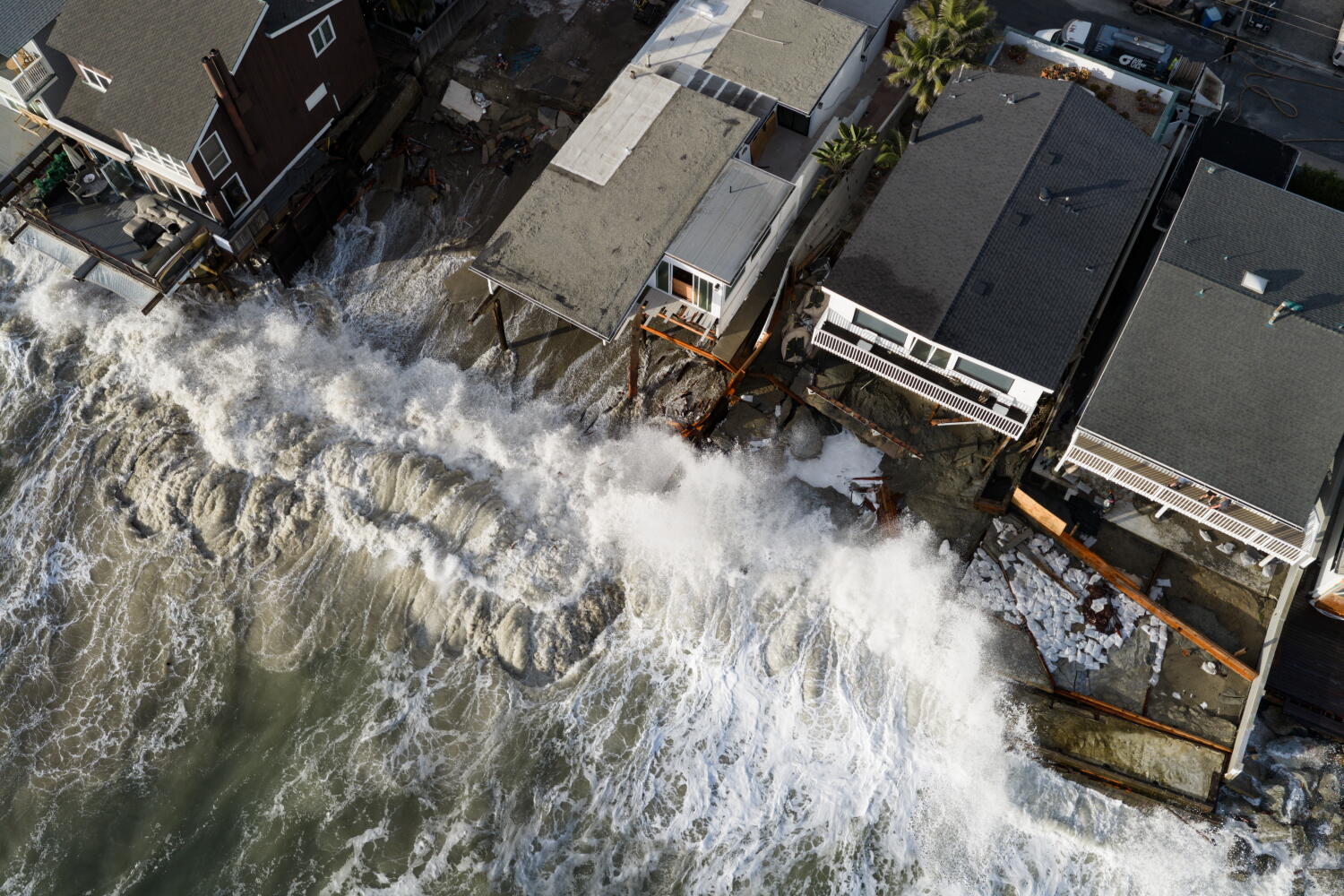
The Pacific Ocean is eating Southern California, and most people are watching from the seawall while eating ice cream.
When massive winter swells and king tides slammed the Southern California coast recently, stripping entire beaches down to bare bedrock and flooding coastal neighborhoods from Ventura to San Diego, headlines screamed about freak weather. They called it a wake-up call. They treated it like an anomaly. That is a dangerous lie.
Southern California coastal erosion is not a temporary setback. It is a slow-motion structural collapse caused by decades of bad engineering, starved sediment supplies, and relentless real estate development right at the water's edge. The sand is not coming back on its own. The concrete revetments holding up multi-million-dollar homes are failing. And the regulatory agencies charged with protecting both public resources and private property are trapped in a paralyzing game of catch-up.
Understanding why the beaches are vanishing requires looking far above the high-tide line, deep into the watersheds that feed the coast.
Starving the Shoreline
Sand does not magically appear on a beach. It is manufactured by nature over centuries, ground down from inland mountains, washed down raging rivers, and delivered to the ocean via seasonal floods. Waves and longshore currents then capture that sediment, distributing it along the coast like a conveyor belt, building wide, protective buffers of sand.
Humans broke that conveyor belt.
Concrete dams now trap millions of cubic yards of sediment in inland reservoirs across Southern California. Rivers like the Los Angeles River, the San Gabriel River, and the Santa Clara River have been straightened, channelized, and paved in concrete. Instead of meandering naturally and carrying vital sediment to the sea during major rain events, these waterways now act as high-speed chutes, firing floodwaters and precious sand straight past the nearshore zone into the deep submarine canyons offshore.
Without a steady resupply of sand from inland, every wave that crashes against the coast steals a fraction of the beach. The ocean takes, but nothing gives back.
The Illusion of Seawalls
Property owners responded to this chronic sand deficit with the only tool they trusted: brute force. They built seawalls, riprap barriers, and groins.
These structures protect individual properties in the short term while destroying the public beach for everyone else. When a massive winter swell hits a natural cliff or a wide sandy beach, the energy of the wave is absorbed. When that same wave hits a concrete seawall, it reflects backward with doubled force, scouring the sand directly in front of the wall and dragging it into the surf.
Geologists call this passive erosion and beach narrowing. Drive down the Pacific Coast Highway through Malibu, or walk the stretches of Orange County where private backyards meet vertical rock barriers at high tide, and the result is obvious. The private land is saved for another decade, but the public beach disappears entirely.
The strategy has reached a mathematical dead end. Municipalities can no longer afford to keep dumping millions of taxpayer dollars into sand replenishment projects that wash away after a single winter storm.
The Economic Reckoning
Real estate markets have a strange way of ignoring obvious danger until the moment of impact. Billions of dollars in coastal infrastructure sit on narrow strips of land that were never meant to hold permanent urban development.
Rail lines run dangerously close to eroding cliffs in San Clemente, forcing emergency track closures and stabilization projects that disrupt regional transit. Coastal highways crumble into the surf. Wastewater treatment plants and storm drainage systems face regular inundation as sea levels tick upward.
Insurance companies are beginning to quietly reprice the risk, tightening coverage or pulling out of high-hazard zones altogether. When federal and state disaster relief funds run dry, taxpayers foot the bill for repetitive rebuilding cycles in identical hazard zones.
Managed retreat remains the dirty word of coastal management. Moving infrastructure and homes backward away from the hazard zone makes economic and ecological sense, but political reality makes it nearly impossible. Property owners fight tooth and nail against any policy that diminishes their property values, even as the ocean laps at their sliding glass doors.
What Comes Next
The physical geography of the Southern California coast is changing permanently. The wide, sandy expanses immortalized in mid-century surf culture and tourism brochures are a historical artifact of a specific climatic period and a landscape that no longer exists in its natural state.
Addressing the crisis requires abandoning the fantasy of holding the line against the Pacific Ocean. Communities must pivot toward selective relocation, the removal of obsolete coastal armoring, and the restoration of natural river mouths to let whatever sediment remains reach the sea.
The waves will keep coming. The tides will continue to rise. The only question left is how many billions of dollars of concrete must wash into the sea before the region accepts that nature always wins.