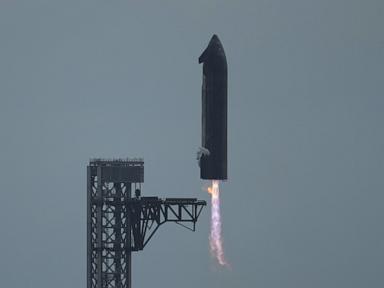
On October 13, 2024, SpaceX achieved an unprecedented engineering milestone during Starship Flight 5 by returning its 232-foot Super Heavy booster from the edge of space and catching it mid-air using massive mechanical arms attached to the launch tower. Instead of deploying landing legs or splashing down in the ocean, the rocket hovered cleanly over the Boca Chica launch pad in South Texas before the tower's "chopsticks" closed around its forward lifting pins, securing the 250-ton stainless steel cylinder intact.
For decades, the aerospace establishment treated orbital rockets like disposable aluminum cans. You built them at immense cost, lit the fuse, watched them throw a satellite into the dark, and let them burn up in the atmosphere or sink to the bottom of the Atlantic. Even SpaceX’s own Falcon 9, which broke that mold nearly a decade ago by landing vertically on autonomous drone ships, still required days of refurbishment, inspection, and transport before flying again.
The Flight 5 catch wasn't just a theatrical stunt for livestream viewers. It was the physical proof of concept for rapid reusability, an operational model designed to turn spaceflight from a bespoke government science project into something resembling commercial aviation.
The Physics of Catching a Falling Skyscraper
To understand why aerospace veterans spent years calling this idea reckless, you have to look at the sheer kinetic violence involved in bringing an orbital-class booster back to its starting point.
When Super Heavy separates from the upper Starship spacecraft roughly 70 kilometers above the Gulf of Mexico, it is traveling at thousands of kilometers per hour. Unlike the Falcon 9, which uses fold-out carbon-fiber landing legs to absorb the final shock of touchdown, Super Heavy has no legs at all. Landing legs are dead weight. Every kilogram dedicated to hydraulic struts and landing pads is a kilogram stolen from the payload bay. SpaceX’s solution was brutal in its simplicity: leave the landing gear on the ground.
Getting the booster back to the pad requires a sequence of aerodynamic and propulsive gymnastics that leaves zero margin for error. After stage separation, the booster executes a boostback burn, firing a subset of its 33 Raptor engines to reverse its horizontal momentum and aim itself back toward Starbase. As it plummets through the thickening atmosphere, four massive, waffle-patterned steel grid fins steer the vehicle like a falling dart, bleeding off speed through atmospheric drag.
The real terror happens in the final thirty seconds.
Approaching the coast at supersonic speeds, the booster relights thirteen of its Raptor engines for the landing burn, rapidly decelerating from a freefall to a vertical hover. Because the engines are powerful enough to lift the entire 5,000-ton fully fueled stack, an empty booster—weighing roughly 200 to 250 metric tons—cannot throttle down enough to hover indefinitely. It has to execute what rocket engineers call a hoverslam, timing its deceleration so that its vertical velocity hits zero at the exact altitude of the catch arms.
During Flight 5, the booster steered itself directly between the two towering steel arms of the "Mechazilla" launch tower. A pair of small, reinforced pins jutting out from just below the grid fins rested directly onto the cushioned rails of the catching arms. The engines shut down. The rocket hung there, scorched and venting cryogenic oxygen, suspended thirty stories above the concrete pad.
Why Traditional Aerospace Missed the Boat
If you walked into the boardrooms of legacy defense contractors ten years ago and proposed catching a 20-story rocket with a pair of giant mechanical tongs, you would have been laughed out of the building. That skepticism wasn't born out of stupidity; it was born out of how traditional aerospace manages risk.
Historically, organizations like NASA, Boeing, and Lockheed Martin operated under a "failure is not an option" mandate. When you are flying a billion-dollar flagship science mission or a one-of-a-kind crew capsule, you cannot afford to blow up hardware on the test stand. Consequently, legacy engineering relies heavily on exhaustive computer modeling, wind tunnel testing, and mountains of paperwork before a single piece of metal is bent.
SpaceX inverted that philosophy by adopting hardware-rich iterative development.
Instead of spending ten years trying to mathematically guarantee that the catch mechanism would work on the first try, SpaceX built a factory in South Texas to churn out stainless steel prototypes like sausages. They blew up early hops. They lost boosters over the Gulf. Each flight—Flight 1 through Flight 4—was treated as a data-gathering expedition rather than a pass-fail exam.
By Flight 4, they had proved the booster could survive reentry and execute a soft "virtual" splashdown in the ocean with millimeter-level precision. Only when the telemetry proved the guidance algorithms could hit a virtual target in open water did the flight director give the "go" for a live tower catch on Flight 5.
Legacy competitors couldn't copy this approach even if they wanted to. Their corporate structures, cost-plus government contracts, and shareholder expectations are fundamentally allergic to blowing up hardware on live television. SpaceX used its private ownership and aggressive capital allocation to buy down technical risk through sheer physical repetition.
The Brutal Economics of Payload to Orbit
Strip away the sci-fi romance of colonizing Mars, and the tower catch boils down to cold, hard unit economics.
In the launch industry, the ultimate metric is cost per kilogram to Low Earth Orbit (LEO). During the Space Shuttle era, getting a single kilogram into space cost roughly $54,000. The Falcon 9, thanks to its reusable first stage, drove that number down to under $3,000 per kilogram, effectively capturing over 80% of the global commercial launch market.
Starship is designed to obliterate even Falcon 9’s numbers.
| Launch Vehicle | Operational Status | Reusability Profile | Max Payload to LEO | Estimated Cost Per Launch |
|---|---|---|---|---|
| Space Shuttle | Retired | Partial (Orbiter/SRBs) | 27,500 kg | ~$1.5 Billion |
| SLS (Block 1) | Active | Expendable | 95,000 kg | ~$2.2 Billion |
| Falcon 9 | Active | Partial (Booster/Fairings) | 22,800 kg (Reusable) | ~$67 Million (Commercial) |
| Starship | In Testing | Full (Booster & Ship) | 100,000+ kg (Reusable) | Target: <$10 Million (Internal) |
When you catch the booster directly on the launch mount, you eliminate the entire maritime recovery fleet. There are no drone ships burning diesel fuel days out at sea, no tugboats, no port cranes, and no oversized flatbed trucks closing down highways to haul a blackened rocket back to the hangar.
More importantly, catching the booster puts it right back where it needs to be: on the orbital launch mount. In SpaceX’s long-term architecture, the tower arms don't just catch the booster; they immediately lower it onto the launch ring, lift a freshly fueled Starship upper stage on top of it, top off the methane and liquid oxygen tanks, and launch again within hours.
If SpaceX achieves even a fraction of that turnaround cadence, the economics of spaceflight change permanently. Satellites will no longer need to be miniaturized, folded like origami, and engineered with exotic, ultra-lightweight materials to survive tight mass budgets. You can build heavy, cheap, durable hardware using off-the-shelf industrial components and launch it in bulk.
The Hidden Engineering Headaches Nobody Mentions
For all the justified celebration surrounding Flight 5, assuming that commercial airline-style rocket operations are right around the corner is a massive mistake. Catching the rocket is only half the battle. Making it fly again quickly without exploding on the next liftoff is an entirely different beast.
Thermal Stress and Metal Fatigue
Super Heavy is constructed from 30X stainless steel, chosen specifically because it maintains structural integrity at both cryogenic temperatures (when filled with sub-cooled liquid methane and oxygen) and extreme heat (during atmospheric reentry). However, plunging a 70-meter metal tube from the vacuum of space into dense, frictional air at hypersonic speeds subjects the airframe to violent thermal cycling. Over multiple flights, microscopic fractures can form in welds, propellant lines, and structural bulkheads. Inspecting thousands of meters of welds between rapid turnarounds remains an unsolved operational bottleneck.
Engine Refurbishment Reality
Thirty-three Raptor engines operating at extreme chamber pressures generate immense acoustic vibration and thermal stress. During Flight 5, observers noted slight warping and glowing metal near the engine skirt on descent. Even if the booster lands softly in the tower arms, a single damaged turbopump or cracked injector plate requires technicians to pull the engine out—a tedious, labor-intensive process that kills any hope of a 24-hour turnaround. Falcon 9 boosters currently require weeks of quiet maintenance between flights despite their routine landings.
Tower Vulnerability
The biggest single point of failure in SpaceX's architecture is the launch tower itself. When Falcon 9 misses a landing, it crashes into an unmanned barge in the middle of the ocean—an expensive annoyance, but easily replaceable. If Super Heavy suffers a guidance glitch, a stuck throttle valve, or a sudden wind shear three seconds before catch, a 250-ton bomb packed with residual methane slams directly into the orbital launch mount. Rebuilding a destroyed launch tower and its complex propellant farm wouldn't take weeks; it would take a year or more, grounding the entire program.
The Geopolitical Shockwaves
While aviation regulators and environmental groups in Texas debate the noise levels and sonic booms rattling windows across South Padre Island, defense analysts in Washington, Beijing, and Moscow are watching the Boca Chica livestream with a mixture of awe and panic.
Space superiority is no longer an abstract military doctrine; it is the backbone of modern warfare, as proven by the critical role of SpaceX’s Starlink constellation in global conflict zones. A fully reusable heavy-lift vehicle gives the United States—and specifically a single private American corporation—an asymmetric advantage in orbit that no nation-state can currently match.
Consider the numbers. In a single year, SpaceX already launches more mass to orbit than the rest of the world combined, including China's state-backed aerospace sector and all European, Russian, and American competitors put together. Starship multiplies that capacity by an order of magnitude.
With a operational fleet of Starships, the U.S. Department of Defense could deploy massive constellations of tracking satellites, orbital sensor networks, or point-to-point global cargo delivery systems in days rather than decades. Meanwhile, China’s state-owned aerospace contractors are scrambling to develop their own reusable methane-fueled rockets, such as the Long March 9, which has already undergone multiple redesigns to mimic Starship’s architecture. Right now, they are at least five to eight years behind the hardware flying out of Texas.
What Still Has to Happen Before Mars
Catching the booster was the headline, yet the second half of the Starship system—the upper stage spacecraft—still faces its steepest climb.
During Flight 5, the Starship upper stage successfully survived atmospheric reentry and executed a controlled splashdown in the Indian Ocean, a massive improvement over previous flights where plasma burned through its forward flaps. Still, surviving a water landing is vastly different from surviving a dry-land tower catch.
The upper stage enters the atmosphere at orbital velocity—roughly 28,000 kilometers per hour—generating temperatures exceeding 1,400 degrees Celsius. It relies on roughly 18,000 hexagonal ceramic thermal protection tiles glued and pinned to its windward belly to keep the steel hull from melting. During Flight 5, heat still breached the tile layer in localized spots, scorching the underlying steel structure near the flap hinges.
Until SpaceX develops a heat shield that requires zero tile replacement between flights—much like the thermal tiles on the Space Shuttle, which required thousands of man-hours to inspect and repair after every single mission—true rapid reusability remains out of reach. SpaceX will eventually have to catch the upper stage with a second set of tower arms, inspect its thermal tiles, mate it to a caught booster, and launch the whole stack again without rolling it back to a hangar.
That next step will test the absolute limits of materials science and aerospace automation, because in orbital mechanics, catching the booster only gets you halfway to the stars.