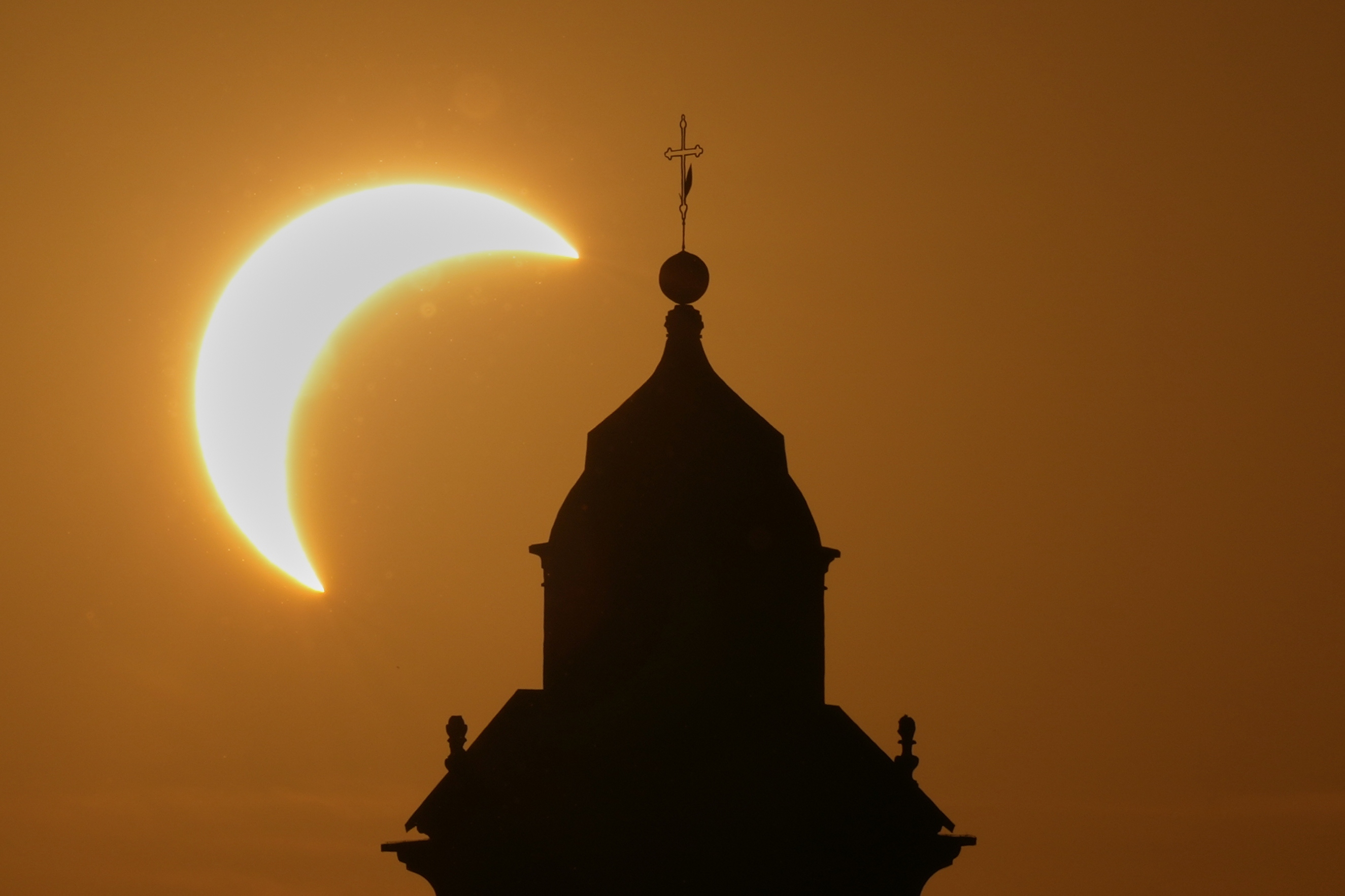
When the shadow of the moon finally slices across the Iberian Peninsula, millions will look up at a daytime darkness not witnessed in Spain since 1912. That fleeting moment of totality brings more than just a celestial spectacle; it triggers an unprecedented stress test for municipal infrastructure, power grids, and emergency services across multiple regions.
Astrophysicists track the mechanics of a total solar eclipse with clockwork precision, calculating orbital intersections down to the microsecond. Governments and urban planners, however, face a far messier equation. On August 12, 2026, a massive influx of domestic and international travelers will converge on narrow corridors spanning from the northern coast down to parts of the east, turning quiet rural highways and coastal arteries into parking lots. For a more detailed analysis into this area, we suggest: this related article.
This is not merely a tourism boom. It is a massive operational hurdle.
The Grid Vulnerability No One Is Talking About
Solar power dominates a significant share of Spain's electricity generation matrix. When the moon completely blocks the sun's rays, photovoltaic plants experience a sudden, dramatic drop in output over a compressed timeframe. For further context on this topic, extensive analysis is available at USA Today.
Grid operators face a steep ramp-down followed immediately by an aggressive ramp-up as the shadow passes. While Red Eléctrica has spent years modeling these fluctuations, the sheer scale of the 2026 blackout window requires precise coordination with gas-fired backup plants and hydroelectric storage facilities.
Power stability during an eclipse depends on millisecond-level load balancing. If regional demand spikes due to millions of visitors turning on air conditioning units or EV chargers while generation plunges, the risk of localized brownouts increases sharply.
Managing the Photovoltaic Dip
Operators rely on predictive meteorological data, yet sudden cloud cover or atmospheric anomalies can throw off automated models.
- Ramp rates: The speed at which solar assets lose and regain capacity tests the limits of grid flexibility.
- Storage reserves: Pumped hydro stations must stand ready to discharge instantly.
- Interconnections: Cross-border energy flows with France and Portugal act as vital safety valves.
The Infrastructure Strain on Rural Corridors
Major urban centers like Madrid or Barcelona handle high-density crowds daily, but the totality path cuts heavily through smaller towns, mountain passes, and coastal villages with limited road capacity.
Rural municipalities face a logistical nightmare. Sanitation services, water supplies, and waste management systems are scaled for permanent residents, not an overnight population surge that can multiply local headcounts tenfold.
Emergency response times will stretch thin. A standard medical emergency or wildfire on a clogged two-lane country road becomes a critical hazard when traffic stalls for miles. Local police forces lack the manpower to manage gridlock across hundreds of rural intersections simultaneously.
Hospitality Pricing and the Speculation Wave
Hotels, campsites, and rural rental properties along the totality track adjusted their rates years in advance. Prices have surged to multiples of standard seasonal averages, squeezing budget travelers and driving opportunistic subletting.
This speculative spike mimics major sporting events or music festivals, yet without the centralized coordination of a stadium venue. Unlicensed rentals pop up overnight, raising safety and tax compliance concerns for local authorities trying to maintain oversight.
Visitors hunting for clear skies gamble heavily on weather patterns. Northern Spain offers breathtaking topography for viewing, but Atlantic weather systems can roll in unexpectedly, obscuring the horizon and leaving thousands of high-paying travelers stranded in the rain.
The Aftermath and Municipal Recovery
Once the corona fades and the solar disk reemerges, the second wave of disruption begins. Millions of vehicles attempt to exit viewing zones simultaneously, clogging highways for up to twenty-four hours post-event.
Municipalities are left to manage tons of discarded viewing glasses, camping debris, and traffic management fallout long after the tourists depart. The economic windfall for local businesses is real, but the administrative debt lingers.
Infrastructure resilience cannot be improvised on the day of the alignment. The true measure of this eclipse will not be found in the beauty of the corona, but in whether the infrastructure held together while the world watched the sky.