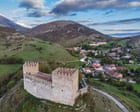
The modern tourism industrial complex has a brand new fairy tale, and every major travel publication is buying it wholesale.
The narrative goes like this: Barcelona is choked with crowds. Mallorca is running out of water. Majorca’s beaches look like a multi-colored carpet of human flesh. Therefore, the savvy, ethical solution is to divert the massive influx of international visitors away from the coast and push them into the "hidden gems" of the interior. The Spanish tourism board calls it diversification. Academics call it sustainable management.
It is actually a recipe for cultural vandalism.
I have spent fifteen years analyzing tourism logistics and regional economic data. I have watched municipal governments pump millions into rebranding industrial towns as cultural meccas, only to watch local housing markets collapse under the weight of short-term rentals within three years. Shifting 100 million tourists off the beaches of Benidorm and dropping them into the fragile, underpopulated villages of Extremadura or the delicate ecosystems of Asturias will not save Spain. It will just spread the infection.
The premise that you can solve overtourism by making it ubiquitous is a mathematical and sociological delusion. You cannot cure a flood by redirecting the water into everyone’s living room.
The Myth of the "Sovereign Tourist"
The competitor articles love to profile the high-spending, culturally curious traveler who opts for a 12th-century monastery in Castile-León over an all-inclusive resort in Ibiza. They frame this as a victory for local economies.
It is an exception masquerading as a trend.
The vast majority of global tourism is driven by volume, standardization, and cheap infrastructure. When you push for mass redistribution, you are not sending discerning historians to the interior; you are sending logistics networks.
Mass tourism requires massive concessions. A quiet village of 400 people in Aragon cannot absorb two tour buses a day without changing its fundamental nature.
- The local bakery stops baking traditional bread for neighbors and starts making pre-frozen pastries for day-trippers.
- The single tapas bar on the plaza raises prices by 40% to cash in on foreigners who view a four-euro beer as a bargain, effectively pricing out the retirees who used the space as a community center.
- The local housing stock, already depleted by rural flight, gets snapped up by speculative buyers converting stone cottages into boutique Airbnbs.
This is not economic development. It is resource extraction dressed up as cultural exchange.
The Excel sheets at the Ministry of Industry and Tourism might show a beautiful, even distribution of euros across fifty provinces instead of five. But GDP figures do not measure the sudden, violent erasure of a lifestyle that survived the Reconquista and a civil war only to be suffocated by digital nomad hubs.
The Logistics of Displacement
Let's look at the actual plumbing of mass travel. The coastlines of Spain—specifically the Mediterranean arc and the islands—were built to handle high-density human traffic.
Benidorm, for all its aesthetic crimes, is a triumph of urban engineering. It features high-rise zoning, centralized waste management, massive desalination infrastructure, and a public transport grid designed to process hundreds of thousands of people a week with surgical precision. It is a carbon-efficient machine designed to contain the impact of low-cost aviation.
When you take that volume and fracture it across the interior, the environmental footprint skyrockets.
- Transportation Emissions: The interior lacks high-capacity rail grids connecting small villages. Moving tourists from Madrid to rural villages requires thousands of rental cars, multiplying per-capita carbon emissions by a factor of six.
- Water Scarcity: While the coast can build and fund multi-million dollar desalination plants, the interior relies on depleting aquifers. Dropping thousands of tourists—who use, on average, three times more water per day than a local resident—into water-stressed regions like Castilla-La Mancha is an ecological time bomb.
- Waste Management: Small municipal budgets cannot scale up sewage treatment plants to handle seasonal spikes. The result is untreated runoff polluting local river systems.
If you care about the environment, you do not disperse the crowd. You build a bigger wall around the containment zone. You keep the mass tourists in Benidorm, where the infrastructure is built to absorb their impact, and you keep the interior difficult to access.
Dismantling the Pretentious "People Also Ask" Queries
Whenever the conversation shifts to Spain's tourist explosion, the same fundamentally flawed questions populate search feeds. Let's dismantle the three biggest offenders.
"How can I travel to Spain sustainably?"
You probably can't, at least not in the way you think. The travel industry has turned "sustainability" into a product you can buy by paying a premium for an eco-lodge or buying carbon offsets that do absolutely nothing.
If you want to be truly sustainable, you do not look for an uncrowded village to discover. Discovering a place, in the context of modern travel, is the first step toward destroying it. True sustainability means going to places that are already built for you. Go to Madrid. Go to Barcelona. Stay in licensed, high-rise hotels that pay union wages. Use the subway. Do not rent a car to drive to an isolated village where your presence forces a local grandmother to wait six months for a rental apartment because the landlord realized he can make her monthly rent in three days on the internet.
"Is rural Spain cheaper for tourists?"
Only because you are exploiting an economic disparity. The interior of Spain suffers from España Vaciada (Emptied Spain)—decades of youth emigration leaving behind an aging, vulnerable population.
When you enter these markets boasting about how cheap the food and lodging are, you are celebrating the economic stagnation of a region. Your cheap holiday is a symptom of their structural decline. When tourism dollars arrive without strict regulation, they do not revitalize the local economy; they create a highly seasonal, low-wage service economy that tethers the youth to waiting tables instead of building modern industries.
"Why is Spain trying to limit tourists in major cities?"
Because municipal politicians want to get re-elected, and blaming foreigners is easier than fixing structural housing failures.
Cities like Barcelona and Valencia did not become unlivable purely because of cruise ships. They became unlivable because local zoning laws failed to protect residential buildings from commercial exploitation, and because national tax laws favored real estate speculation over long-term rentals. Pushing tourists to the interior is a classic political shell game. It allows urban mayors to claim they are tackling overtourism while allowing the national treasury to keep raking in the cash from record-breaking visitor numbers.
The Inevitable Downside of the Hard Truth
Am I suggesting we seal off the interior of Spain behind a chain-link fence? No. There is a legitimate, small-scale market for rural tourism that supports family-owned enterprises.
But we must acknowledge the brutal trade-off of the contrarian approach: if we contain tourism to the coastal mega-resorts and major metropolitan hubs, those areas will become increasingly commercialized, expensive, and culturally homogenized. Barcelona will feel less like a living Catalan city and more like a high-end theme park. The coast will remain a concrete jungle.
That is a price worth paying.
It is far better to sacrifice 5% of Spain's geography to the global tourism machine than to sacrifice 100% of it. We must accept that certain zones are structural containment fields. We let the bachelor parties have the coastal strips. We let the cruise ships have the designated ports. We protect the interior through deliberate, calculated neglect.
The Unpopular Blueprint for Spain's Real Survival
If Spain actually wants to survive its own popularity, it needs to stop trying to move the chess pieces around the board and start changing the rules of the game entirely.
First, dismantle the marketing budget. The Spanish national tourism body (Turespaña) should completely cease all international advertising. When you are pushing 100 million visitors annually in a country of 48 million people, you do not have a marketing problem; you have a supply chain crisis. You do not advertise a store that has a line stretching three blocks out the door.
Second, implement a mandatory, national minimum pricing tier for short-term accommodations. The low-cost carrier model works only because tourists can find fifteen-euro-a-night rooms inside residential apartment blocks. If you mandate that no short-term rental can operate below the price point of a regulated four-star hotel, you immediately filter out the high-volume, low-value traffic that creates the worst social friction.
Third, tax the tourism infrastructure to fund non-tourism industries. Take the revenue from hotel taxes and channel it exclusively into agricultural subsidies, rural high-speed internet infrastructure, and tech manufacturing grants for the interior. Give the villages of Zamora and Jaén an economic lifeline that doesn't involve cleaning toilets for British tourists or renting out their ancestral homes to tech bros from Berlin.
Stop romanticizing the spread of tourism. Stop writing glowing profiles about the "undiscovered" valleys of Spain. The moment a valley is profiled as undiscovered, its countdown clock begins. If you love the authenticity of rural Spain, stay away from it. Go sit on the concrete beaches of Alicante, buy an overpriced pitcher of sangria, and take comfort in the fact that your presence there is keeping a pristine village somewhere else alive.