Walk through the Puerta del Sol in Madrid at ten o'clock on a Tuesday night. The air smells of toasted garlic and diesel exhaust. It is loud. It is crowded. There is a specific type of kinetic energy here that feels increasingly absent from the graying, hushed streets of Berlin or the anxious boulevards of Paris. While the rest of the continent whispers about recession and the slow rot of industrial decline, Spain is shouting.
For decades, the narrative of the "Spanish Miracle" was treated as a fluke or a bubble waiting for a pin. But look at the numbers and you see something far more deliberate. Spain isn’t just growing; it is outpacing its neighbors with a stubborn, rhythmic consistency that has turned the "sick man of the Mediterranean" into the Eurozone’s primary engine. Discover more on a similar subject: this related article.
The Ledger of the Living
Meet Mateo. He is a hypothetical but statistically accurate thirty-four-year-old software engineer living in Valencia. Five years ago, Mateo’s primary ambition was to move to London or Munich. Today, he stays. He stays because the fundamental math of his life has shifted.
In 2023 and 2024, Spain’s GDP growth hovered around 2.5%, roughly five times the average of the Eurozone. While Germany stagnated under the weight of expensive energy and a crumbling manufacturing model, Spain leaned into a diversified portfolio that felt more like a modern tech startup than a legacy economy. Mateo sees this in his rent, his grocery bills, and the new data centers cropping up on the outskirts of his city. More analysis by Forbes delves into comparable views on this issue.
Spain managed to tame inflation faster than almost anyone else in the bloc. By capping gas prices through the "Iberian exception"—a clever bit of regulatory maneuvering that separated the price of electricity from the price of expensive natural gas—the government protected Mateo’s disposable income. This wasn't just a policy tweak. It was a lifeline that kept the domestic market breathing while the rest of Europe was gasping for air.
A Bridge of Many Planks
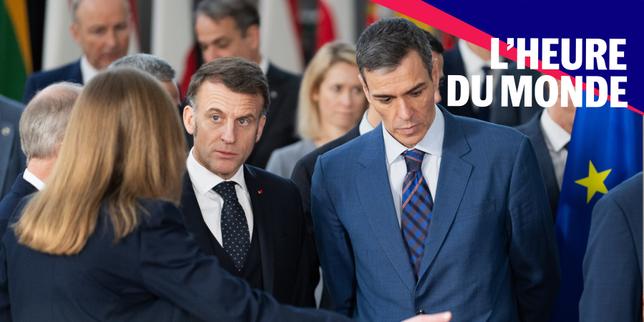
Economics is never just about the money. It is about where you stand in the world. For years, Spain was relegated to the periphery of European diplomacy, a sunny playground for Northern tourists but a lightweight in the halls of Brussels. That has changed.
The current administration has positioned Madrid as the indispensable middleman. Look at the map. Spain sits at the intersection of the Atlantic, the Mediterranean, and the gateway to North Africa. While France struggles with its historical baggage in the Sahel and Germany nervously eyes its reliance on Chinese trade, Spain has quietly built a diplomatic fortress.
This isn't an accident of geography. It is a strategy of "multi-alignment." Spain has become the primary advocate for a stronger relationship between the European Union and Latin America, leveraging a shared language and history to create a trade corridor that bypasses traditional bottlenecks. When the world talks about "near-shoring"—moving supply chains closer to home—Spain is the natural destination.
Consider the energy transition. Europe is desperate to break its addiction to Russian gas and Chinese batteries. Spain, with its vast wind-swept plains and relentless sun, is becoming the continent’s green battery. The country is now a leader in green hydrogen production. This doesn't just lower carbon footprints; it creates a new kind of geopolitical leverage. If you want the lights to stay on in a post-carbon Europe, you need to be on good terms with Madrid.
The Invisible Stakes of the Street
Statistics are cold. They don't capture the feeling of a packed terrace in Seville or the frantic pace of a logistics hub in Barcelona. The real story of the Spanish anomaly is found in the labor market.
Historically, Spain’s Achilles' heel was its "dual" labor market: a lucky few with permanent contracts and a massive underclass of precarious, temporary workers who were fired at the first sign of a downturn. This created a generation of "mileuristas"—young people earning a thousand euros a month with zero job security.
A series of radical labor reforms changed the default. By making permanent contracts the norm and restricting the abuse of temporary hiring, the government did something unexpected: they boosted consumer confidence. When Mateo knows his job won't vanish next month, he spends money. He buys a car. He goes to the cinema. He invests in his own future. This psychological shift is the invisible fuel behind the GDP numbers.
The Fragility of the Crown
It would be a mistake to paint this as a flawless utopia. Spain’s debt-to-GDP ratio remains a looming shadow, a mountain of credit that must eventually be reckoned with. The political landscape is a fractured mosaic of regional tensions and polarized ideologies. One wrong move in the delicate dance of coalition politics could stall the momentum.
There is also the question of tourism. For a long time, Spain was a mono-economy of sun and sand. While the shift toward high-tech services and green energy is real, the country still vibrates to the pulse of the traveler. Over-tourism isn't just a headline; it is a reality that threatens to hollow out the very cities that are driving the growth. The challenge is no longer just attracting people—it is managing the success without losing the soul of the place.
But these are the problems of a country that is moving, not one that is stuck. There is a sense of agency in Spain right now that feels rare. It is the feeling of a nation that has stopped waiting for instructions from Brussels or Berlin and has started writing its own script.
The Quiet Turn of the Tide
History usually happens when we aren't looking. We focus on the collapses, the wars, and the sudden shocks. We often miss the slow, steady ascent of a country that decided to reform its foundations while the world was distracted.
Spain is no longer the "exception" in the sense of being an outlier or a problem child. It is becoming the model. It has shown that you can protect the vulnerable through high inflation, that you can transition to green energy without killing your industry, and that you can find a seat at the head of the table through clever diplomacy rather than raw military might.
As the sun sets over the Gran Vía, the lights flicker on, powered increasingly by the wind of the Castilian plateaus and the sun of the Andalusian valleys. The cafes are full. The voices are loud. The math is working. In a Europe defined by uncertainty, Spain has found a way to be certain of itself.
The old world is watching. They are seeing that the Mediterranean isn't just a place to retire; it is a place to build what comes next. The fever of the last decade is breaking, and for the first time in a long time, the heartbeat of the continent is coming from the south.