The sweat on a doctor’s forehead in a clinic with no electricity does not look like a statistic. It looks like grease under the fluorescent-mimicking glare of a battery-powered lantern. When the virus arrives, it does not announce itself with a press release. It begins with a child who has a fever that will not break, in a village that does not show up on most maps of West Africa.
By the time the global community decides to name the crisis, the dirt roads leading out of that village have already carried the pathogen across borders. Expanding on this idea, you can find more in: The Mechanics of Epidemic Acceleration Quantification and Control Bottlenecks in Ebola Outbreaks.
Money flows differently than disease. Disease moves at the speed of a handshake, a shared taxi ride, a burial where family members touch the skin of the deceased to say goodbye. Money moves through committees, drafting sessions, and diplomatic cables. The gap between those two speeds is where people die.
The United States government recently announced a massive surge in aid to combat the escalating Ebola outbreak. On paper, the numbers are staggering: hundreds of millions of dollars, thousands of pieces of personal protective equipment, and logisticians deployed to build treatment centers from the ground up. It is an administrative muscle-flexing designed to show the world that the superpower is awake. Analysts at Medical News Today have shared their thoughts on this trend.
But beneath the triumph of the announcement lies a bitter, furious finger-pointing. American officials did not just announce cash; they used the moment to openly condemn the World Health Organization. The accusation is simple and devastating: the global watchdogs knew the house was on fire, and they sat on the alarm.
The Invisible Clock
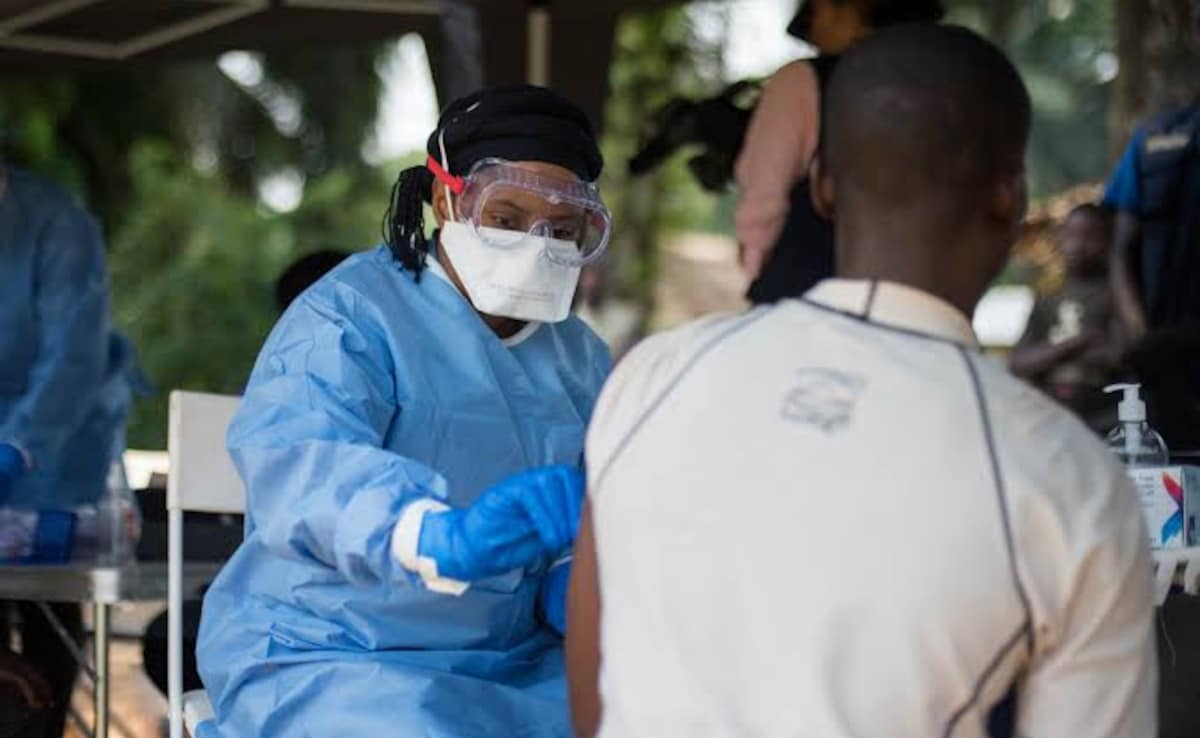
To understand how a virus wins, you have to understand the geography of isolation. Imagine a local nurse named Amara. She is not a real person, but she represents three different healthcare workers in northeastern Guinea whose names were lost to the early weeks of the outbreak. Amara operates in a clinic where the floor is concrete and the primary diagnostic tool is a thermometer.
When a patient arrives vomiting and bleeding from the gums, Amara does not think of a global pandemic. She thinks of malaria. She thinks of typhoid. She treats the patient with the tools she has, using reusable latex gloves that she washes in a bucket of chlorinated water between shifts.
The virus exploits this dedication. Every time Amara wipes a forehead or changes a sheet, the microscopic filaments of the virus find a micro-tear in her glove. Within eleven days, Amara is no longer the healer. She is the vector.
http://googleusercontent.com/image_content/194
While Amara’s clinic was collapsing, the computers in Geneva were quiet. The World Health Organization operates on a system of official notifications. A country must formally report an outbreak before the machinery of international aid can legally grind into gear. But local governments are often terrified of the economic fallout. Report an Ebola outbreak too early, and tourism vanishes. Shipping stops. Airlines cancel flights. A developing economy can be killed by a rumor faster than a virus can kill its citizens.
So, everyone waited.
The bureaucratic machinery requires a high threshold of proof. It demands laboratory confirmation from specialized centers that are often days away by motorcycle over washed-out roads. While the blood samples sat in plastic vials strapped to the backs of bikes navigating the jungle, the virus found its way into crowded urban centers.
By the time the WHO officially declared a Public Health Emergency of International Concern, the outbreak was no longer a spark. It was a firestorm. The delay was not measured in days; it was measured in months. Five months, to be exact. Five months of silence while the bodies accumulated in shallow graves.
The Armor and the Ledger
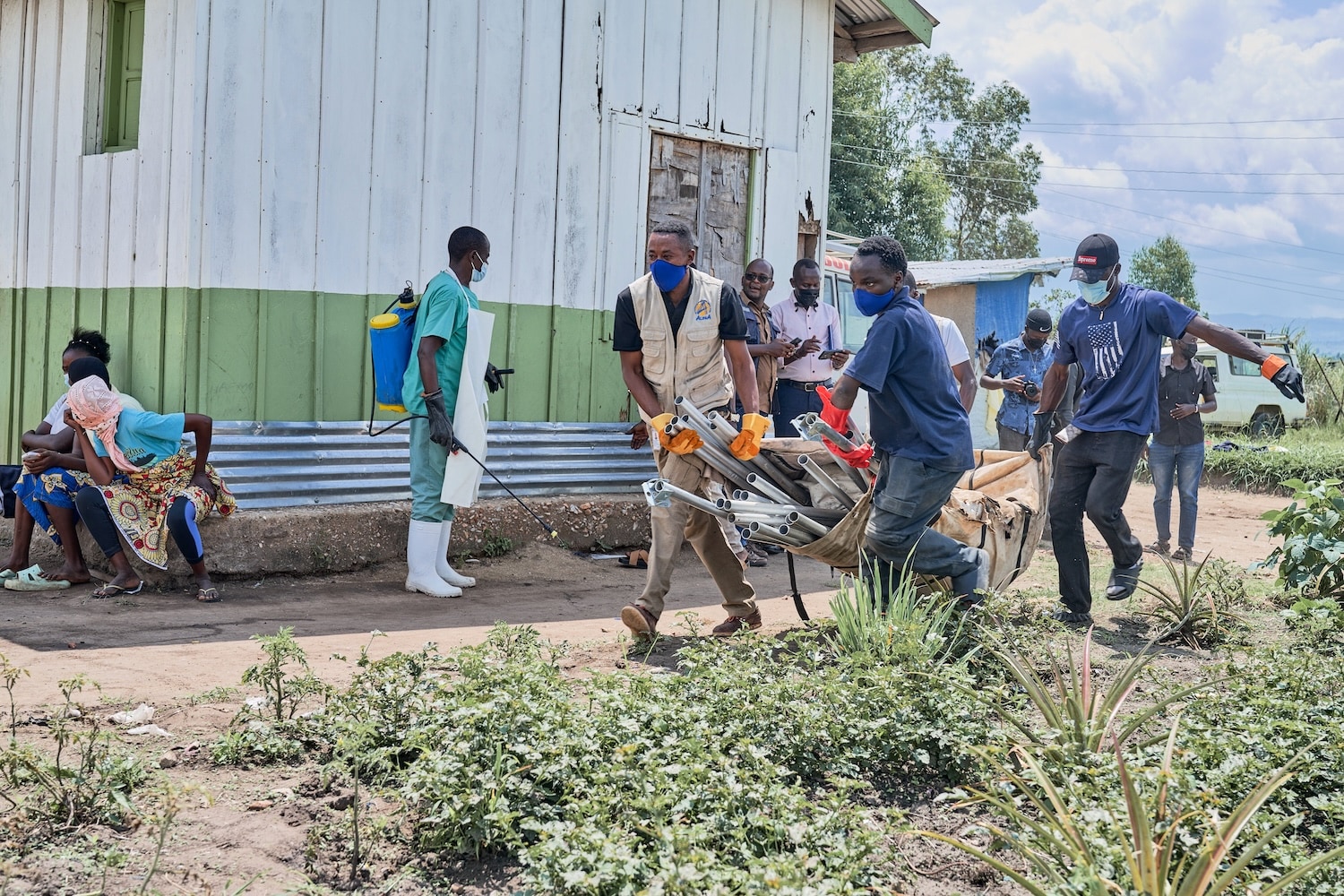
When the American aid surge finally arrived, it landed with the heavy thud of military logistics. Cargo planes touched down in capital cities, disgorging pallets of plastic sheeting, chlorine powder, and those distinctive, ghost-like white biohazard suits.
Seeing those suits on the tarmac provides a strange comfort. They represent science, safety, and the absolute certainty of western technology. But wearing one is a form of torture. Inside the impermeable fabric, the temperature regularly exceeds one hundred degrees Fahrenheit. A doctor or nurse can only stay inside the suit for about forty-five minutes before the sweat pooling in their boots makes it difficult to walk, and the dehydration threatens to make them faint.
To take the suit off safely requires a choreographed dance of decontamination. Twenty-two distinct steps. Spray the hands. Unzip the hood without touching the face. Step out of the boots without letting the cuffs touch the floor. If you miss step fourteen because you are dizzy from the heat, you die.
The American anger toward the WHO stems from this exact physical reality. If the aid had been deployed five months earlier, the response would not have required massive, multi-million-dollar field hospitals built by soldiers. It would have required small teams of epidemiologists with notebooks, tracking down the first twelve infected people and isolating them in their homes.
Instead, the delay forced a pivot from containment to warfare.
The diplomatic criticism levied by Washington is not just about bureaucratic incompetence; it is about accountability. The United States is the largest single donor to global health initiatives. When American officials look at the spreadsheet of the new surge, they see a bill that could have been a fraction of the size if the alarm had been sounded when the first clinic fell silent.
The Ghost in the Bureaucracy
There is an inherent flaw in how the world hunts diseases. We have built an international system that treats health as a matter of state sovereignty rather than a shared biological reality. The WHO is not an independent global police force with the power to kick down doors and test patients against a government's will. It is a member-state organization. It can only be as brave as the countries that fund it allow it to be.
This creates a culture of caution. Leaders in Geneva are prone to diplomatic tiptoeing when they should be screaming from the rooftops. They treat ministries of health with the deference given to nuclear powers, worried that if they offend a local politician, they will be locked out of the country entirely.
The American strategy in this surge is two-pronged. The first is visible: the physical infrastructure of medicine. The second is structural: using the financial leverage of the aid package to demand a complete overhaul of how global health emergencies are declared. The US wants an independent trigger—a system where data, not political consensus, dictates when the world is notified of a threat.
But data is a fickle savior. Data relies on people like Amara having the time and the electricity to enter numbers into a system. When a clinic is overwhelmed, data collection is the first thing that stops. The paperwork is abandoned because the living require water and the dead require burial.
The Weight of the Soil
The true cost of the delay is found in the shifting structure of communities. In the villages where the aid arrived late, the social fabric did not just fray; it snapped.
Ebola is a uniquely cruel disease because it turns human empathy into a weapon. The people who get sick are the ones who took care of their ailing parents. The people who die next are the daughters who washed the bodies of their mothers for the funeral. The virus relies on our best instincts—love, duty, grief—to find its next host.
When the international community arrived with its white suits and its mega-treatment centers, they brought a sterile, terrifying logic. They told families that they could no longer touch their dying children. They took the bodies away in opaque plastic bags, burying them in anonymous trenches without the traditional rites that allow a soul to rest, according to local belief.
To the villagers, the delay looked like abandonment, and the sudden surge looked like an invasion.
The resistance that followed—the stoning of aid vehicles, the hiding of sick relatives in the forest—was not driven by ignorance. It was driven by the profound terror of a system that ignored them when they were crying for help, only to appear with sirens and spray bottles once the threat threatened to cross the ocean and land in western cities.
The money will eventually clear the infection from the current map. The treatment centers will be dismantled, the plastic sheeting will rot in the sun, and the cargo planes will fly home. The WHO will issue a report promising to do better next time, and diplomats will trade memos on structural reform.
But in the clinics where the lanterns are still powered by old batteries, the memory of the silence will remain. The nurses will still look at a sudden fever with a mixture of devotion and dread, knowing exactly how long it takes for the rest of the world to hear a cry for help over the sound of its own paperwork.