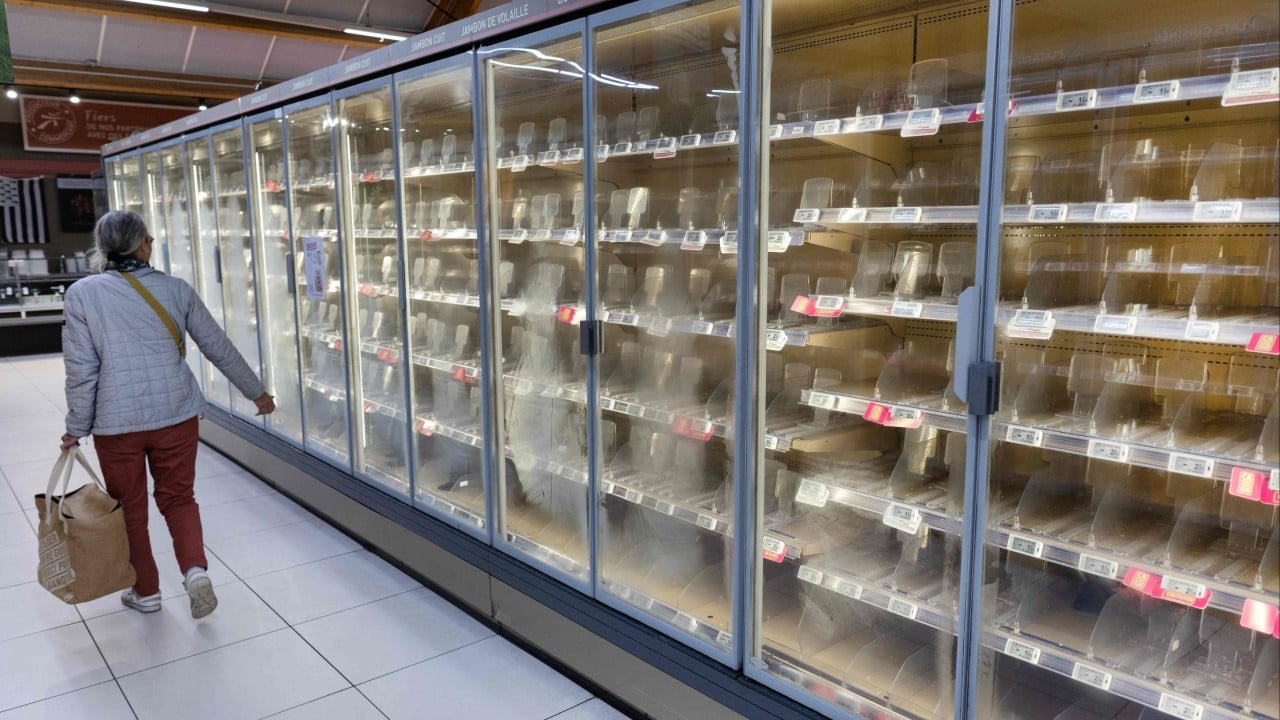
Attribution of cyber operations targeting commercial refrigeration infrastructure by French authorities against Iranian state actors marks a distinct shift in asymmetric warfare from data exfiltration to physical supply chain disruption. When a nation-state compromises internet-connected industrial cooling systems, the objective is rarely financial extortion; the objective is the silent degradation of perishable logistics, pharmaceutical integrity, and domestic food security. Understanding this threat requires stripping away the sensationalism of "hacked refrigerators" and examining the underlying industrial control system (ICS) architectures, the economics of low-cost operational disruption, and the attribution frameworks used by European intelligence agencies.
The Architecture of Commercial Cold Chain Vulnerabilities
Modern commercial and industrial refrigeration units are no longer isolated mechanical loops of compressors, condensers, and evaporators. They are cyber-physical systems managed by Programmable Logic Controllers (PLCs) and Supervisory Control and Data Acquisition (SCADA) interfaces. These controllers regulate thermal thresholds, defrost cycles, and energy consumption, reporting telemetry back to centralized cloud dashboards or local building management systems (BMS). In similar developments, take a look at: The Day the Milk Went Warm and the Quiet War Behind Your Grocery Aisle.
The attack surface of these environments expands through three primary structural failures:
- Direct Internet Exposure of Operational Technology (OT): Technicians frequently connect refrigeration controllers directly to public-facing IP addresses to facilitate remote diagnostics and maintenance. Without a Virtual Private Network (VPN) or a jump host, the controller's web interface or proprietary communication protocol (such as Modbus TCP or BACnet) is visible to automated scanning tools.
- Hardcoded and Default Credentials: Industrial hardware manufacturers prioritize operational uptime and ease of servicing over cryptographic security. Technicians routinely leave factory-default passwords intact across entire fleets of cooling units so that third-party maintenance contractors can access the systems without administrative friction.
- Lack of Network Segmentation: In retail, hospitality, and logistics facilities, the network controlling HVAC and refrigeration equipment often shares a flat local area network (LAN) with point-of-sale terminals, guest Wi-Fi, or administrative workstations. Compromise of a single low-value endpoint allows lateral movement directly into the thermal management layer.
When an attacker gains administrative access to a refrigeration controller, the physical consequences follow predictable thermodynamic timelines. By altering setpoints—raising target temperatures by just a few degrees—or disabling compressor relays while spoofing telemetry data to display normal operating temperatures on the central dashboard, an adversary induces spoilage before automated alarms trigger. MIT Technology Review has also covered this fascinating topic in extensive detail.
Attribution Mechanics in State-Sponsored Cyber Operations
Publicly naming a foreign intelligence service or state-affiliated threat group requires a high confidence threshold across technical, operational, and geopolitical indicators. French cybersecurity authorities, operating under the National Cybersecurity Agency of France (ANSSI), rely on multi-layered forensic correlation rather than single indicators of compromise (IoCs).
Technical attribution begins with infrastructure overlap. State-aligned operators frequently reuse command-and-control (C2) servers, virtual private servers (VPS) leased through specific bulletproof hosting providers, or custom malware loaders across distinct campaigns. If the IP addresses scanning for exposed industrial controllers in France match the infrastructure previously documented in intrusions against European energy grids or municipal water systems, analysts establish a baseline operational link.
Behavioral patterns reinforce technical evidence. Criminal ransomware syndicates operate on a monetization timeline; they deploy encryption payloads rapidly and leave ransom notes demanding cryptocurrency. State-sponsored actors conducting sabotage or pre-positioning operations exhibit entirely different tradecraft. They maintain persistent, low-noise access, map the topology of the operational network, and execute targeted modifications to physical parameters without demanding payment.
Geopolitical context provides the final analytical layer. Retaliatory cyber operations often mirror diplomatic friction, sanctions regimes, or regional conflicts. Targeting non-military, civilian-adjacent infrastructure—such as food distribution networks or municipal utilities—aligns with a doctrine of calibrated escalation. The adversary demonstrates the capability to impose economic pain and psychological friction on a domestic population while remaining below the threshold of conventional military retaliation.
The Economic Asymmetry of Cold Chain Disruption
To understand why an intelligence apparatus allocates resources to compromising refrigeration units, one must evaluate the cost-to-impact ratio of cyber-physical sabotage.
- Reconnaissance Cost: Identifying vulnerable industrial controllers requires minimal expenditure. Open-source intelligence (OSINT) search engines index millions of internet-connected devices, allowing operators to filter specifically for refrigeration management interfaces within seconds.
- Exploitation Cost: Exploiting default credentials or unpatched firmware vulnerabilities in legacy OT hardware requires zero-day exploits in less than five percent of cases. Standard credential stuffing and basic protocol manipulation suffice.
- Material Damage: A single compromised cold storage facility holding biologics, vaccines, or high-value agricultural products can suffer millions of dollars in inventory loss within twelve hours. Across a distributed network of supermarket chains or regional distribution hubs, the cascading economic impact multiplies rapidly.
This asymmetry favors the attacker entirely. Defending thousands of distributed, legacy cooling units requires massive capital expenditure in hardware upgrades, network re-architecture, and continuous monitoring. Disrupting them requires a small team of operators utilizing basic network scanning and credential exploitation.
Tactical Remediation for Operational Technology Environments
Securing distributed refrigeration and HVAC infrastructure against state-level intrusion demands moving away from traditional IT security models and implementing strict operational engineering controls.
Eliminate Public-Facing OT Interfaces
Every industrial controller, thermostat, and building management gateway must be removed from the public internet immediately. Remote access for maintenance vendors must be routed exclusively through authenticated, encrypted tunnels utilizing multi-factor authentication (MFA) and strict session logging.
Enforce Micro-Segmentation
Operational technology must be isolated on dedicated Virtual Local Area Networks (VLANs) governed by firewall rules that deny all inbound traffic from corporate or guest networks by default. Communication between the refrigeration controllers and central monitoring dashboards should be restricted to specific, whitelisted IP addresses and ports.
Implement Out-of-Band Physical Monitoring
Because sophisticated adversaries can spoof software telemetry to hide temperature fluctuations, critical cold chain environments require independent, analog or physically isolated digital monitoring. Hardware-level thermal alarms that operate outside the primary controller's network ensure that physical temperature spikes trigger immediate local alerts regardless of the software state.
Rotate Credentials and Audit Firmware
Organizations must conduct a complete inventory of all deployed environmental controllers, replacing every factory-default password with unique, high-entropy credentials stored in an enterprise privileged access management (PAM) system. Where hardware limitations prevent cryptographic authentication, organizations must deploy compensating network controls, such as protocol-aware industrial firewalls, to inspect and filter commands sent to the controllers.
Strategic Trajectory of Hybrid Infrastructure Targeting
The targeting of commercial refrigeration in France signals that civilian logistics and environmental control systems are now permanent fixtures on the hybrid warfare target list. As commercial appliances increasingly rely on cloud-tethered management platforms to optimize energy efficiency, the boundary between consumer convenience and critical national infrastructure dissolves. Organizations operating distributed physical assets can no longer assume their systems are too mundane to attract nation-state attention. Immediate architectural isolation of operational technology from public networks is the only viable defense against low-cost, high-impact cyber-physical sabotage.