The rain in Paris does not care about protocol. It slicked the cobblestones outside the Élysée Palace just as easily for the giants of post-war Europe as it did for the stray cats darting across the Rue du Faubourg Saint-Honoré. Inside those gilded walls, for twelve long years, sat a woman who understood that power is not merely given; it is painstakingly, quietly manufactured.
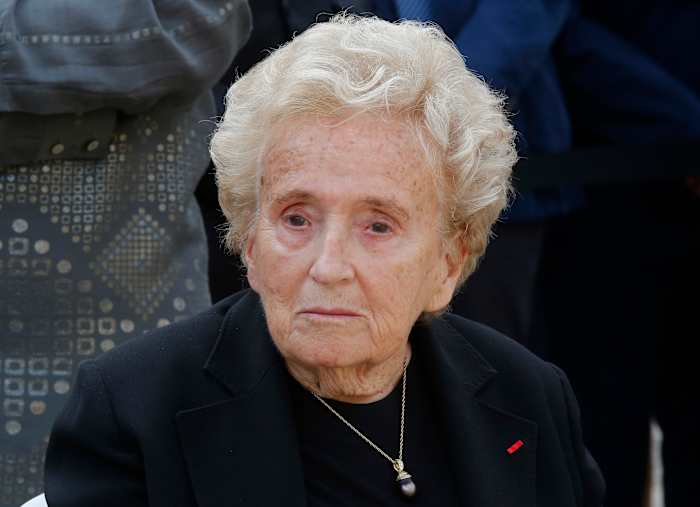
Bernadette Chirac has died at 93.
To the international press, she was often framed as the traditionalist backdrop to her husband, Jacques Chirac, the charismatic, mercurial president who led France from 1995 to 2007. They called her conservative. They called her proper. Some, with a mix of reverence and mockery, whispered that she was the "last queen of France." But to view her as a passive relic of an older world is to completely misread the machinery of French politics.
She was the architect. Jacques was simply the monument.
The Girl from the Boulevard Saint-Germain
Picture a rigid, aristocratic drawing-room in the 1950s. Bernadette Chodron de Courcel was born into the kind of old-money French bourgeoisie where emotions were tightly rationed and duty was the only currency that mattered. She was brilliant, enrolling at the prestigious Sciences Po university at a time when women were expected to merely host dinners, not analyze geopolitical strategy.
Then she met Jacques.
He was tall, boisterous, and entirely lacking her aristocratic pedigree. He was a force of nature, a political animal hungry to devour the world. Her family disapproved. They saw a gambler; she saw a canvas.
When they married in 1956, Bernadette did not enter a partnership of romance. She entered a lifelong pact of ambition. Imagine the sheer stamina required to tether your life to a man whose appetite for power—and, notoriously, for other women—was legendary. A lesser spirit would have broken, or worse, retreated into bitter obscurity.
Bernadette chose a different weapon. Silence, followed by immaculate timing.
She endured the public humiliations not out of weakness, but out of a profound, almost terrifying sense of purpose. She knew the voters of France better than her husband did. While Jacques was shaking hands and kissing babies in the grand squares of Paris, Bernadette was working the rugged, rural terrain of Corrèze.
Corrèze is a land of deep valleys, stubborn farmers, and fierce local pride. It is not Paris. It does not care about haute couture or intellectual theories. Bernadette, the Parisian aristocrat, bought a pair of sturdy shoes, walked into the local markets, and listened. She won a seat on the regional council. She stayed there for decades.
She became the bridge between the high halls of the Élysée and the dirt-under-the-fingernails reality of rural France. When Jacques doubted his political survival during the dark days of his early campaigns, it was Bernadette who grounded him.
Consider the calculation. She understood that in France, a politician needs a touch of royalty to be respected, but a touch of the soil to be loved. Jacques had the soil. Bernadette provided the crown.
The Yellow Coins and the Golden Cage
By the time they finally seized the presidency in 1995, the world was changing. The old Gaullist certainties were crumbling. The French public was growing weary of the distant, imperial presidency.
Bernadette looked at the landscape and saw an opportunity to redefine what a first lady could be. She did not emulate the glamorous, aloof figures of the past. Instead, she launched the Pièces Jaunes—the Yellow Coins campaign.
It sounds simple, almost quaint. She asked the children of France to collect their spare, seemingly worthless copper coins in small cardboard boxes to fund projects for hospitalized children.
But it was a masterclass in psychological branding.
Every time a French citizen dropped a tiny coin into a yellow box at the post office, they were participating in Bernadette’s vision of a compassionate, unified France. She turned charity into a national ritual. She used the campaign to build hospitals, create parent-child rooms, and force the medical establishment to treat children like human beings, not just patients.
Behind the pearls and the rigid posture was a woman who knew exactly how to leverage her public image. She became more popular than her husband. When Jacques’ approval ratings plummeted amid economic strikes and political scandals, Bernadette’s numbers remained stubbornly high.
She had became untouchable.
Yet, inside the palace, the air was heavy. The presidency is a beautiful prison. The public sees the state dinners, the glittering chandeliers, and the handshakes with world leaders. They do not see the crushing isolation. They do not see the private tragedy that defined the Chirac family for decades: their eldest daughter, Laurence, who battled severe anorexia and spent her life shielded from the predatory eyes of the media.
In those private rooms, Bernadette was not the formidable politician. She was a mother trying to hold a fractured family together while the world demanded perfection. The public wanted a fairytale; she was managing a fortress.
The Echo of an Era
When Jacques Chirac passed away in 2019, the curtain effectively fell on that chapter of French history. The era of grand, larger-than-life figures who dominated the twentieth century was officially over. Bernadette retreated from the public eye, moving through the quiet streets of Paris like a ghost of a world that no longer exists.
Her death at 93 is more than a piece of breaking news. It is the closing of a door.
Today, politics is a game of rapid-fire tweets, managed algorithms, and fleeting optics. It is fast. It is disposable. Bernadette Chirac belonged to an age where power was built brick by brick, through decades of discipline, compromise, and an unshakeable belief in the dignity of the state.
She was never just the woman behind the man. She was the anchor that kept the ship from drifting into the rocks during the wildest storms of modern French history.
As the rain continues to fall over Paris, wetting the steps of the Élysée where she once walked with such deliberate, unyielding grace, the city feels a little emptier. The last queen is gone, and she has taken the secret architecture of her world with her.