The rain in Victoria Harbour never just falls. It drives sideways, blurring the neon signboards into bleeding smears of crimson and electric blue.
Ststanding on Harcourt Road at midnight, the asphalt slick as a freshly peeled onion, you can smell the specific exhaust of a city that refuses to sleep. A red taxi hums at the curb. The driver, a man named Uncle Chan whose calloused hands have gripped steering wheels for thirty years, stares blankly into the dashboard glow. He is tired. Not just the bone-weary exhaustion of a twelve-hour shift dodging double-decker buses, but the creeping dread of a ghost materializing in his rearview mirror.
That ghost is an algorithm.
For years, the debate over urban mobility in this vertical labyrinth of glass and concrete has been fought in sterile corporate boardrooms and legislative chambers. Executives talk about market disruption, supply liquidity, and regulatory optimization. They toss around efficiency metrics like confetti. But out here, where the humidity clings to your collar like a wet wool blanket, the stakes are flesh and blood.
Hong Kong did not fall in love with ride-hailing because Silicon Valley pitched it well. Hong Kong adopted every digital evolution because the existing system creaked under the weight of its own inertia. Yet, the friction between traditional transport and app-based alternatives has turned the streets into an ideological battleground.
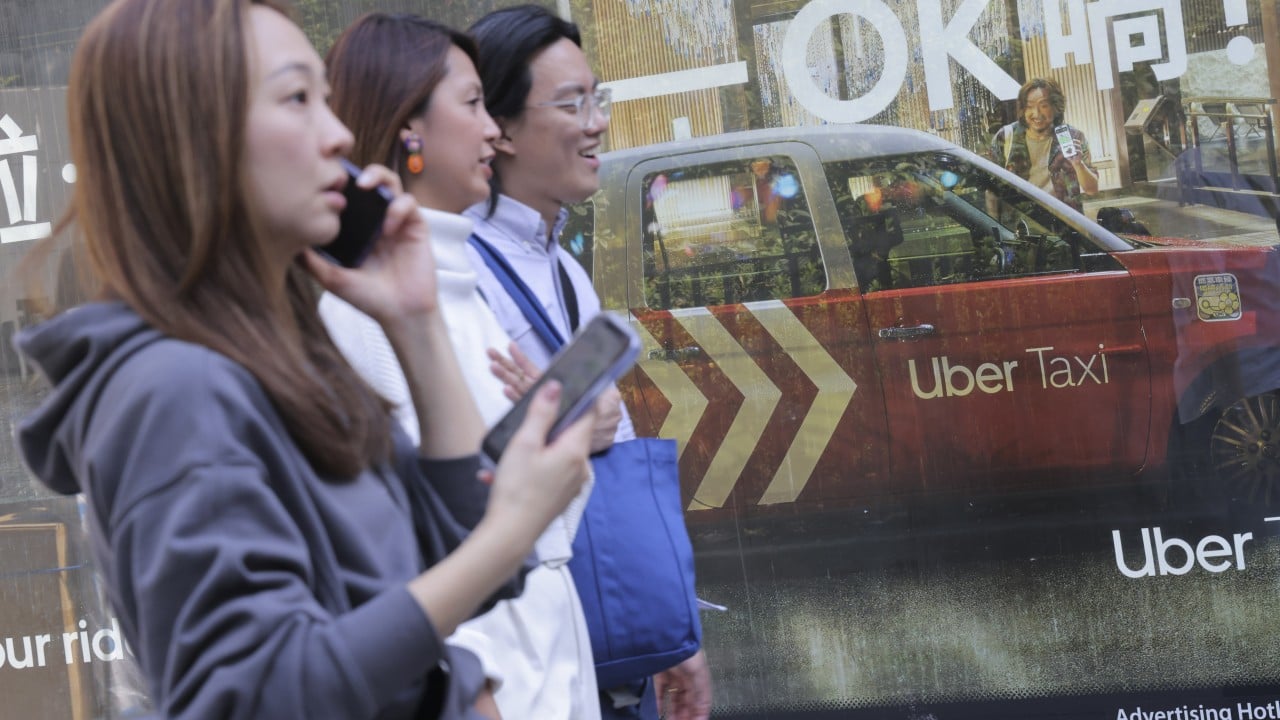
Consider what happens next: a traveler lands at Chek Lap Kok, exhausted from a fourteen-hour flight. They open an app. A car materializes in minutes. To them, this is convenience. To Uncle Chan, who has spent an hour circling a congested stand outside a Kowloon housing estate waiting for a fare, it is an existential threat.
The public stands in the middle of this crossfire. We are the passengers gripping the handle when a driver takes a corner too fast. We are the voters reading about transport strikes in the morning papers. We are the arbiters of a silent referendum conducted one smartphone tap at a time.
And yet, for the longest time, the loudest voices in this room were the lobbyists, the unions, and the conglomerates. The commuter was treated as a passive consumer, a mindless wallet moving from Point A to Point B.
That assumption is crumbling.
To understand why the public voice is suddenly impossible to ignore, you have to look at the anatomy of transit friction in a city of seven million souls packed into a thousand square kilometers. Space is our most precious, violent luxury. Every square inch of pavement is contested territory. When a ride-hailing vehicle stops in a busy Mong Kok lane to drop off a passenger, it triggers a micro-shockwave through the entire district. A minibus hesitates. A delivery van honks. A pedestrian dodges.
(Note: The following micro-scenario illustrates the daily ripple effect of urban congestion patterns studied by transport analysts.)
Picture a single mother rushing her feverish toddler to Queen Mary Hospital. The traditional taxi queue stretches around the block, a stagnant line of frustration. She bypasses it, tapping frantically on a screen. A private car arrives. She slides into the back seat, breathing a sigh that empties her lungs entirely. That transaction—silent, efficient, desperate—bypasses decades of bureaucratic deadlock.
The public voted with its feet. And more importantly, with its wallets.
Governments hate a vacuum. When a service gap opens up, something has to fill it. For years, the grey area between legal taxi medallions and app-based ride-sharing felt like walking across a frozen harbor in March. You heard the ice cracking beneath your boots, but you kept moving because you had to get to the other side.
The traditional taxi industry, once the undisputed monarch of the tarmac, found itself caught in a time warp. Decades of protected monopolies had bred complacency. Clean cars became the exception. Card readers were treated like alien technology. A bad attitude was thrown in for free.
Change arrived not with a gentle knock, but with the subtlety of a typhoon signal number ten.
When digital platforms introduced rating systems, accountability changed hands. Suddenly, a driver could not simply shrug off rudeness or reckless driving. One star-rating drop could starve their daily income. Accountability shifted from an opaque government transport department to the collective consciousness of millions of daily riders.
Yet, demonizing the traditional trade is as foolish as romanticizing Silicon Valley disruption. Uncle Chan is not a villain. He is a survivor of Asia's economic weather systems, paying exorbitant rental fees for a license plate that once represented middle-class security, only to watch its value plummet like a deflated balloon.
We forget the human cost of structural economic shifts. We look at charts showing rising app adoption rates and descending taxi trip counts, and we forget that every data point represents a human family sitting around a dinner table worrying about next month's rent.
The breakthrough in Hong Kong’s endless transit war is not a sudden epiphany of political harmony. It is exhaustion. Everyone is tired of fighting.
Legislators are realizing that protectionism without modernization is just a slow form of cultural taxidermy. You can preserve the shell of an old system, but the life inside it will wither. Simultaneously, ride-hailing giants are learning that you cannot simply disrupt a city without respecting its unique regulatory and social ecosystem. Hong Kong is not San Francisco. It is not London. It is a dense, high-speed ecosystem where safety, order, and density dictate every single rule of engagement.
The voice that ultimately broke the deadlock belongs to the everyday commuter who simply demanded a system that works. Not a system that protects monopolies. Not a system that breaks laws with impunity. A system that works.
Clean cars. Fair pricing. Transparent safety standards. Professional drivers—whether they operate under a traditional medallion or a digital app—who treat passengers with dignity.
Walking down Nathan Road now, the neon signs pulse through the drizzle, casting long reflections on the wet pavement. A fleet of modern electric cabs inches past a line of older cruisers. The drivers look at each other through rain-streaked windows, no longer with the raw hatred of a few years ago, but with a wary, pragmatic recognition.
The monopoly is broken. The wild west phase of unregulated apps is closing. What remains is a messy, painful, necessary negotiation between past and future.
The public got what it wanted, but the victory came with a quiet realization. We are no longer just passengers watching the road ahead. We are holding the wheel.
The asphalt is wet, the traffic is heavy, and the city moves forward whether we are ready or not.