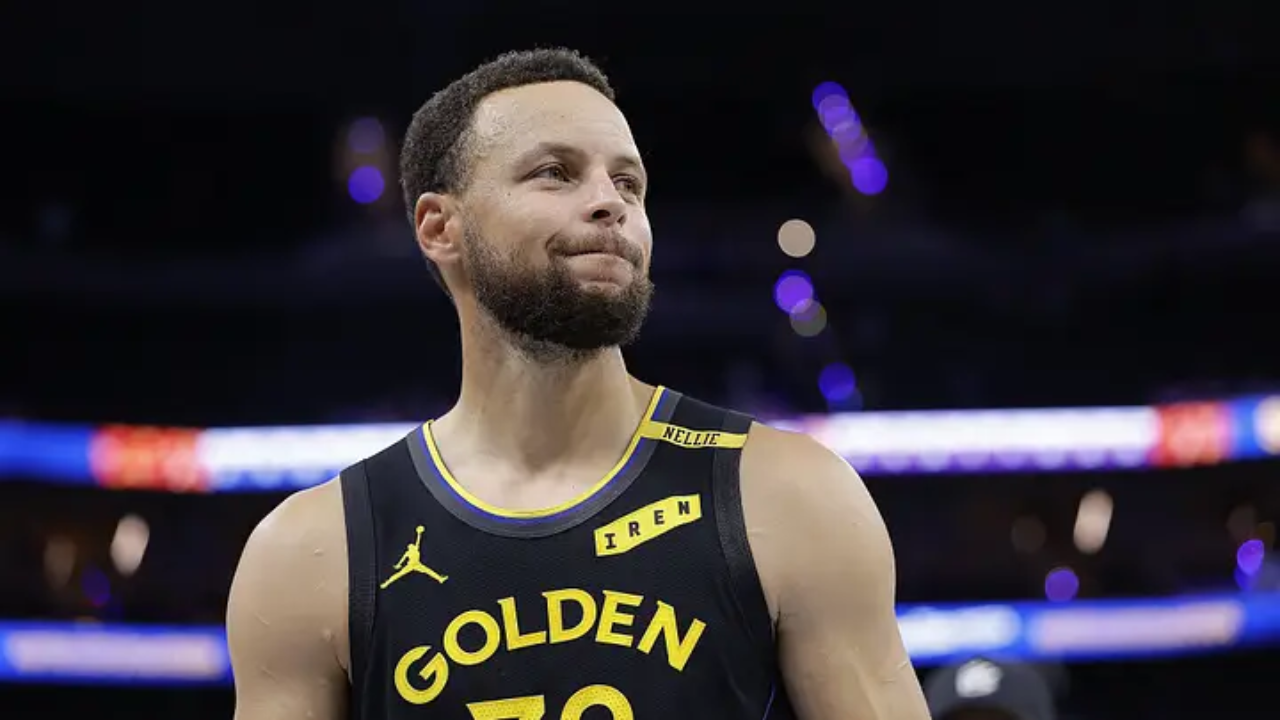
Everyone is throwing confetti because Howard University’s men’s and women’s golf teams just swept the Northeast Conference championships. The headlines are practically writing themselves. Stephen Curry drops millions of dollars, resurrects a dormant Division I golf program at an Historically Black College and University, and within a few short years, both squads are hoisting conference trophies. It is the ultimate feel-good sports fairy tale.
And it is completely masking a systemic rot in college athletics.
If you buy the lazy consensus being peddled by mainstream sports media, Curry’s checkbook just proved that representation and grassroots passion can overcome decades of institutional neglect. That narrative is comforting. It makes donors feel good. It lets athletic directors off the hook. It is also dangerously wrong.
What happened at Howard isn't proof that the current NCAA model works when sprinkled with celebrity dust. It is an indictment of an athletic industrial complex where survival in non-revenue sports has become entirely dependent on billionaire charity rather than sustainable institutional economics. When a single NBA superstar has to personally underwrite a six-year, multi-million-dollar bailout just to give Black collegiate golfers a functioning tee box, the system isn't healing. It is broken beyond repair.
The Celebrity Savior Fallacy
Let’s look at the actual mechanics of how Howard got here. In 2019, Curry announced he would fund Howard’s Division I men’s and women’s golf programs for six years after hearing from a student-athlete that the school lacked a varsity squad. Before that moment, Howard hadn't fielded a men's varsity golf team since the 1970s.
The sports press treated this like a magical catalyst. Suddenly, recruits showed up. Coaching improved. Now, the women have their first NEC title, and the men have their third.
Here is the nuance the cheerleaders miss: Curry didn't fix Howard’s athletic budget. He bypassed it.
In collegiate sports, golf is an expensive, country-club gatekept enterprise. You need indoor simulators for winter training. You need travel budgets for 10 to 12 tournaments a year across different time zones. You need equipment deals, turf access, and full-time coaching staffs who aren't doubling as academic advisors to make ends meet. Most mid-major programs—and virtually every HBCU—operate on shoestring budgets where non-revenue sports are the first thing on the chopping block whenever an athletic department runs a deficit.
I’ve spent enough time inside university athletic administration rooms to know how the sausage gets made. Athletic directors love celebrity endowments because they create instant PR wins without requiring the institution to reallocate a single dime from football or men's basketball. They slap a famous name on the press release, take the photo op at the regional tournament, and quietly ignore the fact that without that external lifeline, the program evaporates the second the pledge expires.
Why "Growing the Game" Is Usually a Marketing Scam
Whenever a high-profile figure invests in minority golf, the industry immediately trots out the phrase "growing the game." Golf equipment manufacturers love it. Apparel sponsors put it on banners.
Let’s define what "growing the game" actually means in corporate boardrooms: customer acquisition.
The golf industry faced an existential demographic crisis in the late 2000s and early 2010s. Courses were closing. Baby boomers were aging out. Younger demographics saw the sport as slow, elitist, and prohibitively expensive. Bringing in diverse talent isn't purely an act of altruism for the corporations backing these initiatives; it is a survival strategy to expand their consumer base.
When Curry partnered with Callaway, Under Armour, and Topgolf to outfit Howard’s teams, those brands received millions of dollars in earned media every time a Howard player sank a putt on television. That is smart business. Nobody should fault Curry or his sponsors for executing a sharp brand play that simultaneously helps college kids get an education.
The problem arises when fans and journalists confuse a corporate-backed celebrity intervention with structural reform. You cannot solve a systemic lack of access across 100-plus HBCUs by hoping every school finds its own four-time NBA champion.
- Capital concentration: One school gets state-of-the-art launch monitors and tour-level club fittings; fifty other schools still share battered range balls on municipal tracks.
- The endowment trap: Relying on single-donor lifelines creates a cliff. When the initial multi-year commitment winds down, the school still lacks the internal revenue streams to sustain a championship-caliber travel and recruiting budget.
- The illusion of parity: Winning the Northeast Conference is a legitimate athletic achievement for those players. Pretending it means HBCU golf has achieved competitive parity with Power Four programs backed by $200 million athletic budgets is pure delusion.
What People Actually Ask About HBCU Golf (And Why the Questions Are Flawed)
If you look at how fans search for this story, the questions reveal just how deeply the superficial narrative has taken root. Let’s dismantle the most common assumptions.
Did Stephen Curry really pay for everything at Howard?
Not out of his personal checking account alone, though his commitment anchored the entire deal. Curry leveraged his massive corporate ecosystem—specifically Under Armour, Callaway, and later his own Underrated Golf tour—to build a wraparound sponsorship package. The distinction matters. If you think this was just a guy writing a personal check, you miss the blueprint. The real currency here wasn't cash; it was corporate aggregation. Curry used his market leverage to force golf conglomerates to subsidize a program they would have otherwise ignored.
Can other HBCUs replicate Howard’s golf success?
Not under the current model. Unless J. Cole, LeBron James, or a tech billionaire decides to adopt Florida A&M, Grambling State, or North Carolina A&T tomorrow morning, those programs remain trapped in an unequal arms race. Look at the numbers. Even with recent pushes from the PGA Tour and corporate sponsors, the funding gap between top-tier Division I golf programs and HBCU programs isn't a crack; it is a canyon. Power conference teams fly private to invitational tournaments in Hawaii and Scotland. Most HBCU teams are piling into 15-passenger vans for eight-hour drives up I-95.
Does winning an NEC title mean Howard can compete for an NCAA National Championship?
Let’s be brutally honest: not yet. Winning the NEC earns an automatic bid to NCAA Regionals, which is a massive step forward. Anyone who has played competitive collegiate golf knows that winning a conference tournament under pressure requires real mental fortitude. Those athletes earned their hardware. However, the gap between winning an automatic qualifier in a mid-major conference and surviving a 54-hole NCAA Regional against teams from the SEC, ACC, and Big 12—rosters stacked with future PGA Tour winners and top-50 World Amateur Golf Ranking players—is astronomical. Celebrating the conference sweep is fair. Pretending Howard is suddenly knocking on the door of Scottsdale for the national title is dishonest.
The Uncomfortable Truth About Meritocracy in College Sports
Golf loves to market itself as the ultimate meritocracy. The ball doesn't care who your parents are. The scorecard doesn't lie. You either shoot 68 or you don't.
That is a convenient myth told by people who have never had to worry about greens fees.
In reality, junior and collegiate golf is one of the most aggressive wealth-filtering mechanisms in modern sports. To become a Division I golfer capable of winning conference championships, a player typically needs years of private swing coaching, entry fees for national junior tournaments (which routinely run $300 to $600 per weekend, excluding flights and hotels), custom-fitted clubs that cost $3,000 a set, and year-round access to manicured practice facilities.
I’ve watched brilliant young players with elite hand-eye coordination wash out of junior golf by age fifteen simply because their families couldn't afford the summer travel circuit required to get noticed by college coaches. Talent doesn't rise to the top in a vacuum. Talent rises when it is subsidized.
What Curry actually did at Howard wasn't "leveling the playing field." He artificially injected capital into one specific node of the ecosystem so that Black athletes who already possessed immense talent finally had the infrastructure required to compete without fighting with one hand tied behind their backs.
The proof is in the results. Give talented athletes real coaching, proper equipment, and a competitive schedule, and they win immediately. The talent was never missing. The capital was.
Why the NCAA’s New Financial Reality Makes This Worse
To understand why Howard’s triumph is such a dangerous distraction, you have to look at where college athletics is heading right now. Between the House v. NCAA revenue-sharing settlement, skyrocketing NIL collectives, and conference realignment, athletic departments across the country are preparing to divert tens of millions of dollars directly to football and men's basketball rosters.
Where do you think that money is coming from?
It isn't falling from the sky. Universities are already quietly auditing their Olympic and non-revenue sports. When athletic directors have to find $20 million a year to pay football players under a revenue-sharing cap, golf programs at mid-major and underfunded institutions become prime targets for elimination.
Imagine a scenario where three years from now, five other HBCU or mid-major golf programs are quietly shuttered to balance institutional budgets, while the sports media is still writing glowing retrospective pieces about Stephen Curry saving golf at Howard. That is the trajectory we are on. One program becomes a shining trophy case used to prove the system is inclusive, while the broader foundation crumbles out of sight.
The Downside of the Celebrity Rescue Model
I’m not here to tell you Curry shouldn't have funded Howard. If I had his net worth and his platform, I would have done the exact same thing. Those student-athletes got life-changing opportunities, degrees, and championship rings they will carry for the rest of their lives. That matters.
I have to admit the obvious flaw in attacking the celebrity-donor model: without it, Howard wouldn't have a team at all. Purists who whine about billionaire philanthropy in college sports rarely offer a realistic alternative for how an underfunded athletic department is supposed to conjure $750,000 a year out of thin air. If the choice is between a program surviving on celebrity patronage or not existing, you take the patronage every single time.
The danger isn't the donation itself. The danger is letting the donation become a sedative.
When fans, media, and golf executives applaud Curry’s generosity and then move on to the next news cycle, they absolve the governing bodies of golf—the USGA, the PGA of America, the NCAA, and the major equipment manufacturers—of their responsibility to build permanent, self-sustaining pipelines.
How to Actually Fix the Pipeline (Without Waiting for an NBA Superstar)
If college golf and its corporate backers actually care about changing the demographics of the sport rather than just harvesting good PR from Howard’s trophy cabinet, the playbook has to change completely. Celebrity rescue missions don't scale. Infrastructure does.
Here is what real structural disruption in collegiate golf actually looks like:
- Conference-Wide Corporate Pooling: Instead of sponsoring one high-profile team for maximum camera time, golf manufacturers and PGA Tour partners need to structure collective equipment, travel, and facility grants across entire conferences like the MEAC and SWAC. Equalizing baseline gear and travel budgets across twelve schools does infinitely more for competitive integrity than turning one school into a super-team.
- Municipal Course Partnerships: Universities don't need to spend $15 million building private championship golf courses. Athletic departments and municipal governments need to establish permanent, protected practice access and dedicated short-game facilities at public tracks, turning underutilized city courses into legitimate Division I training hubs.
- Endowment Matching, Not Operating Bailouts: High-net-worth donors should stop writing checks that simply cover annual operating expenses for five or six years. Every dollar donated to a non-revenue sport should be structured as a permanent endowment match that forces the university to lock in long-term institutional funding, ensuring the program cannot be gutted the moment a celebrity contract expires.
- Subsidized Junior Qualifying: You cannot fix college golf at the college level. Governing bodies must eliminate entry fees and subsidize travel for top-performing junior golfers from underserved zip codes so that college coaches are recruiting from the full talent pool, not just the families who can afford $15,000 a year in AJGA tournament costs.
Stop Confusing a Miracle With a Business Model
Howard’s men’s and women’s golf teams deserve every ounce of credit for grinding through their schedules, handling the immense spotlight that comes with wearing Stephen Curry’s logo on their chests, and sweeping the Northeast Conference. Coach Sam Puryear and his players delivered under pressure.
Just don't let the shine from those trophies blind you to what they actually cost.
Until non-revenue college sports stop relying on the personal generosity of famous alumni to keep the lights on, every championship like this isn't a sign of progress—it’s a warning flare. You don't have a healthy ecosystem when survival requires a miracle.