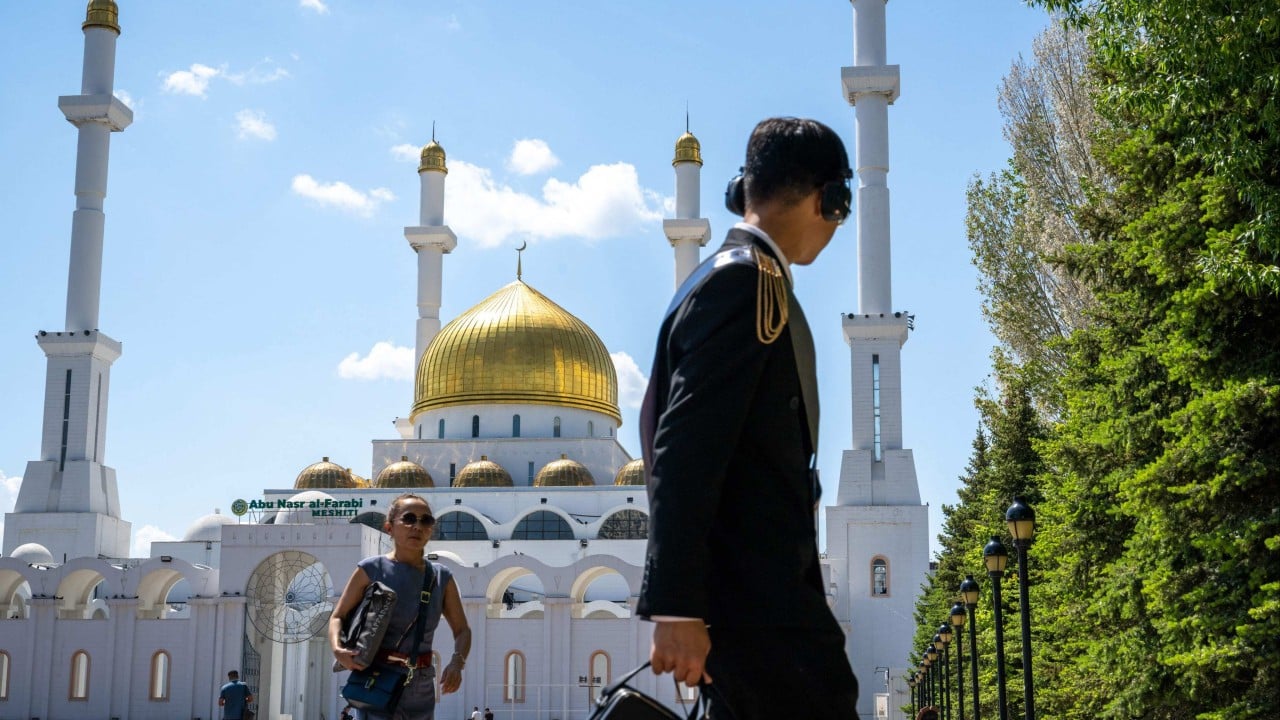
The wind does not ask for permission to cross the steppe. It rolls unchecked from the foothills of the Altai mountains all the way to the Caspian basin, carrying the scent of dry earth and ancient dust. Stand out there, far from the gleaming glass and steel towers of Astana, and you feel entirely untethered. The horizon is a clean, unbroken circle.
For centuries, this vast expanse was a barrier. It separated empires, swallowed armies, and isolated communities in a silence so deep it felt permanent. But ground transportation lines and diplomatic cables are rewriting the map.
Consider a shipment of copper or microchips moving from East to West. Decades ago, that journey was a logistical nightmare of bureaucratic red tape and disjointed rail gauges. Today, it moves across Central Asia through Kazakhstan along the Trans-Caspian International Transport Route—the Middle Corridor. It avoids traditional choke points. It represents a desperate, calculated diversification of global commerce.
Yet, looking at a map and walking the ground are two entirely different experiences.
I stood in a bustling logistics hub outside Almaty last autumn, watching shipping containers stacked like multi-colored Lego blocks against a backdrop of snow-dusted peaks. A crane operator named Daniyar, his face lined by decades of relentless sun and freezing winters, gestured toward a freight train idling on the tracks.
"Everyone talks about speed," he told me, wiping grease from his calloused hands. "They want to cut days off the transit time from China to Europe. But steel wheels still need maintenance. Borders still have customs officers with clipboards. A line on a PowerPoint slide is smooth. Real earth has bumps."
Daniyar’s observation cuts to the heart of Central Asia’s current geopolitical renaissance. Kazakhstan, the ninth-largest country in the world by land area, finds itself thrust into an uncomfortable spotlight. Wedged between bruising superpowers, it is attempting a diplomatic high-wire act that requires extraordinary precision.
To the north lies Russia, a historic partner and economic anchor, currently isolated by sweeping international sanctions. To the east lies China, hungry for energy and pouring billions into infrastructure through the Belt and Road Initiative. To the west and south lie Europe and the United States, eager for critical minerals, alternative trade routes, and a counterweight to authoritarian influence.
It is a pressure cooker disguised as open space.
Walk through the streets of Astana, and this tension is architectural. The city is a monument to futurism, filled with Norman Foster-designed domes, sweeping glass corridors, and futuristic towers that rise abruptly from the flat plains like sculptures dropped by giants. It feels wealthy, ambitious, and intensely modern.
Yet, step inside a neighborhood teahouse just blocks away, and the atmosphere shifts. Elders sit over small bowls of hot green tea, speaking in low, measured tones. They remember the Soviet collapse. They remember the sudden, terrifying economic freefall of the nineteen-nineties, when livelihoods vanished overnight. They view the current flurry of foreign diplomats—Western envoys in sharp suits, Chinese trade delegations, Russian officials—with a mixture of pragmatic welcome and deep-seated caution.
They know what it means to be caught in the undertow of history.
This caution shapes Kazakhstan's multi-vector foreign policy. It is not hesitation; it is survival. When you share thousands of miles of border with giants, you do not pick a side. You build bridges. You make yourself indispensable to everyone while belonging entirely to no one.
The economic stakes are staggering. Kazakhstan is not just a transit corridor; it is a treasure chest of resources. Uranium for nuclear reactors. Rare earth elements essential for electric vehicle batteries. Oil and gas that power neighboring economies.
For the West, these resources are a lifeline for supply chain independence. For Kazakhstan, they are a once-in-a-generation opportunity to modernize, educate its young population, and escape the resource curse that plagues so many nations blessed with subterranean wealth.
universidades in Almaty and Astana are packed with sharp, multilingual students who speak fluent English, Mandarin, and Russian. They code software, study international law, and dream of founding tech startups. They are fiercely proud of their Kazakh heritage, mixing traditional instruments like the dombra with modern electronic music. They represent a new generation that looks neither solely east nor west, but forward.
And yet, the limits of this transformation are stark.
Infrastructure projects billions of dollars on paper often hit the wall of local corruption, inefficient bureaucracies, and geographic realities. The Caspian Sea, a crucial bottleneck in the Middle Corridor, lacks the port capacity and modern vessel fleet to handle the sudden surge of cargo diverted from northern routes. Weather conditions can paralyze transit for days.
Furthermore, human rights and political reforms move at a glacial pace compared to economic ambition. While the government has introduced significant democratic reforms following the tragic unrest of January 2022, deep systemic challenges remain. Civil society activists and independent journalists operate under severe constraints. The promise of an open society often clashes with the entrenched habits of state control.
Diplomacy, too, is a delicate choreography. Every trade agreement signed with the European Union is carefully balanced by consultations in Moscow and Beijing. It is a dance on a tightrope, performed without a safety net.
As evening falls over the steppe, the temperature plunges with startling speed. The vast sky turns a bruised purple, then deep indigo, dotted with stars that seem sharper and closer than they do in crowded Western capitals.
Out on the horizon, the lights of a freight train cut through the darkness, a single glowing thread pulling metal across the ancient earth. It carries goods, yes. But it also carries the hopes of a nation striving to write its own destiny on a canvas too long commanded by others.
The promise is immense. The limits are real. And the wind keeps blowing across the grass, indifferent to the lines we draw upon the map.


