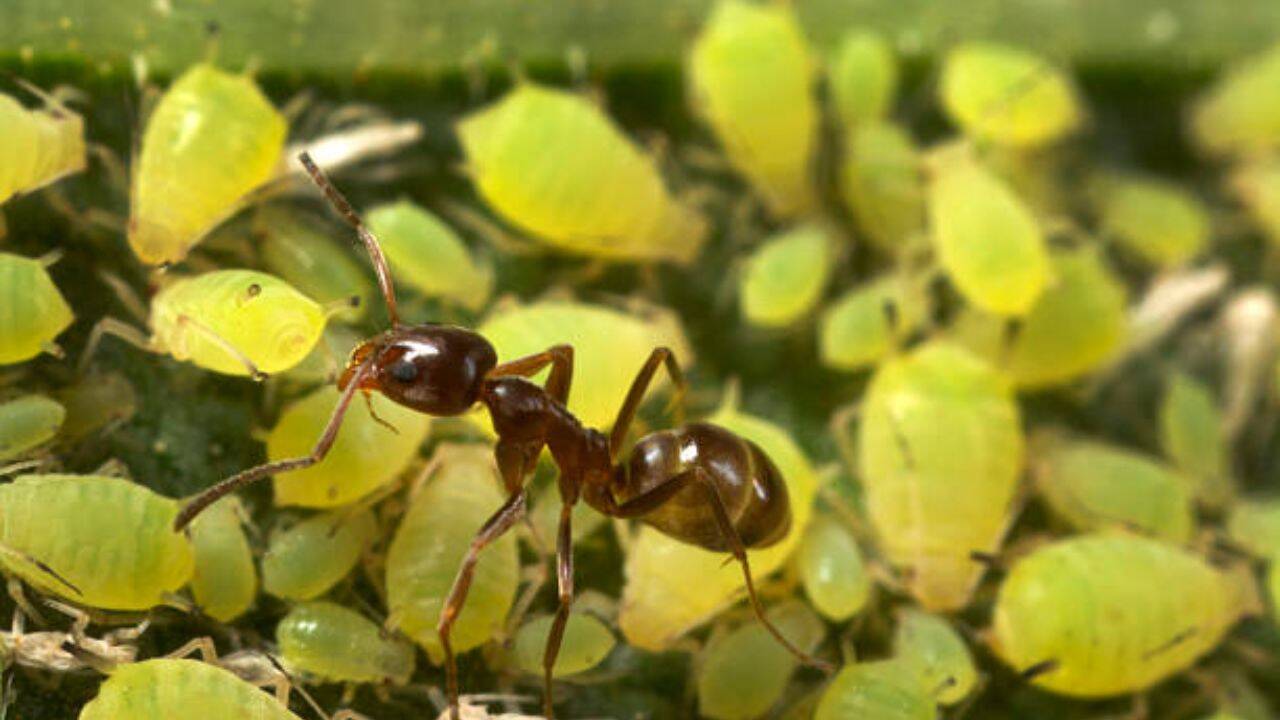
Every autumn, the agricultural press panics. Pundits roll out the same tired narrative about Argentine ants in California orchards, framing these tiny invaders as mob enforcers protecting aphids and scale insects while starving out native species. Growers nod along, reach for another drum of broad-spectrum pesticide, and watch their profit margins evaporate.
It is a comforting story. It gives you a visible villain. It also happens to be completely wrong.
I have spent decades walking dusty rows from the San Joaquin Valley to the coastal citrus belts. I have seen multibillion-dollar operations blow fortunes trying to sterilize their soil, treating Argentine ants like an existential plague. They spend millions to achieve temporary eradication, only to watch secondary pests explode into a full-scale apocalypse three weeks later.
The lazy consensus is that Argentine ants are the root cause of orchard decline. The reality is much worse for traditional management: Argentine ants are just the cleanup crew. They are the symptoms of an over-fertilized, microbially bankrupt ecosystem that we engineered ourselves.
The Flawed Logic of Ant Eradication
Let us look at the standard narrative. The dominant argument claims that Linepithema humile forms massive supercolonies, drives out native ants, farms honeydew-producing insects like mealybugs, and aggressively defends those cash-crop destroyers from natural predators like parasitic wasps and ladybird beetles.
On paper, this sounds airtight. In the field, it ignores basic ecological mechanics.
Imagine a scenario where you walk into a hospital waiting room, notice that everyone is coughing, and decide to cure the epidemic by confiscating everyone's handkerchiefs. That is what orchard managers do when they target ants.
Argentine ants do not create honeydew pests; they exploit a sugar surplus that we spray onto the trees via poor fertilization and irrigation practices. Modern high-input farming flushes crops with excess nitrogen, turning plant sap into a high-octane sugar flood. The tree is literally leaking waste carbohydrates through the backs of sap-sucking insects.
The ants show up because the table is set. Blaming the ants for the feast is like blaming vultures for a roadkill problem.
When you spray persistent insecticides to wipe out the ant colonies, you systematically obliterate the actual biological control agents—lacewings, spiders, predatory mites, and parasitic wasps—that lack the subterranean refuge of a massive ant supercolony. Once the ants are gone, the sap-sucking pests reproduce unchecked without any predatory friction. Within a month, the orchard is in worse shape than it was before you opened your wallet for the pest control vendor.
What the Research Actually Tells Us
Entomologists love to point to the mutualism between ants and honeydew producers as a pristine example of biological engineering. They talk about sugar exchanges and aggressive defense behaviors. But they miss the macro-level physics of soil health.
Research from Kearney Agricultural Research and Extension Center shows that Argentine ant populations fluctuate directly in response to soil moisture and canopy humidity, not just honeydew availability. They are hyper-efficient scavengers that thrive in disturbed, monoculture environments where native biodiversity has already been paved over.
Native ants require complex, undisturbed perennial understories, specific mycorrhizal fungi networks, and diverse food webs. California agriculture replaced those complex webs with endless rows of uniform almonds, citrus, and grapes, irrigated by drip systems that create localized wet-dry microclimates.
We built a five-star resort for Linepithema humile, and then acted surprised when they checked in.
To fix this, we have to abandon the eradication mindset. Eradication is a fool's errand. These colonies stretch for hundreds of miles underground, sharing genetic material across regional boundaries. You cannot spray your way out of a macro-ecological baseline shift.
The Uncomfortable Truth About Orchard Economics
I know what the chemical salesmen say. They tell you that clean trunks mean high yields. They sell you sticky bands, chemical baits, and trunk sprays that require monthly maintenance applications. It is a brilliant business model for them, and a financial treadmill for you.
Let us be honest about the downsides of the contrarian approach I am advocating: doing less feels terrifying.
When you stop aggressively spraying for ants and trying to sterilize the orchard floor, things get messy. Cover crops grow. Dust settles. Native predators take time to re-establish. For the first two seasons, your packhouse metrics might look slightly erratic as the biological pendulum swings back to center.
If you lack the stomach for short-term ecological volatility, keep writing checks to chemical distributors. Enjoy your endless loop of secondary pest flare-ups and resistance management crises.
For the rest of you, the path forward requires an operational pivot.
Stop treating the orchard floor like a sterile laboratory. If you want to drop ant populations permanently without bankrupting your enterprise, you have to starve them out and out-compete them.
First, dial back your nitrogen inputs. Over-fertilization is the primary driver of the honeydew explosion that keeps ant colonies fat and happy. Match your fertigation schedules strictly to plant uptake curves rather than mass-production guesswork.
Second, introduce a diverse, perennial understory. Diverse cover crops disrupt the uniform foraging trails of Argentine ants while providing alternative habitats for predatory ground beetles and spiders that actively hunt ant queens and workers.
Third, manage your irrigation. Overhead or poorly managed drip lines create surface moisture pockets that allow Argentine ants to nest right at the root crown. Shift toward deep, infrequent sub-surface irrigation that forces tree roots down and dries out the topsoil layers where these invaders build their shallow surface brood chambers.
Stop waging war on an insect that is merely exploiting your design flaws. Nature always bats last, and she keeps score in red ink.