Mainstream travel journalism loves a lazy disaster narrative. The moment an unexpected air traffic control walkout hits the wires, the headlines write themselves. "Travel Chaos." "Thousands Stranded." "Aviation Grounded."
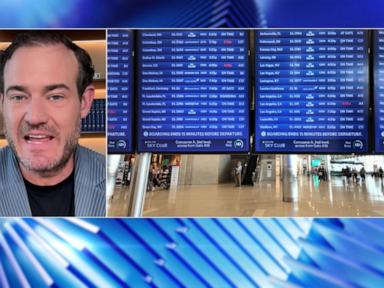
We see it happening right now as Skeyes controllers trigger a seven-hour wildcat strike, freezing arrivals, departures, and overflights across Brussels Airport and Charleroi. The immediate reaction from the legacy press is a collective groan, followed by the usual hand-wringing over ruined vacations and airline operational deficits.
They are asking the entirely wrong question. They want to know how to fix a fractured labor dispute or how passengers can claim an EU261 refund.
The real question we should be asking is much more uncomfortable: Why is our continental transit network so fragile that a seven-hour pause in a single mid-sized European country triggers a systemic stroke across the entire hemisphere?
The truth is, this seven-hour total shutdown is not a tragedy. It is an indictment of a broken, bloated aviation model that we rely on far too heavily. If your business or life is entirely derailed because a few dozen controllers in Brussels walked away from their radar screens for an afternoon, you are operating on a razor-thin margin of structural error.
The Myth of the "Unexpected" Transit Collapse
I have spent nearly two decades analyzing logistics and corporate mobility networks. I have watched boards of directors panic over supply chain hiccups while completely ignoring the ticking time bomb in their corporate travel budgets.
Let us dismantle the first piece of lazy consensus: this strike was not an anomaly. To call a European aviation disruption "unexpected" in the current climate is a symptom of collective amnesia. Between the introduction of the cumbersome European Entry/Exit System (EES) causing three-hour queues at border points and a continuous wave of industrial action sweeping through Germany, Spain, and Portugal, the system is permanently on the brink.
Aviation operates on a fiction of absolute efficiency. It relies on the hub-and-spoke model, squeezing every possible minute out of turnarounds. Budget carriers like Ryanair and Vueling structure their schedules with virtually zero buffer time.
When Belgium closes its airspace, the domino effect is instant. A flight from Edinburgh to Bratislava gets rerouted because it cannot cross Belgian sectors. A jet scheduled to fly from Charleroi to Madrid is stuck on the tarmac, which means the evening rotation out of Madrid is scrubbed too.
Airlines blame the unions. Unions blame the state infrastructure. But the structural flaw belongs to the model itself. We have optimized for the lowest possible cost at the expense of any meaningful resilience.
The Hidden Cost of Infinite Growth
Aviation insiders will never admit this publicly, but Europe’s skies are full. The Eurocontrol network is managing traffic volumes that outpace human and infrastructural capacity. The legacy press covers these seven-hour shutdowns as financial black holes for the airlines. They cry over lost revenue and passenger inconvenience.
They ignore the massive externalized costs. The constant pressure to keep ticket prices artificially low forces air traffic control providers to stretch resources to the absolute limit. Skeyes controllers are not striking in a vacuum; they are striking because the gap between human capacity and flight volume has become unmanageable.
Consider a simple thought experiment: Imagine a shipping company that runs its delivery trucks 24 hours a day with zero time allocated for fleet maintenance or driver rest, relying entirely on clear weather and perfect traffic conditions to break even. The first flat tire bankrupts the quarter. That is commercial aviation.
Instead of viewing the Belgian shutdown as a catastrophic failure, forward-thinking business leaders should view it as a forced stress test. It is a stark reminder that our hyper-mobility is an illusion built on fragile infrastructure.
The High-Speed Rail Pivot You Are Afraid to Make
Here is the counter-intuitive reality that corporate travel departments refuse to acknowledge: Most short-haul flights across Western Europe should not exist.
When Brussels and Charleroi shut down, the immediate panic is centered on how to rebook passengers onto flights the next morning. Why? London is under two hours away from Brussels via the Eurostar. Paris is an eighty-minute trip on the TGV. Frankfurt, Amsterdam, and Cologne are all connected by high-speed rail corridors that require zero airport security lines, zero baggage drops, and zero reliance on over-stretched air traffic control sectors.
Yet, corporate policy routinely forces employees onto budget flights because the face-value ticket costs fifty euros less than a train fare.
They completely ignore the real accounting:
- The lost billable hours spent sitting in a terminal waiting for an airspace restriction to lift.
- The hotel vouchers and ground transit costs when a crew times out.
- The reputational damage of missing a multi-million-euro pitch because a wildcat strike locked down a regional hub.
If a seven-hour disruption completely breaks your corporate travel plan, your travel plan was defective from inception. True operational resilience means building a multi-modal strategy where rail is the default for anything under 500 kilometers.
Grounding the Delusion
The downside to abandoning the "fly-by-default" mentality is clear: it requires active management and higher upfront costs. Booking high-speed rail can look expensive on a spreadsheet when compared to a bare-bones ticket from a low-cost carrier. It requires giving up the convenience of booking a single connection through a legacy carrier's hub.
But cheap aviation is an extraction scheme. It extracts peace of mind from travelers, fair working conditions from staff, and stability from the transit network.
Stop checking the departure boards hoping for a miracle resurrection of the afternoon schedule out of Brussels. The planes are not moving. Take your team out of the airport queue, head to the nearest rail terminal, and adapt. The skies are not getting any less crowded, and this seven-hour freeze is merely a preview of the structural gridlock to come.