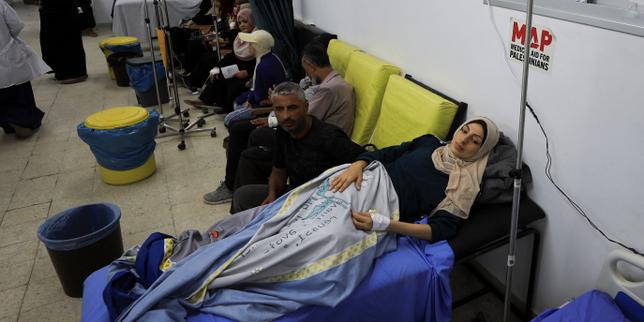
The headlines want you to weep over a catheter. They want you to read about clinicians washing single-use plastic tubes twenty times over, staring down rusted trays, and picturing a dystopian operating room straight out of a disaster movie.
It is an easy story to swallow. It requires zero critical thought. It plays directly into the lazy consensus of modern humanitarian reporting: material scarcity equals human suffering, ergo, ship more boxes of sterile PVC and the problem vanishes.
I have walked through field triage units where supplies were measured in grains of sand, and I am here to tell you that the obsession with equipment shortages is a dangerous smokescreen. Fixating on the physical inventory misses the structural failure entirely. When a medical system breaks down under pressure, the shortage of gear is rarely the root disease. It is always the symptom of a profound, systemic refusal to triage reality itself.
The Myth of Absolute Scarcity
Let us dispense with the fairy tale that medical logistics are governed solely by the physical presence of a box on a shelf. In any high-stress operational theater, scarcity is an administrative allocation problem masquerading as a supply chain crisis.
When international aid agencies and local administrators scream about a lack of disposable medical devices, they are hiding behind a comforting fiction. They want you to believe that if a cargo truck crosses a border, the crisis evaporates. But look closer at how supplies move, how they are stockpiled, and how institutional gatekeepers hoard resources out of bureaucratic paranoia.
I have watched organizations sit on warehouses full of advanced surgical kits while clinicians on the ground improvised with kitchen twine, simply because the bureaucratic sign-offs required to distribute those assets were trapped in a loop of institutional inertia. Reusing a catheter thirty times is not merely an indictment of a blockade; it is an indictment of a procurement structure that cannot adapt, decentralize, or trust its own operators on the front lines.
When you treat a logistics failure as an immutable act of God, you excuse every administrator who refused to decentralize inventory, every logistician who prioritized paperwork over patients, and every oversight body that valued liability mitigation over human survival.
The Protocol Trap
Medicine under extreme constraint demands a ruthless departure from textbook protocols. This is where conventional medical ethics completely implode, and where standard-issue humanitarian narratives fail us.
When resources drop to near zero, applying standard-of-care guidelines written in Geneva or London is not ethical. It is malpractice.
If you attempt to maintain single-use sterility standards in an environment where sterilization infrastructure has collapsed, you are not protecting the patient. You are introducing a catastrophic bottleneck that kills ten people outside the door while you meticulously prepare a sterile field for one. The lazy consensus assumes that we must lower standards while pretending to keep them. We cling to the rituals of sterility while the underlying reality has burned to the ground.
Contrarian truth time: Sterilization is a risk management continuum, not a binary switch.
A used catheter washed and autoclaved under field conditions carries a quantifiable risk of infection, yes. But keeping a patient in urinary retention or denying them decompression because you are waiting for a pristine, factory-sealed plastic tube carries a hundred percent risk of organ failure and death. The medical establishment's pathological fear of liability prevents clinicians from openly establishing rigorous, codified field-improvised protocols. Instead of training staff on how to safely clean and inspect reusable alternatives when forced into a corner, institutions pretend the emergency is temporary, forcing clinicians into dangerous improvisation without institutional cover.
Dismantling The Aid Industry Complex
We need to talk about the perverse incentives of the humanitarian supply machine.
For decades, international relief operations have functioned on a model of perpetual dependency. The narrative must remain simple: helpless victims, blocked borders, heroic doctors performing miracles with broken tools. If you fix the systemic inefficiencies—if you build decentralized manufacturing of basic consumables, if you empower local operators to bypass international NGO gatekeepers, if you rewrite field protocols for maximum resource longevity—you threaten the entire funding architecture of global aid.
Organizations raise hundreds of millions of dollars on the back of imagery featuring exhausted nurses holding worn-out medical gear. The broken catheter is currency. It generates press releases, donor checkbooks, and high-level diplomatic hand-wringing that ultimately changes nothing on the ground.
During a deployment audit years ago, I watched millions of dollars worth of specialized diagnostic gear sit rusting in a customs holding area while basic gauze and saline ran dry three miles away. Why? Because the high-value equipment looked better on an annual impact report for a major donor foundation. The system optimizes for optics, not outcomes.
What Actually Works When Everything Fails
If we stop crying over the broken logistics model and look at the mechanics of survival, what does effective field medicine look like?
First, we must institutionalize improvisation. Instead of pretending that standard manufacturing supply chains will magically rescue a compromised zone, operations must shift immediately to decentralized, modular reuse protocols. We need standardized training on material lifecycle extension—how to safely test, clean, and validate components that were originally engineered for single use.
Second, decision-making authority must be violently stripped away from distant administrative headquarters and handed directly to the senior medical officer standing at the bedside. If a doctor decides that a particular tube can withstand a twentieth cycle without structural compromise, their clinical judgment must override any standardized regulatory guideline designed for a Manhattan hospital.
Third, we must stop accepting the framing that healthcare in crisis zones is purely a passive victim of external blockades. While external constraints are real and brutal, internal adaptation is the only variable a medical team actually controls. When you surrender your agency to the supply chain, you have already lost the ward.
The catheter is not the crisis. The refusal to redesign our thinking around absolute constraint is the crisis. Until we stop treating medical supplies as sacred, untouchable artifacts of normal times and start treating them as volatile, malleable commodities in a permanent state of siege, patients will continue to pay the price for our institutional cowardice. Stop mourning the plastic. Fix the system that makes people worship it.