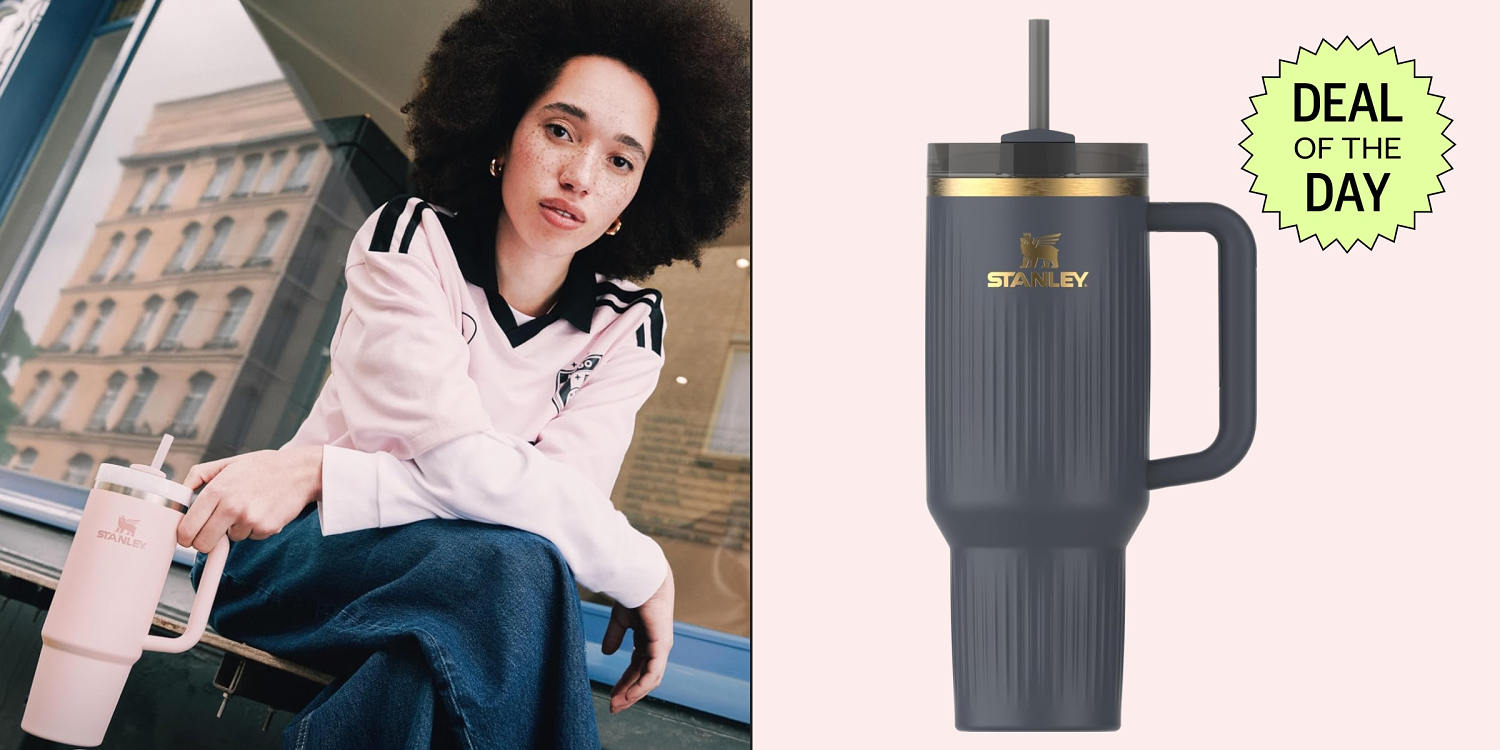
A 50% discount on a viral consumer product is never a stroke of luck. It is a clearance flare fired by a retail algorithm drowning in dead inventory.
Every major shopping blog on the internet pushes the exact same breathless script whenever a Stanley Quencher or IceFlow drops to half price. They frame a $22 price tag as an urgent wealth-building opportunity. They tell you to buy three before stock vanishes. They treat a mass-produced, injection-molded, vacuum-insulated steel cylinder like a discounted share of blue-chip stock. If you found value in this piece, you might want to read: this related article.
That consensus is lazy, financially backwards, and completely blind to how modern retail psychology works.
When a lifestyle brand built entirely on artificial scarcity and limited-edition drops slashes prices by 50%, the hype cycle has already flatlined. You are not beating the system by snagging a bargain. You are acting as a warehouse liquidation service for a corporation that miscalculated demand. For another look on this event, refer to the latest coverage from Glamour.
The Anchoring Trap of the Viral Deal Post
Affiliate commerce runs on a simple, brutal mechanism. Publishers earn a commission—typically between 1% and 8% depending on the retailer and category—every time you click an outbound link and check out. To make that click happen, the headline must manufacture urgency. "Lowest price ever" is the oldest trigger in the book.
This strategy relies on price anchoring, a cognitive bias first documented by psychologists Amos Tversky and Daniel Kahneman. When a retailer stamps a $45 MSRP onto a stainless steel cup, your brain accepts $45 as the objective baseline of value. When a deal aggregator shows you that exact same cup for $22.50, your brain registers an immediate $22.50 profit.
You did not save $22.50. You spent $22.50 on a sixth insulated vessel to sit in a kitchen cabinet that already holds five functional thermoses.
I have watched consumer brands play this exact margin game for over a decade. The landed manufacturing cost of a double-wall, 18/8 food-grade stainless steel tumbler produced at scale in overseas factories sits somewhere between $3.50 and $6.50 per unit, depending on powder-coating complexity and lid tooling. Even after ocean freight, tariffs, warehousing, and domestic fulfillment, a 50% off retail price still leaves healthy gross margin on the table for the brand—and pure profit for the affiliate publisher who convinced you that buying a discounted cup is an act of fiscal responsibility.
Why 50% Off Actually Signals Product Obsolescence
If you look closely at which specific Stanley models hit the 50% discount tier, a clear pattern emerges. It is rarely the core neutral colorways that move steadily year-round. It is almost always two specific categories:
- Over-indexed seasonal colorways: Neon shades, aggressive floral prints, or hyper-specific holiday palettes that failed to clear during their primary retail window.
- Legacy lid architectures: Older FlowState or IceFlow configurations being quietly phased out ahead of a structural redesign—such as newer leakproof locking mechanisms or integrated flip-straw updates engineered to fix the notorious spilling issues of earlier models.
Retailers operate on strict inventory turnover ratios. Shelf space and warehouse cubic footage cost money every single day a unit sits unsold. When a SKU misses its sell-through target at 30 days, automated pricing software triggers a 20% markdown. At 60 days, it hits 35%. By the time a product reaches 50% off, the retailer is actively losing money on storage fees and capital tie-up.
Buying at the bottom of the markdown curve means you are buying the exact color nobody wanted at full price, or the exact mechanical design the manufacturer is trying to retire before next quarter's launch.
The Physics of Vacuum Insulation Are Commoditized
The most persistent myth in the reusable drinkware market is that premium viral brands possess proprietary thermal magic. They do not.
The thermal performance of any insulated tumbler relies on a physical principle invented by Scottish physicist Sir James Dewar in 1892: the vacuum flask. By placing one stainless steel wall inside another and pumping the air out of the gap between them, you eliminate heat transfer via conduction and convection. Add a thin copper lining to the exterior of the inner wall, and you reflect radiant heat transfer.
That entire manufacturing process is completely standardized across dozens of contract factories in Zhejiang and Guangdong provinces. Whether you spend $45 on a trend-driven tumbler, $22.50 on a clearance sale, or $14 on an unbranded commercial-grade equivalent from a restaurant supply store, the thermodynamic physics inside the steel wall are virtually identical.
Independent lab testing across consumer publications consistently proves that ice retention variance between top-tier viral brands and mid-tier generic vacuum tumblers comes down to a single variable: the surface area and gasket seal of the plastic lid. Heat escapes through the polymer cap, not the steel body.
Paying a brand tax—even a discounted brand tax—for basic 19th-century thermodynamics makes zero engineering sense.
Dismantling the Questions Buyers Actually Ask
When shoppers search for discount drinkware, they usually ask the wrong questions because marketing copy has trained them to focus on brand prestige rather than utility.
Is a 50% off Stanley tumbler actually worth it?
Only if you currently own zero functional insulated containers and plan to use that single tumbler every day for the next five years. If you already own a working Hydro Flask, Yeti, Owala, or generic insulated bottle, the marginal utility of adding a half-price Stanley to your counter is zero. A discount on an item you do not need is a 100% financial loss.
Why are Stanley cups suddenly going on sale so often?
Market saturation. Between 2020 and 2024, Pacific Market International transformed a century-old heritage workwear brand into a fast-fashion accessory empire through limited drops and influencer seeding. Once every suburban household owned three or four 40-ounce tumblers, the addressable market hit a ceiling. You cannot sustain exponential growth on a durable product that lasts twenty years unless you convince customers to collect colors like trading cards. When consumer fatigue sets in, markdowns are the only lever left to pull.
Are the discounted versions lower quality than full-price ones?
Structurally, no. The 18/8 recycled stainless steel gauge and vacuum seal on a clearance tumbler match the full-price version. However, check the lid revision carefully. Older promotional batches frequently feature earlier-generation slider lids that leak violently the moment the cup tips sideways inside a backpack or passenger seat.
Which insulated tumbler actually keeps ice frozen the longest?
Any narrow-mouth, fully sealed screw-top vacuum bottle will outperform a wide-mouth handled tumbler with a straw opening. Physics dictates that a smaller opening equals less thermal bridging. A $20 narrow-neck vacuum bottle will hold solid ice longer than any $45 wide-mouth Quencher, regardless of what the side of the box claims.
The Hidden Environmental Irony of Discount Culture
There is a glaring contradiction at the heart of every viral reusable cup craze that lifestyle articles conveniently ignore.
The entire moral justification for reusable drinkware rests on replacing single-use plastics. According to lifecycle assessment studies on stainless steel versus disposable PET bottles, a stainless steel tumbler requires roughly 15 to 20 times more energy and raw material extraction to manufacture than a standard plastic bottle. You must reuse a single steel tumbler hundreds of times just to break even on its carbon and resource footprint.
When 50% off flash sales encourage consumers to hoard four, five, or six color-coordinated steel tumblers—turning a durable utility tool into a disposable fashion collectible—the environmental math collapses entirely. You are not saving the planet by buying a half-price cup to match your autumn wardrobe. You are accelerating resource extraction for metal that will spend 95% of its life sitting untouched in a cupboard.
What to Do Instead of Chasing Flash Sales
If your goal is actually keeping water cold without getting manipulated by retail markdown cycles, abandon the deal-aggregator ecosystem altogether.
- Audit your cabinet before opening a browser. Pull every reusable bottle and tumbler you currently own onto your kitchen counter. If you have more than two functional vessels per person in your household, close the tab immediately.
- Buy for lid mechanics, not brand logos. If you carry your drink in a bag, buy a tumbler with a positive-locking, gasket-sealed flip lid. A cup with a handle and an open straw hole is strictly a desk ornament or a car cupholder passenger. Buying a clearance Quencher for a commuter backpack guarantees a ruined laptop.
- Check restaurant supply stores for raw utility. If you genuinely need a heavy-duty insulated vessel, look at commercial foodservice suppliers like WebstaurantStore or local kitchen supply houses. You can buy commercial-grade, double-wall vacuum-insulated stainless steel tumblers without the lifestyle markup, influencer tax, or fake MSRP anchoring—every single day of the year, no coupon required.
- Admit the downside of opting out. Walking away from a half-price deal means you will not get the brief dopamine hit of a cardboard package arriving on your porch, and you will not own the exact pastel shade trending on short-form video feeds this month.
That trade-off is worth every penny you keep in your bank account. Let the retailers choke on their excess inventory—stop paying them to clean out their warehouses for them.