Every major news wire is currently running the exact same comforting narrative. Volodymyr Zelenskiy touches down in Canada, steps off a plane, and the headlines parrot a predictable script: air defenses and winter preparation are the primary focus.
It sounds sensible. It feels humane. It is completely, dangerously backward.
For over three years, international journalism has reduced Ukraine’s existential survival to a supply chain problem for high-end military hardware. The lazy consensus states that if western allies just shovel enough multi-million-dollar interceptors and Patriot batteries into Kyiv, the grid will stay lit, the snow will stay manageable, and the war machine will hum along.
I have watched defense analysts and policy wonks burn billions of dollars on this single point of failure. It is a fundamental misdiagnosis of industrial attrition.
The Fallacy of the Interceptor Economy
Let us define the core operational reality that mainstream pundits refuse to acknowledge: asymmetric saturation.
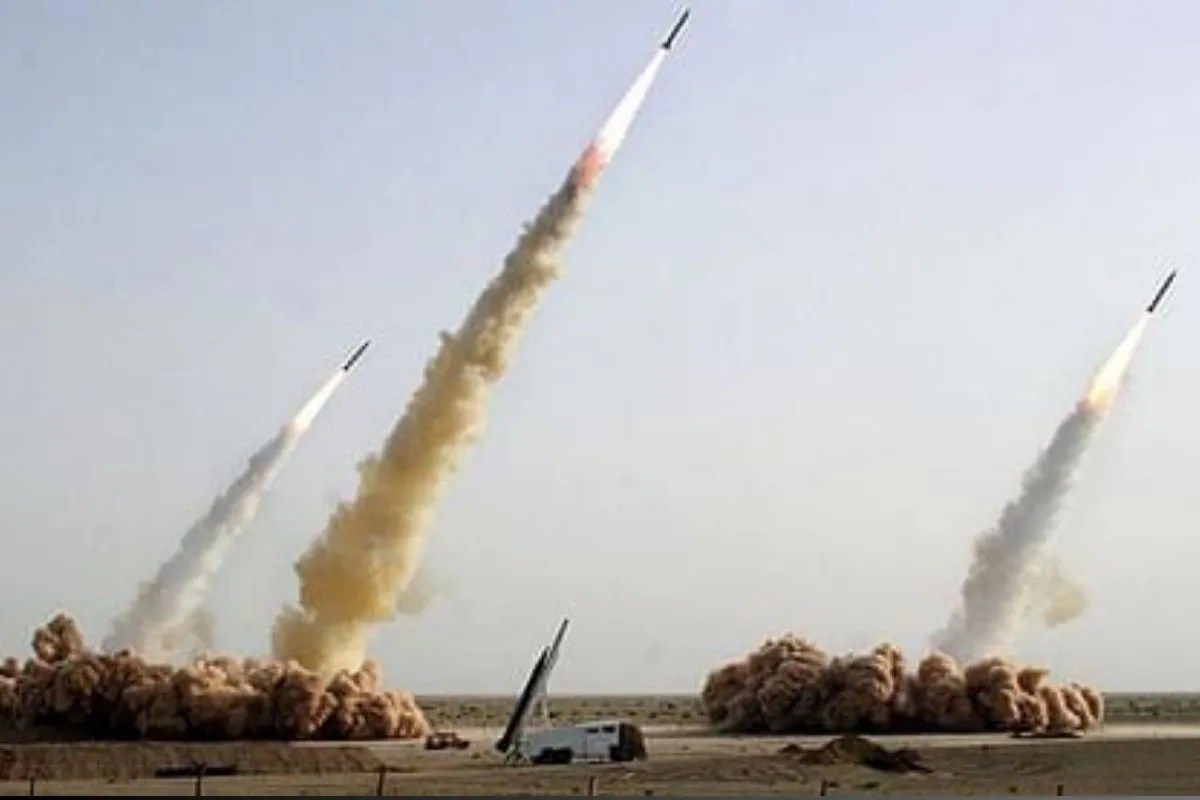
A standard Patriot or NASAMS interceptor costs anywhere from one to four million dollars per round. The systems targeting Ukraine's thermal plants and transformer substations—mass-produced loitering munitions and modified ballistic missiles—cost a fraction of that. Simple mathematics guarantees that defense wins are a slow-motion bankruptcy. When you spend four million dollars to swat down a forty-thousand-dollar drone, you are not winning a war of attrition. You are executing a financial suicide pact, courtesy of allied taxpayers.
The mainstream media asks: "How many more air defense systems can Canada and NATO send before winter hits?"
This is the wrong question entirely.
The correct question is: "Why are we still trying to defend centralized Soviet-era grid architecture that physics dictates cannot be protected?"
Imagine a scenario where every single Patriot battery requested by Kyiv is miraculously delivered tomorrow morning. Every square inch of airspace over Kyiv, Kharkiv, and Lviv is blanketed in radar-guided steel. You still have a massive, centralized electrical grid composed of sprawling, highly visible nodes. Drop a single hypersonic missile near a primary substation, and fifty thousand people lose power. Air defense is a sieve. No matter how tight the mesh, high-value stationary targets always lose to volume.
Decentralization Beats Iron Domes
Decentralization is the only strategy that survives contact with modern kinetic reality. Ukraine does not need another convoy of missile batteries; it needs a hyper-fragmented, micro-grid infrastructure that cannot be targeted from the sky.
When you scatter power generation down to the municipal, neighborhood, and industrial block level using containerized biomass, localized solar arrays, modular small modular reactors, and distributed diesel-gas co-generation units, you turn a macro-target into a ghost. You cannot bomb what does not exist as a single point of failure.
Yet, leaders like Zelenskiy fly to Ottawa to secure traditional state-to-state military packages because international diplomacy is trapped in twentieth-century modalities. Bilateral photo-ops require shiny hardware transfers. You cannot stage a dramatic tarmac handover for ten thousand decentralized micro-inverters and localized battery walls.
This brings us to the harsh truth about the winter preparation mantra. Stockpiling heavy generators and begging for spare parts is a Band-Aid on an amputated limb. If the main transmission lines remain the backbone of the grid, every winter will be an engineered humanitarian crisis orchestrated from Moscow.
The Realpolitik of Aid
Let us address the elephant in the room regarding western partners like Canada and European allies. For years, I have seen corporate defense contractors and state bureaucrats use "winter resilience" as a marketing pitch to keep production lines humming at maximum profitability. It creates a closed-loop economy where public funds are funneled directly back into western defense manufacturing conglomerates under the guise of philanthropy and solidarity.
Nobody in the diplomatic circuit wants to admit that military aid is often a lagging indicator of strategic failure. If your primary objective every October is scrambling to find air defense systems to protect power plants built forty years ago, your strategy failed in March.
Stop praising the endless cycle of hardware dependency. Stop pretending that another batch of surface-to-air missiles solves the structural thermodynamics of a freezing city.
The only winter preparation that matters is the total abandonment of centralization. Break the grid into a million pieces before the cruise missiles do.