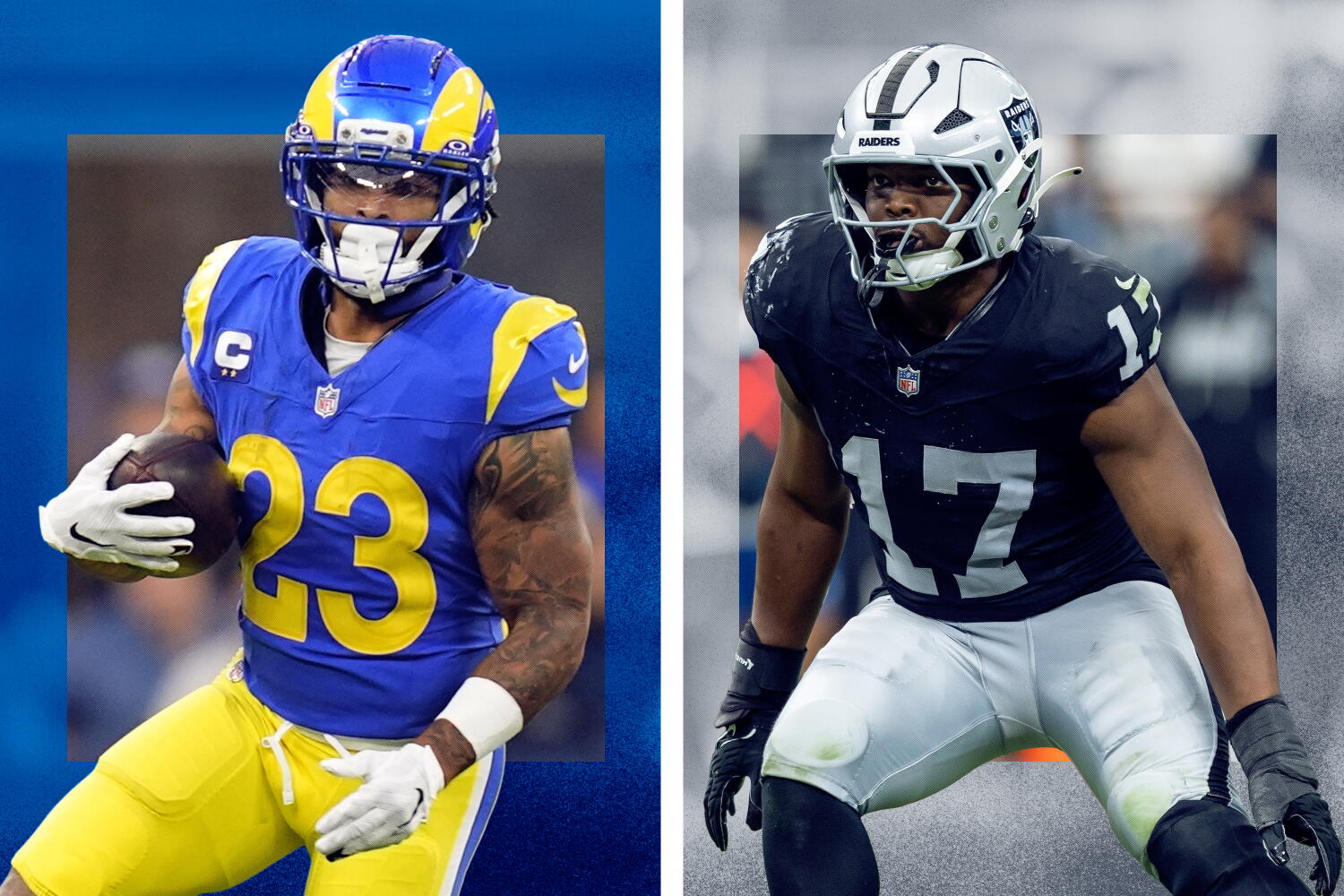
Every fall, sports media falls head over heels for the same lazy trope. A contender loses three starters to the injured reserve, scrapes together an ugly win on a Sunday afternoon, and suddenly the locker room is full of blue-collar warriors who do not want your sympathy.
They want to prove they can save their season.
Spare me.
When you peel back the inspirational locker-room quotes coming out of Los Angeles, that narrative completely falls apart. Treating an injury-marred roster like a badge of honor is not brave. It is institutional malpractice disguised as toughness.
The mainstream press loves a good "next man up" fairy tale because it requires zero tactical analysis. It is much easier to write about heart, grit, and Sean McVay’s fiery pregame speeches than it is to examine the structural rot that put the Los Angeles Rams in this position in the first place.
If you want to understand what is actually happening in Inglewood, stop listening to the beat writers peddling sympathy-free heroism. Look at the salary cap, look at the injury history, and look at the cold, hard math of the National Football League.
The Lie of the "Next Man Up" Mentality
In football, "next man up" is a cute slogan for a high school pep rally, not a viable front-office strategy in a salary-cap league.
When a team loses premier talent—whether it is elite offensive linemen protecting a stationary pocket passer or top-tier wide receivers who dictate coverage shells—the replacement player does not magically absorb the starter's skill set through sheer willpower. He is a backup for a reason. Usually, that reason is a measurable deficit in lateral agility, processing speed, or functional strength.
I have watched front offices across professional sports burn entire competitive windows on this exact delusion. They convince themselves that coaching schemes and culture can bridge a 30 percent talent gap. They refuse to pivot. They stubbornly run the exact same concepts with third-stringers that they designed for All-Pros, and then act shocked when the offense stalls in the red zone.
McVay is undeniably one of the brightest offensive minds of his generation. His mastery of condensed formations, pre-snap motion, and the Shanahan-tree wide-zone system has revolutionized modern passing attacks.
Even genius has a ceiling.
Scheming a backup wide receiver open against soft zone coverage on third-and-four is coaching. Asking a practice-squad tackle to hold up one-on-one against an elite edge rusher on third-and-nine is a prayer. And in the NFL, prayers get your quarterback killed.
You Cannot Out-Tough a Bad Roster Architecture
To understand why the Rams are constantly fighting off the injury bug, you have to stop treating injuries like random lightning strikes. They are not bad luck. They are the predictable tax of a specific roster-building philosophy.
For years, general manager Les Snead famously operated under the "F them picks" banner, trading away premium draft capital for established, high-priced superstars. It worked in 2021. They got their Lombardi Trophy, and nobody can ever take that ring away from them.
Here is the bill coming due.
When you routinely bypass the first two rounds of the NFL Draft, you do not just miss out on cheap superstar talent. You hollow out the middle class of your roster. You lose the young, durable, inexpensive depth pieces that are supposed to step in during weeks six through twelve without causing a catastrophic drop-off in production.
Instead, your roster becomes violently top-heavy:
- Aging Veterans: High-mileage players carrying massive cap hits whose soft-tissue durability naturally declines after age 28.
- Undrafted Free Agents: Cheap, developmental bodies filling out the bottom half of the 53-man roster because you have no mid-round draft picks left to develop.
- Zero Margin for Error: The moment two or three foundational pillars go down, the entire structure collapses because there is no load-bearing depth underneath them.
Calling this a "sympathy-free comeback story" misses the entire point. The Rams are not victims of cruel fate. They are experiencing the exact statistical outcome that happens when you concentrate 60 percent of your cap space into a handful of aging or injury-prone bodies.
The Dangerous Myth of "Saving the Season"
Let us address the question every Rams fan is actually asking right now: Can they still make a run at the playoffs if they just survive until their stars get healthy?
The premise of that question is fatally flawed.
In the modern NFL, simply sneaking into the postseason as a bruised, 9-8 Wild Card team is not an accomplishment. It is purgatory.
Think about what "saving the season" actually entails for a banged-up roster. To claw back from an early deficit, the coaching staff has to empty the playbook in October and November. They have to rush recovering veterans back onto the turf at 80 percent health. They have to ask their franchise quarterback to take unnecessary hits behind a patchwork offensive line just to steal a divisional game.
Imagine a scenario where the Rams pull off the miracle. They grit their teeth, ignore the critics, and limp into the seventh seed in January.
What is their reward?
They get to travel on the road in freezing weather to face a well-rested, fully healthy division winner with a top-five defensive front. They get bounced in the Wild Card round by two touchdowns, their veterans enter the offseason needing cleanup surgeries, and their draft pick drops ten spots out of blue-chip territory.
That is not saving a season. That is mortgaging next year to feel good about yourself for four weeks in December.
What Smart Front Offices Do Instead
Look at how elite organizations like the Baltimore Ravens or the San Francisco 49ers handle catastrophic injury years.
When the 49ers lost their entire starting lineup to turf injuries in 2020, Kyle Shanahan did not pound his chest and tell the media his backups were going to win the NFC West through sheer grit. They accepted reality. They evaluated young talent, protected their core assets from further damage, and positioned themselves to reload for a legitimate championship run the following year.
When the Ravens suffered a historic wave of injuries in 2021, John Harbaugh squeezed every ounce of competitiveness out of that roster, yes—but the front office never deluded itself into trading future assets to patch a sinking ship. They took their medicine, drafted Kyle Hamilton and Tyler Linderbaum the next spring, and immediately returned to Super Bowl contention.
The Rams are standing at that exact fork in the road, and the worst thing they can do is buy their own press clippings.
If you are Les Snead and Sean McVay, pride is your biggest enemy right now. You have to separate emotional attachment from asset management.
1. Stop Trading Future Picks for Band-Aids
When a contender suffers injuries, the immediate knee-jerk reaction from fans is to demand a trade-deadline splash. Bring in a veteran cornerback. Trade a fourth-rounder for a rotational pass rusher.
Do not do it. Giving up draft capital to raise your ceiling from seven wins to nine wins is how franchises trap themselves in a decade of mediocrity. Every single draft pick is a lottery ticket for cheap, controllable labor. Hoard them.
2. Force-Feed the Rookies High-Leverage Snaps
If the season is compromised, turn the remaining schedule into a live-fire laboratory. Stop giving 35 snaps a game to 30-year-old journeymen who will not be on the roster next September.
Put the young defensive backs on an island. Let the rookie offensive linemen take their lumps against elite interior rushers. You need to know before March whether these kids can actually play in this system, or if you need to replace them in free agency. You cannot evaluate guys standing on the sideline holding a tablet.
3. Protect the Franchise Quarterback at All Costs
Matthew Stafford is a future Hall of Famer with a history of back, elbow, and concussion issues. He is also the ultimate competitor who will never take himself out of a game, even when he can barely lift his throwing arm.
It is the head coach's job to save a player from his own toughness. If the pass protection is breaking down at a 40 percent pressure rate, you run the ball, you throw quick screens, or you sit him down when the game gets out of hand. Letting a franchise quarterback get tee'd off on in a lost season is coaching malpractice.
The Downside of Cold Realism
To be completely fair, admitting reality in an NFL locker room carries a massive, undeniable risk.
Professional football players do not operate on spreadsheets. They put their bodies through car-crash violence every Sunday for a living. If a locker room senses for even a second that the front office or coaching staff is waving the white flag to protect draft positioning, you lose the team.
Veteran leaders will check out. Effort on special teams will evaporate. The culture that McVay spent years building could fracture beyond repair, and rebuilding a broken locker room takes way longer than rebuilding a depth chart.
You have to coach every Sunday to win the game in front of you. You have to let the players believe they can beat anyone on the schedule.
That mentality belongs inside the building, between the white lines. It does not belong in the front office, and it certainly should not be the standard by which intelligent observers judge the franchise.
Drop the Sympathy and Demand Accountability
The Rams do not want your sympathy, and frankly, they have not earned it.
Sympathy is reserved for small-market teams devastated by unpredictable tragedies, not a flagship franchise in the second-largest media market in America that consciously chose an aggressive, high-variance roster strategy.
They made a calculated gamble to win a championship, and it paid off. Now they are living in the hangover of that gamble, watching a thin roster buckle under the physical attrition of a 17-game schedule.
Stop applauding them for surviving on fumes. Stop romanticizing a battered roster scraping by on grit and creative play-calling. If Los Angeles wants to be taken seriously as a perennial heavyweight again, they do not need another moral victory on Sunday afternoon.
They need a healthy roster, a full cupboard of draft picks, and a front office willing to prioritize long-term dominance over short-term pride.