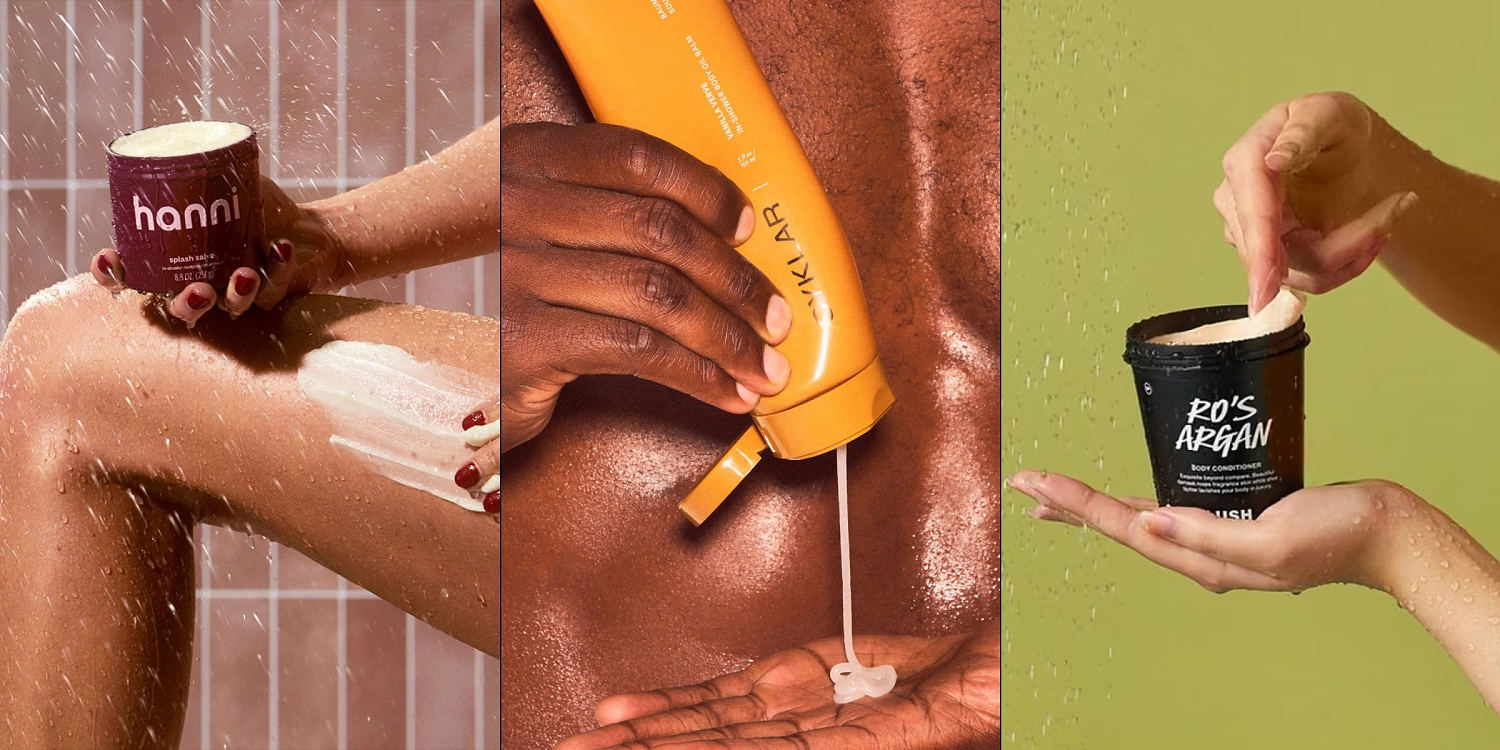
You are standing in a hot shower, rushing to get to work, slapping twenty dollars' worth of emulsified wax onto wet skin, and rinsing eighty percent of it straight into the municipal sewer system.
Congratulations. You have fallen for one of the most profitable optical illusions in modern personal care.
Every beauty blog on the internet publishes the exact same roundup every winter. They list the "best in-shower body lotions for when you're in a rush." They praise the slip. They rave about the convenience. They tell you that slathering on a rinse-off conditioner for your limbs is the secret hack to hydrated skin without the sticky wait time of traditional creams.
They are selling you a fairy tale. And your dry, flaky shins are paying the price.
Having spent over a decade formulating body care products and auditing ingredient decks for major personal care brands, I have seen the exact margins on these bottles. Brands love in-shower lotions. Why? Because when a product is designed to be rinsed off, the consumer burns through a bottle three times faster than a standard leave-on body butter. You rebuy faster. They hit their quarterly targets. Meanwhile, your skin barrier remains completely compromised.
To understand why the "rush-hour shower lotion" is a scam, you have to look at the basic physics and chemistry of how skin actually holds onto water.
The Chemistry of the Rinse-Off Lie
Skin hydration is not about adding water to your body. You just stood under a literal waterfall for ten minutes. Your stratum corneum—the outermost layer of your epidermis—is already saturated.
Hydration is about retention. It is about stopping transepidermal water loss (TEWL), the biological process where water passively evaporates from your skin into the surrounding air.
To stop TEWL, a moisturizer needs three specific classes of ingredients working together:
- Humectants (like glycerin, hyaluronic acid, or urea) that act like microscopic sponges, pulling water into the upper layers of the skin.
- Emollients (like squalane, fatty acids, and ceramides) that fill in the microscopic cracks between dead skin cells to smooth the surface.
- Occlusives (like petrolatum, dimethicone, shea butter, or mineral oil) that form a physical, hydrophobic seal over the skin so the water cannot escape.
Now, look at the back of your favorite in-shower body lotion.
Because the product has to spread easily over soaking-wet skin and rinse off without turning your shower floor into a lethal slip-and-slide, cosmetic chemists have to load the formula with surfactants and emulsifiers—ingredients like ceteareth-20, polysorbates, or sodium laureth sulfate derivatives.
Think about what an emulsifier does. It binds oil and water together so that water can wash the oil away.
When you apply an in-shower lotion and turn the showerhead back on, those emulsifiers do their exact job. They grab the heavy occlusives and the water-soluble humectants and escort them right off your body. Humectants like glycerin are completely water-soluble. Putting glycerin in a rinse-off product is like trying to paint a house during a hurricane. It washes away before it can bind a single molecule of water to your skin cells.
What gets left behind? A microscopic, uneven film of cheap mineral oil or silicone—just enough to trick your fingertips into feeling "soft" while you are still wet, tricking your brain into thinking the product worked.
Two hours later, under the dry HVAC air of your office, your skin is tight, itchy, and ashy again. You didn't moisturize your skin. You just lubricated your drain pipes.
The Hidden Hazard Nobody Mentions
Let's talk about the elephant in the bathroom. Slippage.
Brands spend millions in product liability insurance because coating a wet fiberglass or porcelain tub floor with petrolatum and shea butter is an inherently dangerous proposition. To keep you from breaking your hip, formulators have to deliberately nerf the occlusive power of the product.
If an in-shower lotion actually left behind a thick, effective barrier capable of halting transepidermal water loss for twelve hours, your shower floor would become a frictionless ice rink. You would need a commercial degreasing agent and a stiff-bristle brush to clean your tub after every single wash.
So, chemists compromise. They dial back the heavy waxes and oils until the product rinses clean enough to pass safety testing. By making the product safe for your bathtub, they render it useless for your skin.
Dismantling the "I Don't Have Time" Excuse
The entire marketing premise of the in-shower lotion rests on a single psychological trigger: you are too busy.
You don't have five minutes to wait for thick cream to absorb before pulling on your skinny jeans or dress trousers. You hate that clammy, suffocating feeling of fabric sticking to freshly lotioned legs.
That pain point is entirely real. Nobody likes wrestling into denim over a thick layer of cold ointment.
However, solving that problem with a rinse-off lotion is like solving a flat tire by taking the wheel off the car. You are asking the wrong question. The question isn't "Which rinse-off lotion works best?" The question is "How do I lock in moisture in under thirty seconds without leaving a greasy residue on my clothes?"
When you look at how dermatologists actually treat severe xerosis (dry skin) in clinical settings, you realize that the beauty industry has inverted the entire process to sell you an extra bottle.
Do In-Shower Body Lotions Actually Work at All?
Let's be fair and scientifically precise. If you are someone with naturally oily, resilient skin living in a humid climate like Miami or Houston, an in-shower lotion will feel fantastic. You don't actually need heavy barrier repair. You just want a pleasant scent and a slight reduction in post-shower tightness. For you, the microscopic film of mineral oil left behind is plenty.
If you have genuinely dry skin, eczema, keratosis pilaris, or you live anywhere with a real winter, in-shower lotions are a complete waste of capital. Clinical dermatology standards, including guidelines emphasized by the American Academy of Dermatology, consistently point to one golden rule for barrier repair: apply a leave-on occlusive or emollient directly to damp skin within three minutes of exiting the shower.
Notice the distinction. Damp skin. Not soaking wet. And definitely not rinsed off.
The 20-Second Protocol That Destroys In-Shower Lotions
If you want to cut your morning routine in half and actually keep your skin hydrated until midnight, throw the rinse-off bottle in the trash and execute this exact sequence instead.
1. Kill the Water and Stay Inside the Stall
Do not step out onto a cold bathmat. Keep the shower curtain closed or the glass door shut. The ambient steam trapped inside the stall keeps the air humidity near 100%, which temporarily halts evaporation from your skin.
2. The Squeegee Method
Use your hands like windshield wipers to briskly push the excess standing water off your arms, torso, and legs. Do not touch a towel yet. Your skin should be slick with a thin sheen of water, not dripping.
3. Deploy a Pure Lipid or High-Concentration Emulsion
Instead of a diluted rinse-off lotion, grab a pure plant oil (like jojoba, squalane, or fractionated coconut oil) or a fast-absorbing, high-glycerin leave-on lotion.
Because your skin is still covered in a micro-layer of warm water, the oil or lotion will emulsify on contact with your skin. It spreads effortlessly. You need half as much product as you normally use, and it takes roughly fifteen seconds to cover your entire body.
4. The Towel Pat (The Secret Weapon)
Now, grab your bath towel. Do not rub. Gently pat yourself dry.
The towel absorbs the remaining free-floating water droplets sitting on top of the oil, while the lipid layer itself—being hydrophobic—stays locked onto your epidermis. You step out of the shower completely dry, zero grease on your palms, and you can pull on tight trousers immediately without a single snag.
Why Beauty Editors Won't Tell You This
You will rarely see a mainstream lifestyle magazine recommend plain squalane oil or a basic pharmacy lotion applied before towel-drying.
There is no affiliate commission goldmine in telling you to buy one giant, unsexy bottle of plain mineral oil or basic fragrance-free lotion that lasts you six months. Affiliate revenue thrives on novelty, specialized "step-two" shower products, and fast-depleting tubes that require monthly replenishment.
Furthermore, fragrance is the primary driver of repeat purchases in the body care category. In-shower lotions are heavily perfumed because the heat and steam of the shower bloom the fragrance notes, creating a spa-like sensory experience. You aren't paying twenty dollars for skincare; you are paying twenty dollars for scented steam.
Admit the Downsides of the Contrarian Approach
Switching to the damp-skin leave-on method isn't entirely friction-free. You need to know the trade-offs before you overhaul your bathroom shelf:
- Towel Laundry: Because you are patting your skin with a towel after applying lipids, trace amounts of oil will transfer to your bath towels over time. If you use heavy plant oils like sweet almond or olive oil, your towels can develop a stale oil smell if you wash them in cold water. You must wash your towels in warm or hot water with a decent enzyme detergent.
- No Instant Rinse: If you accidentally apply too much product, you can't just turn the shower back on to wash the excess away. You have to learn portion control—usually a quarter-sized amount of oil for your entire body is plenty.
- Zero "Spa" Foam: You lose that thick, creamy, lather-like sensation of rubbing a heavy conditioner all over yourself under hot water. It feels utilitarian because it actually works.
Stop Confusing Convenience With Efficacy
The personal care industry banks on your impatience. They know that if they can shave thirty seconds off your morning routine, you won't stop to ask whether the product actually survived the trip down the drain.
Skin biology does not care about your commute. A moisturizer cannot protect your barrier if you wash it off three seconds after applying it. Stop paying for expensive emulsions designed to disappear down your plumbing, keep your leave-on bottle inside the shower caddy, and lock the water in before you ever reach for a towel.