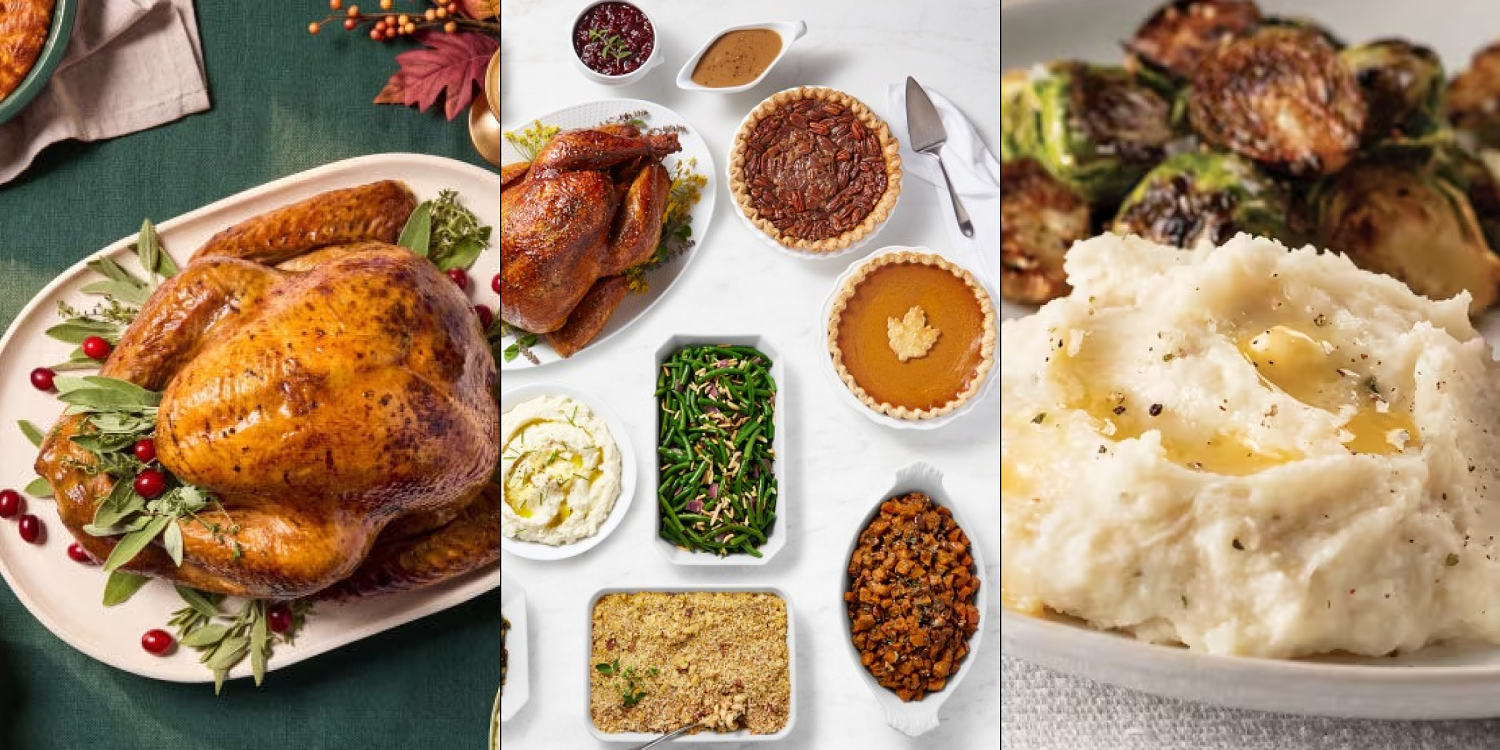
Every November, the same recycled listicle floods your feed. "Eight Thanksgiving meal kits starting at just $25." It sounds like salvation. You picture yourself sipping Pinot Noir in a spotless kitchen while a pre-portioned box magically transforms into a Norman Rockwell centerpiece.
That fantasy is a lie engineered by venture-backed logistics companies.
Those "$25" price tags are bait-and-switch loss leaders—usually an appetizer bundle or a two-serving side dish box that won't feed a toddler, let alone your extended family. By the time you configure an actual holiday spread for six to eight people through Blue Apron, HelloFresh, Marley Spoon, or Gobble, you are dropping between $180 and $350. And here is the kicker nobody in lifestyle media wants to admit: a traditional meal kit does not take cooking off your to-do list. It just offloads the cheapest part of the labor—grocery shopping—while forcing you to do the hardest part yourself on the highest-stress cooking day of the year.
I have spent over a decade analyzing direct-to-consumer food economics and supply chain unit costs. I have watched subscription box companies burn hundreds of millions of dollars trying to convince home cooks that tiny plastic packets of sour cream equal luxury. When you apply cold math and basic culinary thermodynamics to the Thanksgiving meal kit model, the whole premise collapses.
The Cold Math Behind the $25 Thanksgiving Bait-and-Switch
Let us dismantle the pricing architecture first. When a roundup article advertises a Thanksgiving box "starting at $25," they are exploiting entry-tier anchoring.
In subscription food marketing, the entry price reflects the smallest possible SKU—typically two servings of a single recipe, or an add-on dessert box shipped alongside an existing weekly subscription. You cannot actually buy a standalone $25 Thanksgiving dinner.
Even when you look at the flagship holiday boxes from major players like HelloFresh or Home Chef, the unit economics fall apart under scrutiny:
- The Protein Premium: A standard Thanksgiving box for six to eight people averages around $200 to $260 including shipping. Meanwhile, the USDA Economic Research Service consistently tracks whole frozen turkeys at roughly $1.00 to $1.60 per pound during November loss-leader promotions at major grocers. A 14-pound bird costs under $22 at a regional supermarket.
- The Carb Markup: Meal kits pad their gross margins with heavy, low-cost starches. Russet potatoes, yellow onions, celery, carrots, and dry bread cubes cost pennies per pound wholesale. Wrapping two pounds of potatoes in a branded paper bag and charging a 400 percent markup is not convenience. It is an IQ tax.
- The Packaging Penalty: Shipping perishable proteins and produce across state lines in November requires thick insulated liners, five-pound gel ice packs, and corrugated boxes. You are paying $30 to $50 of your food budget purely for cardboard and refrigerant that goes straight into your trash can before you even preheat the oven.
If you buy raw ingredients at a standard grocery store—even a high-end one like Whole Foods or Wegmans—a scratch-cooked feast for eight people costs between $75 and $110. You are paying a $150 surcharge for someone else to walk down four grocery aisles for you.
Why Meal Kits Actually Make Thanksgiving Harder
The core pitch of every Thanksgiving meal kit article is stress reduction. They claim pre-portioned ingredients eliminate kitchen chaos.
Anyone who has actually cooked a Thanksgiving dinner knows that ingredient gathering is 10 percent of the stress, while thermal management is 90 percent.
A meal kit arrives raw. You still have to peel the potatoes. You still have to dice the shallots. You still have to mince the herbs, whisk the roux, monitor internal meat temperatures, and—most fatally—juggle oven space.
Think about the physical reality of a standard residential kitchen. You have one oven cavity. Maybe two if you are lucky. A meal kit for eight people typically includes a turkey breast or whole bird, plus four to five separate side dishes, each packed with individual recipe cards demanding different baking temperatures and cook times.
- The stuffing wants 375°F for 40 minutes.
- The green bean casserole wants 350°F for 30 minutes.
- The Brussels sprouts want 425°F for 25 minutes.
- The rolls want 400°F for 12 minutes.
Pre-measured packets of thyme do not expand the cubic volume of your GE profile oven. Instead of streamlining your day, a raw meal kit forces you to execute five unfamiliar recipes simultaneously under tight time constraints, using tiny plastic tubs that create mountains of countertop clutter. I have seen seasoned home cooks melt down at 4:30 PM on Thanksgiving Day because they were trying to follow six-step laminated cards for dishes they had never tested before.
The Quality Degradation Nobody Talks About
Food logistics follow strict biological rules, and Thanksgiving week breaks the cold chain.
During the third week of November, FedEx, UPS, and regional last-mile couriers hit peak holiday volume. Perishable meal kits sit in unrefrigerated sorting hubs and delivery vans longer than they do in July or March. Even with heavy gel packs, delicate produce suffers severe cellular damage.
Fresh sage and rosemary turn black and slimy inside sealed plastic pouches. Green beans develop moisture condensation that accelerates bacterial spoilage. Pre-peeled or pre-cut root vegetables oxidize, losing both natural sugars and structural snap before they ever hit your roasting pan.
Then there is the turkey itself. Because whole turkeys are heavy, irregularly shaped, and nightmarish to pack inside standard meal kit dimensions, most subscription boxes substitute boneless turkey breast roasts.
Ask any serious culinary professional—from J. Kenji López-Alt to Samin Nosrat—about boneless turkey breast roasts. Without bones to insulate the muscle fibers and conduct heat evenly, lean white meat dries out in a narrow five-degree window between safe pasteurization (165°F) and sawdust. Meal kit companies try to mask this texture problem by including heavy packets of sugary glazes, artificial butter flavorings, and xanthan-gum-thickened gravy bases. You are not eating a Thanksgiving feast; you are eating airline catering assembled in your own kitchen.
Answering the Questions People Actually Ask About Holiday Shortcuts
When people search for Thanksgiving meal kits, they are asking the wrong question. They ask, "Which meal kit saves the most time on Thanksgiving?" when they should be asking, "Where should I spend money to actually buy back my time?"
Let us look at the real answers to the assumptions driving holiday food searches:
Are Thanksgiving meal kits cheaper than grocery shopping?
No, and it is not even close. On a per-serving basis, meal kits cost 2.5 to 3.5 times more than buying raw ingredients at a supermarket. The only scenario where a meal kit saves money is if you normally buy full-sized jars of twenty obscure spices you will never touch again—which does not apply to Thanksgiving, a holiday built entirely around pantry staples like butter, flour, garlic, onions, and stock.
Do meal kits really save time on Thanksgiving Day?
They save zero minutes on Thanksgiving Day itself. They save roughly 45 minutes of grocery shopping on Tuesday or Wednesday. Once you step up to the cutting board on Thursday morning, chopping a pre-portioned onion takes the exact same amount of time as chopping an onion from a three-pound mesh bag. Worse, opening forty individual plastic sachets of vinegar, broth concentrate, and spices actually adds ten to fifteen minutes of tedious scissor-work and trash sorting.
What is the difference between a meal kit and a heat-and-eat holiday dinner?
This is the distinction lifestyle listicles deliberately blur. A meal kit (HelloFresh, Blue Apron, Martha Stewart & Marley Spoon) sends raw ingredients that require full culinary execution. A prepared heat-and-eat meal (Goldbelly, Williams Sonoma, local butcher shops, high-end grocers) sends fully cooked, chilled food that only requires reheating. Grouping them together under the umbrella of "meal kits" is lazy journalism that misleads buyers into thinking they are buying a finished meal when they are actually buying raw groceries.
The Counter-Intuitive Strategy That Actually Works
If you genuinely want cooking off your to-do list without serving mediocre food—or if you want to cook a world-class dinner without losing your mind—abandon the subscription box model entirely. Use one of these three superior alternatives instead.
1. The Local Butcher and Supermarket Hybrid
Stop ordering perishable meat through parcel carriers. Call an independent local butcher shop or order from the catering counter of a high-end regional grocer (like Wegmans, Central Market, Publix, or Whole Foods) two weeks before Thanksgiving.
- What to outsource: Buy a fully cooked, smoked, or roasted turkey from the butcher, plus two complex, labor-intensive sides like mashed potatoes and gravy. A cooked 14-pound bird from a reputable butcher or smokehouse typically runs $80 to $110—less than half the price of a meal kit, cooked by professionals in commercial convection ovens.
- What to make yourself: Make one or two high-impact, low-effort dishes at home—like a raw cranberry-orange relish (takes five minutes in a food processor) and roasted Brussels sprouts with pancetta.
You get genuine restaurant-grade quality, zero raw poultry cross-contamination in your sink, and total control over your oven schedule.
2. The Grocery Delivery + Pre-Chopped Produce Hack
If you enjoy the ritual of cooking from scratch but hate the prep work and crowded store aisles, replicate the exact value proposition of a meal kit for a fraction of the price.
Open Instacart, Amazon Fresh, or your local grocer's pickup app. Order standard bulk ingredients, and specifically add fresh pre-diced mirepoix (onions, celery, carrots), peeled garlic cloves, and pre-washed, trimmed green beans from the produce section. You pay a $2 markup per container for pre-cut vegetables instead of a $150 markup for a branded cardboard box, and everything arrives at your door two hours later without shipping delays.
3. The High-End Goldbelly Pivot (If Money Is No Object)
If you are willing to spend $250 to $350 on Thanksgiving dinner, do not spend it on raw ingredients from a weekly subscription company. Spend it on a specialized culinary purveyor through a platform like Goldbelly, or directly from a renowned smokehouse like Greenberg Smoked Turkeys or Willie Bird.
When you spend $250 on a fully cooked, flash-chilled heritage meal from a dedicated culinary producer, you are paying for professional execution, commercial-grade brining, and real wood smoke. All you have to do on Thursday is reheat and plate.
The Honest Downside to Skipping the Box
Let us be completely transparent about what you lose when you ditch the meal kit.
If you are a complete beginner cook who has never roasted poultry, made a pan sauce, or balanced acidity in a side dish, a meal kit acts as training wheels. The step-by-step visual cards remove the intimidation of recipe selection, and having exact measurements prevents catastrophic seasoning mistakes. Furthermore, if you are cooking Thanksgiving dinner for just two people in a tiny apartment with zero pantry staples, buying a small holiday box prevents you from getting stuck with ten pounds of leftover turkey and half-used bags of flour.
For everyone else—especially anyone hosting four or more guests—the Thanksgiving meal kit is an expensive distraction.
Take Control of Your Kitchen
Stop letting clever marketing convince you that unwrapping plastic packets is the same thing as taking the night off. Cancel the holiday box add-on before the billing cutoff hits. Place an order with a real local butcher for a cooked bird, grab pre-chopped vegetables from your neighborhood grocer, and spend your Thanksgiving morning drinking coffee instead of sorting cardboard.