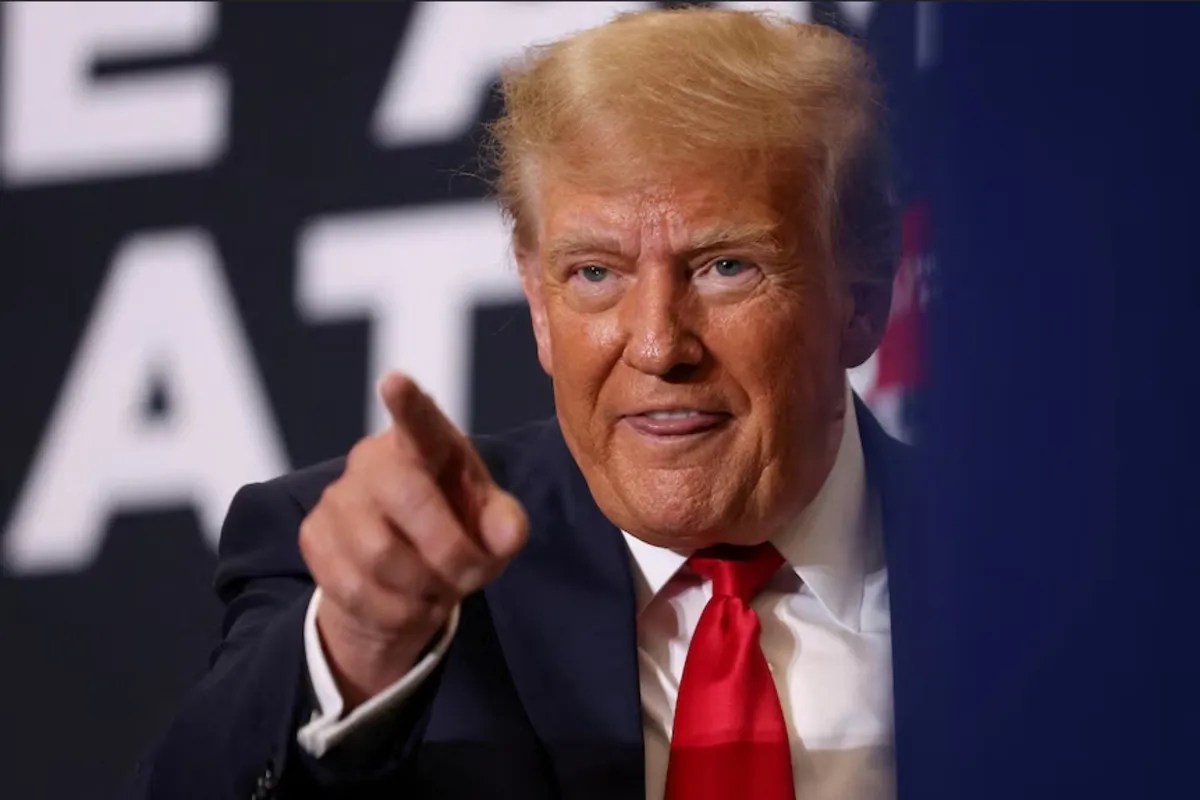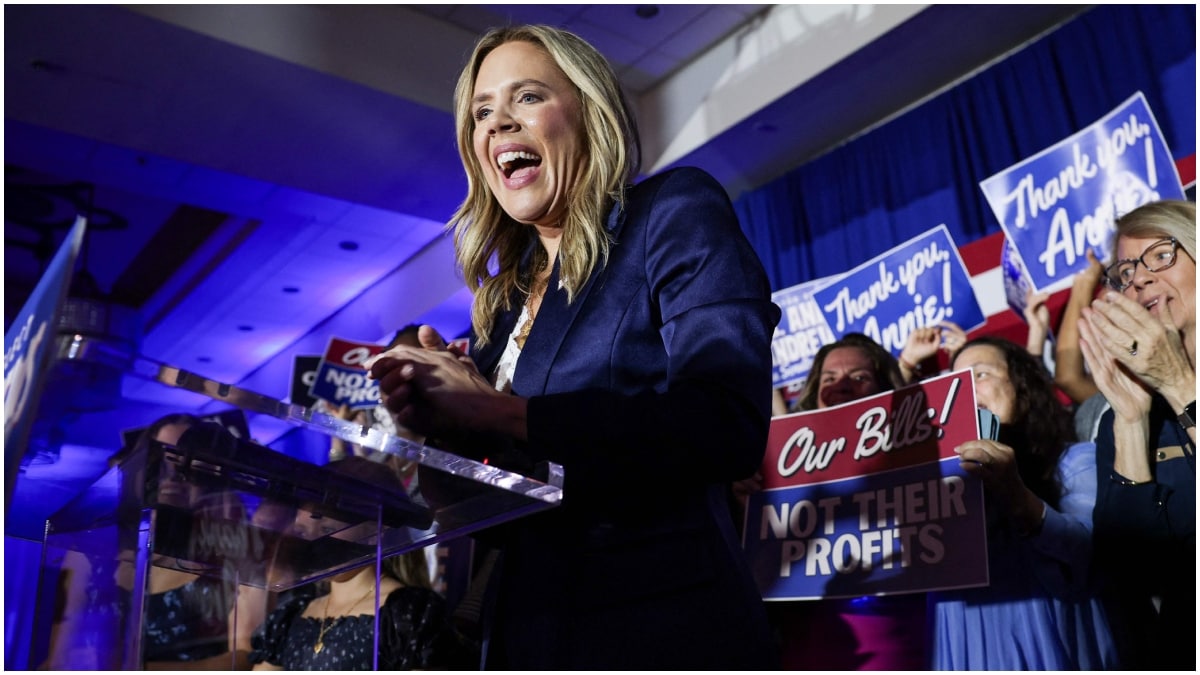
Every political pundit in Washington is currently tripping over themselves to crown Dr. Annie Andrews as the savior of Southern liberalism.
They are wrong. Dead wrong.
Look at the headlines flooding your feed right now. Who is Dr. Annie Andrews? South Carolina’s first Democratic Senator in two decades defeats Darline Graham. The legacy media loves a fairy tale. They want you to believe a Charleston pediatrician walked into deep-red territory, waved a stethoscope, spoke truth to power, and single-handedly turned a ruby-red stronghold blue.
It is lazy storytelling. Worse, it is dangerously misleading for anyone trying to understand how modern elections are actually won and lost.
If you buy the mainstream narrative, you think South Carolina suddenly had a change of heart. You think decades of entrenched Republican dominance evaporated because one candidate had a compelling biography and a good campaign manager. Having spent fifteen years inside war rooms watching political consultants burn tens of millions of dollars on that exact delusion, I can tell you how this ends. When campaigns mistake an opponent's structural collapse for their own ideological triumph, they get slaughtered in the very next cycle.
Dr. Annie Andrews did not conquer South Carolina. She survived a historic implosion on the other side of the ballot, capitalized on a massive demographic shift that has been building since 2016, and avoided the catastrophic self-inflicted wounds that usually sink Southern Democrats.
That is not a miracle. That is cold, hard electoral mechanics.
The Myth of the Blue Wave in the Palmetto State
To understand what just happened in South Carolina, you first have to throw away the partisan cheerleading. You are asking the wrong question when you ask, "Who is Dr. Annie Andrews?" The real question is why the Republican machine in South Carolina—one of the most ruthless, disciplined political operations in the country—suddenly forgot how to win a statewide race.
For over twenty years, since Ernest "Fritz" Hollings retired in 2005, Democrats in South Carolina have been nothing more than fundraising ATM machines for national consultants. Remember Jaime Harrison in 2020? He raised over $130 million—a mind-boggling, obscene sum of money—and still lost by ten points. Why? Because national Democrats tried to run a nationalized, cable-news campaign in a state where retail politics and local tribalism rule everything.
Pundits want to pretend Andrews cracked the code that eluded Harrison. Let us look at the actual fundamentals of what separates a winning insurgency from an expensive vanity project.
- The Suburban Bleed: Charleston, Greenville, and Richland counties are no longer polite, country-club Republican strongholds. Over the past decade, a massive influx of out-of-state transplants from the Northeast and Midwest has fundamentally altered the voter rolls. These voters are not left-wing activists. They are moderate, college-educated professionals who care about property taxes, public schools, and healthcare infrastructure.
- The Exhaustion Factor: Incumbency fatigue is real. When a political party holds absolute power in a state for twenty years, they stop governing and start infighting. The South Carolina GOP spent the last two cycles tearing itself apart in bloody primaries over ideological purity tests that meant nothing to average voters worried about insurance premiums and crumbling roads.
- The Messenger Alignment: Andrews did not run as a career politician. Before her 2022 congressional run against Nancy Mace—a race she lost, which pundits conveniently gloss over—she was a practicing pediatrician at the Medical University of South Carolina. When a doctor talks about healthcare access and gun violence, voters hear clinical authority, not partisan talking points.
Why the "Pediatrician-Turned-Politician" Narrative Is Only Half the Truth
The media loves the "outsider doctor" trope. It plays well on television. A mother of three, stepping out of the hospital ward to fight for children's lives in the halls of the United States Senate. It is clean, emotional, and completely incomplete.
If being a compassionate doctor were enough to win in the South, hospitals would be empty and Congress would look like an AMA convention.
What the feel-good profiles ignore is that Andrews is a sharp, calculating political operator who learned brutal lessons from her 2022 defeat in South Carolina's 1st Congressional District. In 2022, she ran a textbook progressive campaign heavy on national Democratic messaging. She got crushed by over fourteen points.
Most losing candidates blame the voters, write a book, and take a cushy job at a D.C. think tank. Andrews did something rare: she actually looked at the precinct data.
She realized that in South Carolina, cultural grievance is a death sentence for Democrats. If you let your opponent turn the election into a referendum on national culture wars, you lose by double digits before a single ballot is cast. So, she stripped her rhetoric down to kitchen-table triage. She stopped talking like an activist and started talking like an emergency room physician assessing a trauma patient.
You do not lecture a bleeding patient about systemic policy failures. You stop the bleeding.
By framing every issue—from reproductive rights to rural hospital closures—through the lens of immediate, tangible harm to families, she neutralized the standard Republican attack ads. It is easy to paint a lawyer or a community organizer as a radical socialist. It is remarkably difficult to convince a suburban mother in Mount Pleasant that a pediatrician wants to destroy her family.
Dismantling the "Graham" Factor
Let us address the elephant in the room: the defeat of Darline Graham and the broader collapse of the establishment grip on the seat.
In political consulting, there is an ironclad rule: Oppositions do not win elections; incumbents lose them.
When a dominant political dynasty falls after two decades, it is almost never because the challenger found a magic wand. It is because the incumbent apparatus rotted from the inside out. Look at the structural vulnerabilities that defined the Republican campaign in this cycle:
- Complacency in the Base: For twenty years, statewide Republican campaigns in South Carolina operated on autopilot. They assumed rural turnout in the Upstate and the Pee Dee region would automatically drown out whatever margins Democrats racked up in Charleston and Columbia. They failed to account for a sharp drop-off in rural enthusiasm when voters feel their own party takes them for granted.
- The Primary Hangover: Bruising, scorched-earth primaries leave scars. When candidates spend months attacking each other's integrity, conservative voters stay home in November. You cannot spend six months calling your own side corrupt and expect the base to march cheerfully to the polls in the general election.
- Underestimating the Ground Game: While the GOP relied heavily on broad media buys and nationalized outrage, Andrews built a relentless, precinct-by-precinct voter turnout operation focused specifically on low-propensity suburban women and younger voters in college towns like Clemson and Columbia.
Imagine a scenario where the Republican candidate had run a disciplined, unified campaign focused entirely on inflation, energy independence, and border security without any internal party fractures. Even with her compelling biography and massive fundraising, Andrews would have faced an uphill climb against a structural partisan lean that still favors Republicans by roughly eight to ten points in a neutral year.
She won because she was prepared when the door cracked open—not because she kicked it down with brute ideological force.
The Brutal Reality of Governing in a Red State
Here is the part where I ruin the victory party for Democratic strategists already popping champagne in Washington.
Winning the seat was the easy part. Keeping it—and actually governing from it—is a nightmare scenario that the current media coverage completely ignores.
South Carolina has not suddenly transformed into Massachusetts or even Virginia. The state legislature remains overwhelmingly, unapologetically conservative. The statewide electorate is still fundamentally skeptical of federal overreach, high taxes, and progressive social mandates.
If Dr. Annie Andrews goes to Washington and votes like a standard-issue coastal Democrat, she will be a one-term senator. Period.
Political history is littered with the carcasses of red-state Democrats who mistook a localized, candidate-specific victory for a broad ideological mandate. Look at what happened to senators in states like North Dakota, Missouri, and Indiana over the past decade. The moment they aligned themselves with the national party leadership on divisive cultural or economic votes, the voters who took a chance on them felt betrayed—and punished them mercilessly at the ballot box.
Andrews faces an immediate, razor-thin tightrope:
- The Base Trap: National donors and progressive activists who funded her historic upset will immediately demand loyalty on high-profile party-line votes. If she breaks ranks to protect her right flank in South Carolina, she risks drying up the small-dollar online fundraising engine that kept her competitive.
- The Moderate Illusion: If she tries to play the role of the perennial maverick—blocking her own party's priorities just to prove her independence—she alienates her base at home without actually convincing hardcore South Carolina conservatives to vote for her in six years.
- The Scrutiny Shift: As a challenger, you get to define yourself. As an incumbent United States Senator, every single committee vote, every floor speech, and every donor dinner is weaponized against you 24/7 by opposition researchers with unlimited budgets.
What Political Operatives Are Getting Wrong About This Race
I have sat in countless post-mortem meetings after upset elections, and the delusion is always the same. Consultants love to take credit for structural forces they neither created nor controlled.
Right now, Democratic strategists are looking at South Carolina and thinking they have discovered a universal blueprint for flipping the South. They are already drawing up plans to recruit doctors, nurses, and teachers in states like Texas, Florida, and Tennessee, assuming the "Annie Andrews Model" is plug-and-play.
It is not. And here is why that thinking will lose them millions of dollars:
- Authenticity Cannot Be Manufactured: You cannot take a standard political operative, put them in scrubs for a thirty-second television spot, and expect voters to buy it. Voters have finely tuned radar for fraud. Andrews spent years treating children in South Carolina communities before she ever asked for a vote. That reservoir of trust takes a decade to build and cannot be faked by a media firm in Alexandria, Virginia.
- Geography Matters: South Carolina has a unique demographic profile. Its coastline is booming with retirees and remote workers who bring vastly different political instincts than native-born rural voters. Trying to apply a Charleston-centric suburban strategy to a state with completely different population centers is a recipe for disaster.
- Timing Is Everything: Elections do not happen in a vacuum. They are snapshots of a specific emotional and economic moment. What worked in this specific cycle—capitalizing on voter fatigue and healthcare anxiety—might be completely irrelevant two years from now when the national mood shifts to foreign policy or manufacturing jobs.
The Verdict Nobody Wants to Hear
To be clear, I am not taking anything away from Dr. Annie Andrews' personal grit. Stepping into the arena after a painful double-digit loss in 2022, staring down twenty years of historical inertia, and executing a disciplined campaign takes serious spine. Most people do not have the stomach for it.
To give the devil her due, she did what almost no Southern Democrat has managed to do since the days of Fritz Hollings: she made herself acceptable to swing voters without completely demoralizing her own base. In modern polarized politics, that is walking across a tightrope over a canyon during a windstorm.
Yet, calling this a "new era" for South Carolina politics is pure fantasy.
A single election does not erase twenty years of partisan alignment. One upset does not rewrite the electoral map of the American South. Until Democrats prove they can win down-ballot races—state house seats, county commissions, judicial posts—a lone Senate victory is an anomaly, not a realignment.
The pundits will spend the next six months writing glowing profiles about the pediatrician who slayed a political giant. They will dissect her campaign ads, praise her folksy charm, and declare the Solid South officially cracked.
Ignore them. Watch the precinct returns in Charleston. Watch the rural turnout numbers in the Upstate. Watch how fast the national GOP pours fifty million dollars into South Carolina to take that seat back the second the dust settles.
Dr. Annie Andrews didn't break the system. She just found the one crack in the armor that everyone else was too blind to see—and now she has six years to figure out how to survive inside the fortress.