Critics love a funeral. Put a prestige actor in a hospital gown, dim the color grading to bruised slate, add a single cello note, and half the film press will trip over themselves to call it a masterwork before the credits finish rolling.
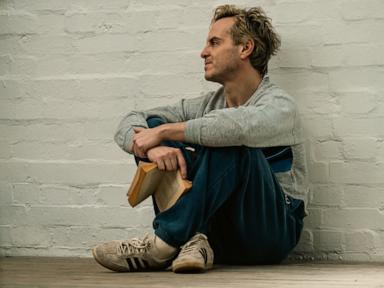
That is the exact trap swallowing the coverage around Elsinore, the biographical drama starring Andrew Scott as Ian Charleson. Every mainstream review reads like an obituary written by someone who confused emotional manipulation with structural brilliance. They praise Scott’s raw vulnerability—which is undeniable—and then give the surrounding movie a free pass for doing the bare minimum required of prestige cinema.
Here is the uncomfortable truth nobody in the awards circuit wants to say out loud. Andrew Scott is doing heavy lifting for a script that mistakes tragedy for drama, turning one of the sharpest, fiercest theatrical minds of the twentieth century into a passive vessel for audience tears.
The Prestige Biopic Formula Is Broken
You know the blueprint before you buy the ticket.
Act One establishes brilliance through shorthand. A few quick backstage laughs, a glimpse of talent, an immediate leap to the ticking clock. Act Two introduces the diagnosis, stripping away the subject’s agency until their entire personality shrinks to the size of their illness. Act Three delivers the triumphant final performance, proving that art conquers death, right before white text on a black screen tells you when they died.
Biopics built on this architecture rely on borrowed emotion. They do not earn your investment through dramatic tension or psychological complexity. Instead, they lean on your pre-existing empathy for real human suffering. When a film depicts the devastating toll of the HIV/AIDS crisis in the late 1980s, crying in the theater is a human reflex, not proof of great filmmaking.
I have watched dozens of festival darlings follow this exact trajectory over the last fifteen years. Buyers spend millions acquiring them out of Toronto or Telluride because tears test well in early screenings. Six months later, nobody rewatches them. Why? Because once you know the ending, there is nothing left inside the frame to examine.
Elsinore falls squarely into this prestige trap. By framing Ian Charleson’s life almost exclusively through the countdown to his final run as Hamlet at the National Theatre, the movie reduces a complex, fiercely intelligent artist to a tragic saint.
Who Ian Charleson Actually Was
To understand why the consensus around Elsinore misses the mark, you have to look at the real man behind the myth.
Ian Charleson was not a delicate martyr waiting around for a tragic third act. Born in Edinburgh to a working-class family, he trained at LAMDA and built a reputation on sheer physical intensity, biting wit, and a refusal to play things safe. Most casual filmgoers know him as Eric Liddell in Chariots of Fire, the devout Scottish sprinter who refused to run on Sunday. Yet his real arena was the stage.
When Charleson took on Hamlet in Richard Eyre’s 1989 production at the Olivier Theatre—stepping in after Daniel Day-Lewis famously walked off mid-performance—he was already gravely ill. He had lost significant weight. The disease was attacking his body relentlessly.
Yet contemporaries who saw those performances did not describe a frail man begging for sympathy. They described an electric, ferocious, unsentimental Prince of Denmark. Charleson used his physical deterioration as an artistic weapon, stripping away centuries of theatrical ornamentation to play Hamlet with terrifying clarity. He was angry. He was funny. He was sharp until the very end, dying in January 1990 at age forty, just weeks after his final curtain call.
By softening his edges to maximize tearjerker appeal, Elsinore flattens the very rebellion that made his final performance historic.
Why Andrew Scott’s Brilliance Masks the Script’s Laziness
Let’s be clear about one thing. Andrew Scott is extraordinary.
Since breaking out globally as the "Hot Priest" in Fleabag and delivering career-best work in All of Us Strangers and Ripley, Scott has proven he possesses a rare technical gift. He can communicate three competing thoughts in the silence between two lines of dialogue. He understands micro-expressions, vocal cadence, and physical stillness better than almost any screen actor working today.
In Elsinore, Scott brings every ounce of that precision to bear. When he is on screen, your eyes do not leave him. He captures the specific physical exhaustion of a body fighting an unseen war while the mind refuses to surrender.
The problem is what happens when an actor of Scott’s caliber is handed an underwritten screenplay. Great acting becomes camouflage.
- The Dialogue Does Half the Work: Instead of letting scenes breathe through subtext, the script repeatedly forces characters to state the theme out loud. You do not need three separate conversations reminding the audience that time is running out when Scott’s posture already tells the entire story.
- Supporting Characters Are Reduced to Props: Great drama requires friction. In Elsinore, the people around Charleson—friends, fellow actors, medical staff—exist mostly as mirrors reflecting his courage back at the camera. They rarely challenge him, frustrate him, or possess inner lives independent of his illness.
- The Theater Is Treated Like a Museum: Rehearsals are shot with hushed reverence rather than the messy, sweaty, ego-driven chaos that actually defines major stage productions. Anyone who has spent time backstage at a national theater knows it is equal parts terror, dark humor, and grueling labor—not a slow-motion montage set to swelling strings.
When reviewers rave that Scott "transcends the material," they are accidentally admitting the material is mediocre. An actor should not have to rescue a film from its own script.
What Makes a Great Actor Biopic Actually Work
If Elsinore gets the formula wrong, what does getting it right look like?
Compare it to Bob Fosse’s All That Jazz. Fosse made a movie about his own impending death, chronicling his open-heart surgery and self-destruction while staging a Broadway show. He did not ask for your pity. He showed his vanity, his cruelty, his brilliance, and his terror in equal measure. The film endures because it treats the artist as a whole human being rather than a monument.
Or look at Tár, Todd Field’s fictional study of a conductor imploding at the height of her power. Even though Lydia Tár is invented, the film feels infinitely more authentic to the realities of high-level performance than most real-life biopics. It respects the audience enough to show the brutal mechanics of the craft—how rehearsals actually run, how artistic ego operates, how genius and flaw are tangled together.
Great films about performers share three traits that Elsinore largely avoids:
- Professional Specificity: They show how the work is made, down to the technical choices, vocal adjustments, and rehearsal failures.
- Moral Ambiguity: They allow the protagonist to be selfish, irritable, or wrong, rather than sanding down every rough edge after death.
- Structural Risk: They match the form of the movie to the psychology of the subject instead of relying on linear cradle-to-grave—or diagnosis-to-curtain—storytelling.
The Questions Audiences Are Asking (And Why They Are Looking in the Wrong Place)
Whenever a prestige biopic drops, search engines fill up with predictable queries. People want to know if the movie is historically accurate, whether it will sweep the Oscars, and how closely the actor resembles the real person. Those questions miss the real issue entirely.
Is Elsinore historically accurate?
On a surface level, yes. The timeline of Ian Charleson’s illness, his replacement of Daniel Day-Lewis in Hamlet, and the critical reception to his final performances align with documented theater history.
Accuracy of dates, however, is not the same thing as truth of character. You can get every costume, theater program, and medical detail right while still missing the psychological reality of the room. Elsinore gets the facts straight while smoothing out the emotional truth into something safe enough for Sunday afternoon prestige viewing.
Will Andrew Scott win Best Actor for Elsinore?
He will almost certainly be nominated, and he has a strong shot at winning—not because Elsinore is the best movie of the year, but because the Academy has a well-documented addiction to physical transformation and terminal illness narratives.
Historically, voters reward suffering. From Daniel Day-Lewis in My Left Foot to Eddie Redmayne in The Theory of Everything and Brendan Fraser in The Whale, playing a character whose body is failing remains the fastest route to an Oscar statuette. Knowing how awards campaigns operate, studios lean hard into the "bravery" narrative because it plays well to older voting blocs. Scott’s performance is genuinely great, which makes the inevitable campaign spin even more frustrating—he deserves recognition for his craft, not for surviving a sad script.
Do you need to know Shakespeare or Hamlet to understand the movie?
No, and that is part of the problem. The film explains Hamlet in broad, accessible strokes so no viewer ever feels left behind. By simplifying the play’s themes to mirror Charleson’s mortality, it turns one of literature’s most slippery, infuriating texts into a neat metaphor about facing death.
The Downside of Rejecting the Tearjerker
There is an obvious counterargument to tearing down a well-intentioned film like Elsinore.
Cinema is an empathy machine. For millions of viewers who were not alive during the height of the AIDS epidemic—or who have forgotten the sheer institutional cruelty faced by gay men in the 1980s—a straightforward, emotionally accessible biopic serves a vital purpose. It introduces a new generation to Ian Charleson’s name. It preserves a piece of queer and theatrical history that might otherwise stay locked inside theater archives and out-of-print biographies.
Not every movie needs to be an avant-garde deconstruction. Sometimes, putting a brilliant actor in front of a camera to honor a fallen artist is enough to move an audience and keep a legacy alive.
That point is fair, as far as it goes. History matters, and visibility matters.
Yet lowering our artistic standards out of respect for the subject does no favors to the person being remembered. Ian Charleson spent his life pushing against safe, comfortable theater. Turning his final act into a polite, predictable tearjerker is the exact opposite of how he lived and worked.
Stop Rewarding Safe Prestige Cinema
If you watch Elsinore, watch it for Andrew Scott. Watch the way he holds his shoulders when exhaustion sets in, the way his voice shifts from backstage warmth to sudden, razor-sharp theatrical command, and the quiet defiance in his eyes during the final scenes. He earns every ounce of praise coming his way.
Just do not confuse a powerhouse solo performance with a great movie.
When audiences and critics automatically crown every sad biopic a masterpiece, studios learn the wrong lesson. They stop funding daring, messy, structurally ambitious character studies and keep churning out polite funeral arrangements with prestige lighting.
Demand scripts that are as brave as the actors starring in them. Until then, save your standing ovations for the performers doing the rescuing—not the movies holding them hostage.