Every major news desk from New Delhi to London just fell for the oldest distraction in South Asian statecraft.
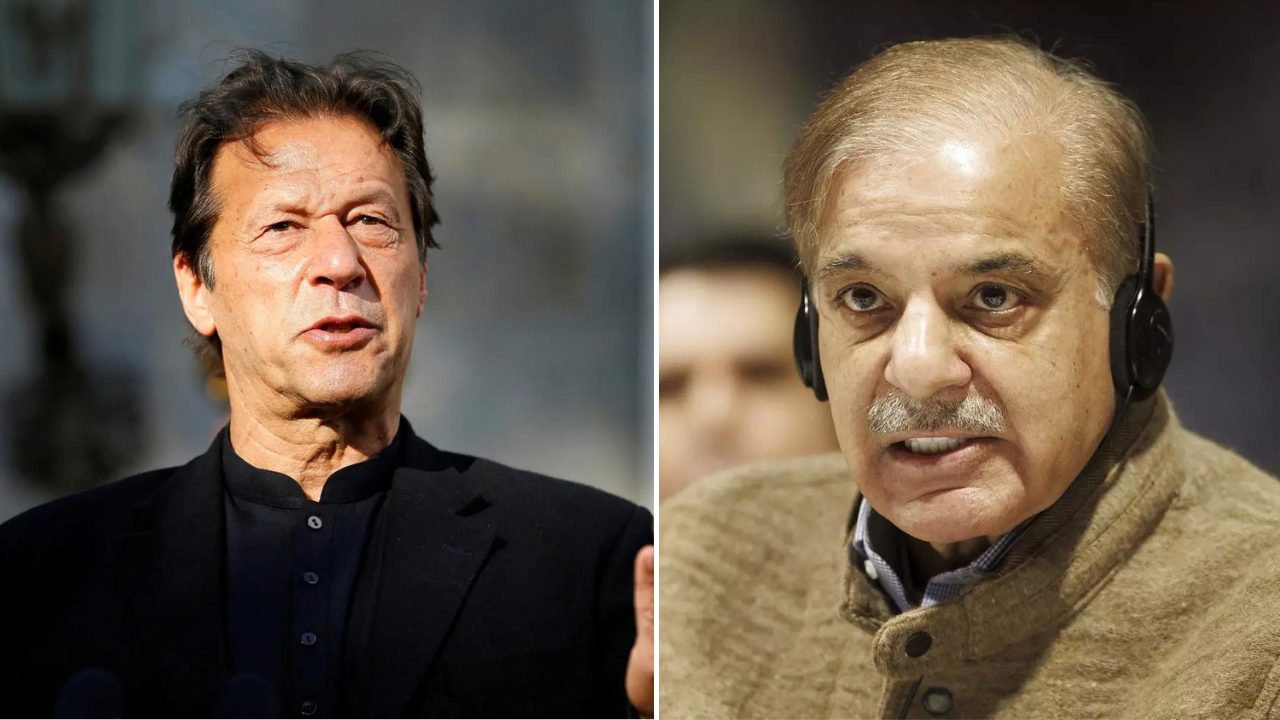
Read the mainstream coverage of Islamabad's October 11, 2026, decision to suspend the provincial government of Khyber Pakhtunkhwa (KP) and you will find the exact same lazy binary. On one side, Prime Minister Shehbaz Sharif and President Asif Ali Zardari claim they invoked Articles 232 and 234 of Pakistan's Constitution to crush surging militancy. On the other side, Imran Khan's Pakistan Tehreek-e-Insaf (PTI) cries foul, calling it a targeted political ambush meant to stop Chief Minister Sohail Afridi's protest march on the capital. If you found value in this post, you might want to look at: this related article.
Both sides are feeding you half-truths. And the pundits repeating them are missing the real story entirely.
If you want to understand why Islamabad just decapitated the only provincial government still controlled by Imran Khan's party, stop looking at the protest convoys on the Peshawar-Islamabad motorway. Stop taking the federal cabinet's counterterrorism talking points at face value. Look instead at the constitutional machinery, the fiscal chokehold on the former tribal areas, and a newly minted judicial referee that changes the rules of Pakistani power forever. For another look on this story, check out the recent update from BBC News.
The Lazy Consensus and Why It Fails
Mainstream reporting treats the KP emergency like a standard tug-of-war between security imperatives and democratic rights. That framing is intellectually bankrupt. It assumes the federal government had to choose between fighting militants and respecting a provincial mandate.
That is a false choice.
Under Pakistan's security architecture, the federal government and the military establishment already control border management, intelligence operations, and major kinetic campaigns in KP. You do not need to suspend a provincial assembly, arrest Chief Minister Sohail Afridi, detain Assembly Speaker Babar Saleem Swati, and place the province under Governor Faisal Karim Kundi just to launch an operation against cross-border insurgents.
Look at the map. If worsening militancy alone triggered Article 232 emergencies, Balochistan would have been under governor's rule years ago. Yet Balochistan's provincial setup remains intact, while KP—where PTI has held uninterrupted power since 2013 and won a two-thirds majority in 2024—gets placed under direct federal receivership.
The counterterrorism excuse does not survive five minutes of scrutiny.
At the same time, PTI's narrative—that this is merely a panicked reaction to a single long march—is equally shallow. Islamabad has survived dozens of marches, container blockades, and tear-gas standoffs over the past decade without dissolving an entire provincial executive. Burning down a provincial government just to block a rally is like burning down your house to kill a spider. You only take a step that extreme when you are trying to permanently rewire the wiring inside the walls.
What Everyone Missed About Articles 232 and 234
Most journalists lump Articles 232 and 234 together as a single "emergency button". In constitutional law, precision matters, and the dual invocation here reveals a cold, calculated legal trap.
Here is how the mechanics actually work:
- Article 232 (Proclamation of Emergency): Triggered when the security or economic life of Pakistan, or any part of it, is threatened by war, external aggression, or internal disturbance beyond the power of a provincial government to control. Once approved by a joint sitting of Parliament—which Islamabad pushed through on October 15, 2026—Article 232 has no automatic expiration date. It stays alive until revoked or voted down by a majority of the total membership of both houses.
- Article 234 (Power to Issue Proclamation in Case of Failure of Constitutional Machinery): This is the instrument that actually strips the Chief Minister and cabinet of executive authority and hands the province to the Governor. Unlike Article 232, Article 234 carries strict time limits and requires parliamentary extensions, maxing out at six months.
Do you see the play?
By firing both barrels simultaneously, Islamabad did not just pause PTI's street mobilization. It gave itself an indefinite security override under Article 232 while using Article 234 to physically remove the provincial leadership from the board during a critical six-month window.
I have watched South Asian governments use emergency clauses for twenty years, and the pattern is always the same: when an administration invokes two overlapping constitutional provisions at once, it is not trying to solve a crisis. It is trying to manufacture a fait accompli before the courts can catch up.
The Real Fight Is Over Money, Not Just Marches
You will barely find a mention of fiscal federalism in the viral headlines about KP, yet money is the quiet engine driving this collision.
When Pakistan merged the Federally Administered Tribal Areas (FATA) into Khyber Pakhtunkhwa in 2018, Islamabad promised massive developmental transfers to integrate the war-scarred districts into the provincial fold. The administrative burden landed squarely on Peshawar's shoulders. The promised cash never arrived in full.
Look at the numbers from the first ten months of the financial year leading into this crisis: against a budgeted allocation of PKR 203 billion, KP received just PKR 73 billion. That is a staggering shortfall for a province absorbing the social, policing, and infrastructure costs of frontline counterinsurgency.
For months, KP's provincial leadership had been turning that fiscal squeeze into political ammunition—threatening to withhold cooperation, demanding overdue National Finance Commission (NFC) shares, and using provincial state resources to bankroll anti-federal mobilization. From Islamabad's perspective, a hostile provincial government sitting on a strategic border, starved of cash, and openly defying federal security policy was an intolerable administrative liability.
Suspending the provincial government under Article 234 solves Islamabad's budget headache overnight. With Governor Faisal Karim Kundi calling the shots, Peshawar stops demanding missing billions from the federal treasury and starts signing off on whatever security and fiscal arrangements Islamabad puts on the desk.
Enter the Federal Constitutional Court
If you really want to know why October 2026 was the exact moment Islamabad pulled the trigger, look at where PTI's legal challenges landed.
In previous eras, suspending a provincial assembly meant an immediate, unpredictable showdown in the Supreme Court of Pakistan. Not anymore. Today, these petitions are routed through the Federal Constitutional Court (FCC)—the specialized judicial body created to handle constitutional disputes.
When PTI Chairman Gohar Ali Khan and opposition leaders challenged the governor's rule and the preventive detention of Sohail Afridi and Speaker Babar Saleem Swati, the high court proceedings hit a wall, pushing the fight squarely into the FCC's lap. Legal scholars like Muhammad Asif Khan, writing for the International Journal of Constitutional Law Blog, have already flagged the existential stakes of this moment. The KP emergency is the ultimate stress test for the FCC.
If the FCC validates the dual use of Articles 232 and 234 based purely on the federal cabinet's subjective claim of an "internal disturbance," it effectively gut-punches the 18th Amendment—the landmark 2010 constitutional reform that devolved power from Islamabad to the provinces. It signals to every provincial government in Pakistan that provincial autonomy exists only at the pleasure of the federal executive.
Answering the Questions Readers Actually Ask
When people search for why Pakistan declared an emergency in Khyber Pakhtunkhwa, they are usually led down blind alleys by partisan spin. Let's strip away the noise and answer the core questions directly.
Did the KP government actually fail to stop terrorism?
That question assumes the provincial government had the tools to stop it in the first place. While provincial police bear the brunt of militant attacks—losing dozens of officers in ambush after ambush across districts like Kohat and the merged tribal belt—counterterrorism strategy, intelligence gathering, and cross-border military policy with Kabul are dictated by the federal government and military high command. Blaming Peshawar alone for deteriorating security is like blaming a hospital's night nurse for a citywide epidemic.
Is this emergency legal under Pakistan's Constitution?
On paper, yes. In practice, it stretches constitutional text to its breaking point. Articles 232 and 234 exist in the Constitution, and the federal cabinet followed the formal steps: presidential proclamation on October 11, followed by parliamentary approval in a joint sitting on October 15. However, constitutionalism is not just checking procedural boxes. Using emergency powers to arrest a sitting Chief Minister and dissolve an assembly holding a two-thirds majority—right as that assembly prepares a peaceful political march—violates the core democratic purpose those articles were written to protect.
Can Imran Khan's party still govern KP once the emergency ends?
Only if there is a functioning party apparatus left to govern. Preventive detentions of top provincial leaders, combined with restrictions on movement and communication, are designed to fracture PTI's local command structure. Even when Article 234 governor's rule expires, a weakened, disorganized provincial cabinet returning to empty coffers will find itself governing in name only.
The Uncomfortable Downside Nobody Wants to Admit
Here is where the contrarian view cuts both ways, and any honest analyst has to admit the risk in dismissing Islamabad's security argument too lightly.
While Islamabad's motives are overwhelmingly political and fiscal, the security vacuum in Khyber Pakhtunkhwa is lethal and very real. Militant attacks in the province have spiked dramatically over the past two years, and the total breakdown in communication between the federal interior ministry and the provincial Chief Minister's office was actively paralyzing coordination. You cannot run a coherent counterinsurgency when the federal capital and the provincial capital treat each other as enemy states.
The fatal flaw in Islamabad's strategy, however, is thinking that replacing an elected Chief Minister with an unelected Governor fixes that coordination problem.
It does the exact opposite. In a region as fiercely independent and politically mobilized as Khyber Pakhtunkhwa, stripping away the public's democratic mandate does not pacify the population. It alienates the very communities whose intelligence and cooperation security forces need to defeat insurgents. When Islamabad locks up the province's elected representatives and boycotting lawyers empty the courts, the state loses its moral authority on the ground. Militants thrive in the exact space where citizens stop trusting the state.
What Analysts and Policymakers Must Do Instead
If you are tracking South Asian geopolitics, sovereign risk, or constitutional governance in Pakistan, stop reading press releases from Islamabad or Peshawar. Adjust your analytical playbook immediately:
- Track the Treasury, Not the Rallies: Watch whether the federal Ministry of Finance releases the withheld NFC and FATA merger funds to Governor Faisal Karim Kundi over the next 60 days. If the money suddenly flows now that PTI is out of the Chief Minister's house, you have your definitive proof that this emergency was a fiscal and political takeover, not a security necessity.
- Watch the Federal Constitutional Court Docket: Ignore the noise in the lower courts. The single most important signal for Pakistan's political stability is how quickly—and on what grounds—the FCC rules on the recovery petitions for Sohail Afridi and the validity of the Article 234 proclamation. A ruling that ducks the merits under the "doctrine of necessity" tells you provincial autonomy in Pakistan is dead for a generation.
- Measure Kinetic Incidents Post-Takeover: Compare militant attack data from independent monitors like ACLED across the 90 days before October 11 against the 90 days after. If violence remains flat or escalates under governor's rule, Islamabad's primary justification collapses in public view.
Pakistan's ruling coalition thinks it just neutralized Imran Khan's last institutional fortress. By trading democratic legitimacy for temporary administrative control, Islamabad has not secured Khyber Pakhtunkhwa—it has simply taken direct ownership of a crisis it no longer has a provincial scapegoat to blame for.
You can watch the breakdown of the initial emergency declaration and the immediate fallout in Pakistan Declares Emergency In 12 Khyber Pakhtunkhwa Districts. This report outlines the immediate district-level administrative measures and security coordination triggered right after the proclamation.