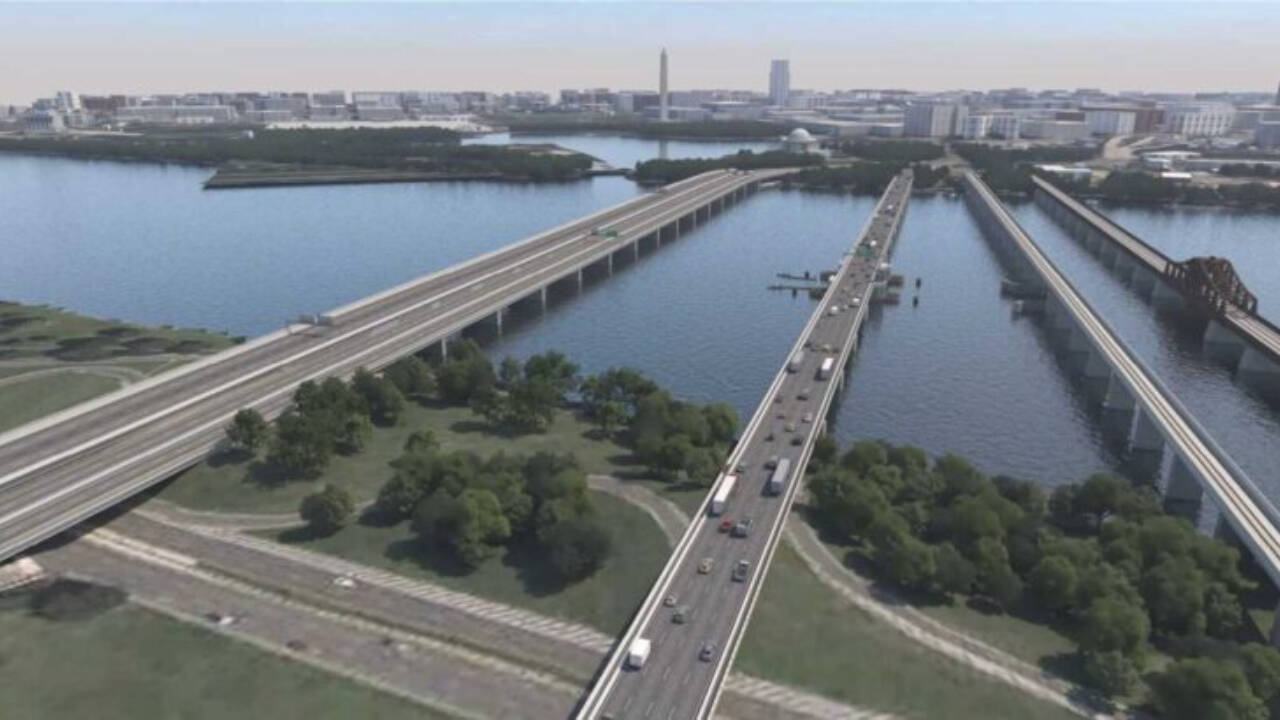
The headlines wrote themselves across every regional news outlet and trade publication. A mid-century span in Washington State receives a fresh injection of one hundred and fourteen million dollars. A brand-new section gets floated into place in a breathless fifty-six hours. Commuters rejoice. Politicians pose in hard hats with oversized scissors, beaming for the cameras as traffic resumes ahead of schedule. The local news breathlessly reports on the triumph of modern civil engineering, marveling at how fast a piece of heavy infrastructure can be swapped out like a failing hard drive.
It is theater. Expensive, dangerous, self-deluding theater.
I have spent two decades watching public works departments trade long-term structural survival for short-term headline management. When you wrap a fifty-six-hour installation stunt around a mid-century skeleton, you are not fixing infrastructure. You are putting a custom-tailored suit on a corpse and calling it a resurrection. The public claps because the highway reopens by Monday morning, oblivious to the fact that the underlying structural debt has just been compounded with interest.
The Fifty-Six Hour Illusion
Let us look past the stopwatch. Fifty-six hours sounds impressive until you examine what anchors that shiny new span. Modern self-propelled modular transporters, high-capacity hydraulic jacks, and precision barge ballasting make moving multi-ton concrete and steel slabs look effortless. It is a masterclass in logistics, executed by skilled field crews who deserve immense credit for their precision.
However, a bridge is not a modular Lego set where you can swap out a middle piece and pretend the entire structure resets its biological clock.
A nineteen-fifties bridge was built under completely different load assumptions, material sciences, and environmental expectations. Truck weight limits were a fraction of today's legal maximums. Freight volume was a trickle compared to the relentless, bumper-to-bumper convoy of heavy semi-trucks hammering asphalt twenty-four hours a day. Material science in nineteen fifty relied on steel alloys and concrete formulations that have decades of micro-cracking, chloride ion infiltration, and fatigue cycles baked into their atomic structure.
When you drop a modern, high-capacity span onto legacy piers, abutments, and foundations that have endured seventy-plus years of seismic shifts, thermal expansion, and weather battering, you create an architectural Frankenstein. You have upgraded the middle while leaving the load paths resting on aging, tired substructures. Engineers call this mismatched stiffness. Physics calls it a ticking clock. When an earthquake hits or a load-rating threshold is pushed to the limit, the old concrete does not care how fast you floated the new deck into position.
The Accounting Fraud of Deferred Capital
One hundred and fourteen million dollars is a staggering sum of money. Yet, in the sterile world of department of transportation budgeting, it is a cop-out. It is the cheap way out disguised as a major investment.
Building an entirely new crossing from scratch requires political courage, environmental battles, land acquisitions, and a multi-year capital commitment that spans multiple election cycles. No elected official wants to fund a project that will only open after they have retired or lost their seat. So, they opt for the overhaul. They commission a flashy retrofit, slap a fifty-six-hour construction window on it so traffic disruption is minimized, and call it a win for taxpayers.
Taxpayers did not win. They paid premium prices for a temporary extension on an expired warranty. If you spend one hundred and fourteen million dollars patching a relic every twenty years, you eventually spend far more than the cost of a clean-sheet replacement, while managing a higher risk of catastrophic failure during the interim decades. It is the infrastructure equivalent of replacing the transmission in a car with three hundred thousand miles on the odometer. You are keeping a dying machine on life support because you are terrified of facing the cost of a new vehicle.
The Geometric Trap of Legacy Corridors
Proponents of these rapid overhauls love to talk about economic continuity. Keeping the highway open, maintaining the flow of commerce, preventing supply chain snarls.
This argument collapses under basic urban economics. Bottlenecks are not caused solely by construction closures. They are caused by structural geometric obsolescence. A bridge built in nineteen fifty was designed for narrower lanes, tighter merge angles, and lower design speeds. Floating a new span in place does not magically widen the approach roads, expand the shoulders, or fix the archaic geometry that choked traffic flow in the first place.
You have replaced a worn-out segment of road with a newer segment of road that funnels vehicles right back into the exact same spatial trap. It is like buying a faster processor for a computer with a cracked motherboard. The bottleneck remains because the entire corridor was engineered for a bygone era when personal vehicles were smaller and freight trucks were lighter. By locking yourself into the old alignment through a costly retrofit, you legally and financially trap the region into substandard corridor geometry for another generation.
The Reality of Structural Fatigue
Let us examine what actually happens beneath the waterline. While the media focuses on the cinematic float-in of the superstructure, the submerged piers take the brunt of the abuse. Concrete submerged in marine or river environments undergoes continuous chemical attack. Alkali-silica reactions swell the internal matrix of the concrete, creating micro-fractures that weaken the compressive strength long before visible spalling occurs on the surface.
In a full replacement project, engineers drive entirely new deep-foundation piles, redesign scour protection, and implement modern seismic isolation bearings. A superficial overhaul skips this foundational renewal because touching the underwater substructure blows up the budget and destroys the fifty-six-hour timeline.
When agencies brag about saving time and money through rapid assembly, they are usually saving money by skipping the hardest, most vital parts of structural renewal. They are painting the rust on the underside of the pier cap and hoping the river does not look too closely.
How We Fix the Playbook
If we want to stop repeating this cycle of expensive cosmetic surgery on crumbling infrastructure, we need a complete operational reset.
First, establish a mandatory lifecycle cost audit for any bridge overhaul exceeding fifty million dollars. If the projected lifespan of the retrofitted asset is less than forty percent of a newly constructed baseline, ban the project. Force agencies to justify why they are propping up a zombie structure instead of clearing the slate for a permanent solution.
Second, decouple civil engineering funding from short-term electoral cycles. Infrastructure does not care who is in office. When we allow politicians to prioritize projects that can be completed before the next election cycle, we guarantee that critical, multi-year structural overhauls get starved of funding in favor of high-visibility, short-duration stunts.
Third, design for modular adaptability from day one. If we are going to build spans that can be floated in over a weekend, those spans should be engineered as standardized, swappable components of an entirely modernized corridor grid, not custom band-aids strapped to seventy-year-old foundations.
The Final Ledger
A fifty-six-hour installation is a fantastic media event. It makes for great time-lapse videos on social media, glowing press releases, and easy political talking points. But engineering is not judged by how fast you can drop a slab of concrete into place. It is judged by how well it holds up when the next major seismic event hits, or when regional traffic volumes double over twenty-five years.
Until we stop rewarding politicians and planners for speed over substance, we will keep celebrating milestones that are little more than expensive countdown timers to the next emergency repair. The bridge is fixed for now. The systemic rot underneath it is laughing.


