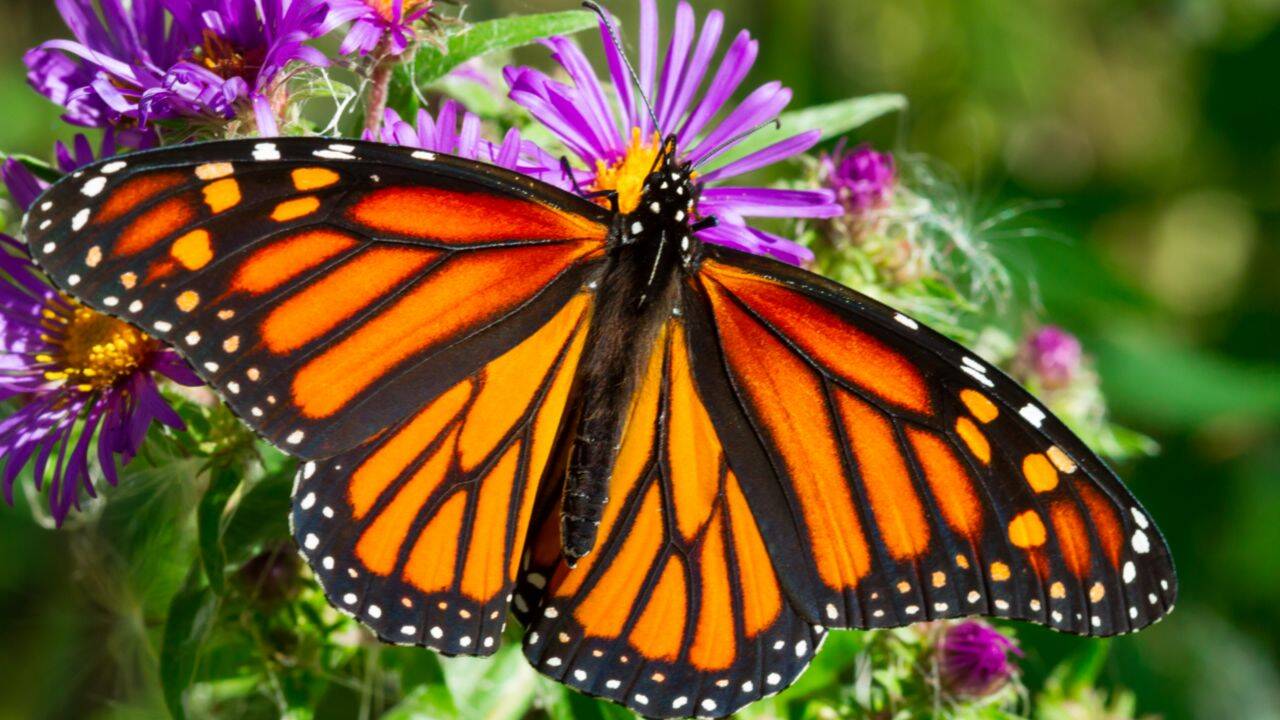
Every autumn, the internet falls in love with a bug.
This year, her name is Lulu. According to the viral headlines, a monarch butterfly named Lulu wore a tiny adhesive sticker, flew roughly 600 miles from Idaho to the California coast, and gave us a heartwarming glimpse into the resilience of nature. People shared the post. Comment sections overflowed with awe. Conservation groups patted themselves on the back for another successful outreach campaign.
Here is the uncomfortable truth nobody in the feel-good media ecosystem wants to admit. Lulu is not a triumph of conservation. She is a statistical rounding error wrapped in a public relations stunt.
When we turn individual insects into Disney characters, we actively obscure the brutal ecological reality facing western monarchs. The lazy consensus says that putting a microscopic sticker on a butterfly wing connects people to nature and saves species. Logic and actual population data say otherwise. We are spending millions of human hours and vast sums of grant money playing tag with individual bugs while the foundational habitats those bugs require are being paved over, sprayed with neonicotinoids, and burned to ash.
If you want to understand why the western monarch population crashed from millions in the 1980s to fewer than 2,000 individuals in 2020 before experiencing a fragile, erratic rebound, stop looking at Lulu's flight path. Start looking at the systemic failures that make a 600-mile journey a death sentence for 99 percent of her siblings.
The Myth of the Heroic Individual
Mainstream wildlife journalism relies on a predictable formula. Take a massive, terrifying ecological collapse, zoom in on one charismatic survivor, give it a cute name, and sell hope.
Lulu flew 600 miles from Idaho to California. That sounds miraculous until you actually understand monarch biology. Western monarchs do not navigate using willpower, grit, or a personal desire to reach the beach. They are biological gliders riding high-altitude thermal currents and prevailing autumn winds. A 600-mile trek from the Great Basin to coastal California groves like Pismo Beach or Pacific Grove is standard operating procedure for Danaus plexippus west of the Rocky Mountains.
Calling Lulu extraordinary is like throwing a paper airplane off a skyscraper in a hurricane and acting shocked when it lands three blocks away.
I have spent over a decade analyzing conservation funding models and watching well-meaning nonprofits burn through endowments on flashy tracking initiatives. Every time a tagged monarch gets spotted in an overwintering grove, fundraising emails go out. Donors feel good. Meanwhile, the recovery rate for tagged butterflies remains abysmally low—often hovering around one percent or less depending on the region and tagging program.
Why Tagging Data Misleads the Public
Let us break down what a wing tag actually tells scientists versus what the public thinks it tells them.
- What the public thinks: Scientists are tracking Lulu in real time, watching her brave storms, and using her GPS coordinates to build safe corridors across the American West.
- What actually happens: A volunteer slaps a polypropylene sticker onto the discal cell of a butterfly's hindwing. Nobody sees that butterfly again unless another human happens to spot that exact bug resting in a cluster of thousands of other butterflies months later, takes a high-resolution photo, and submits the alphanumeric code to a database like the Southwest Monarch Study or Monarch Watch.
There is no satellite uplink. There is no real-time telemetry. Lulu did not have a micro-transmitter strapped to her thorax. She had a piece of plastic glued to her scales. And while historical tagging programs pioneered by researchers like Fred Urquhart in the 1970s were instrumental in discovering the central Mexican overwintering sites for eastern monarchs, continuing to treat basic sticker-tagging as a breakthrough in 2026 is absurd. We already know western monarchs fly from Idaho, Washington, and Utah to the California coast. We have known this for decades.
The Hidden Physical Toll of Stickers on Wings
Conservationists love to claim that tagging is completely harmless. They insist that a tag weighs a fraction of a milligram and does not impede flight.
Ask any aerodynamicist or functional morphologist about surface friction and wing loading on a creature that relies on laminar airflow to survive a multi-month migration. A monarch butterfly weighs roughly half a gram. Adding an external sticker alters the center of gravity, disrupts the microscopic scales that shed water and regulate temperature, and introduces localized drag.
Even worse, consider the human error factor. Tagging requires catching wild butterflies in nets, pinching their wings between human fingers, and pressing an adhesive onto delicate chitinous membranes. When trained entomologists do this, the risk is minimized. When thousands of enthusiastic amateurs do it in backyard workshops, wings tear, scales rub off, and lipid reserves get burned while the insect panics in a mesh cage.
Imagine a scenario where you are preparing to run an ultramarathon across a desert with zero water stations. Just before the starting gun fires, a giant picks you up, holds you down for three minutes while your heart rate spikes to maximum capacity, and glues a laminated index card to your shoulder blade. You might still finish the race. You might even make the local news. That does not mean the experience helped you survive.
The Opportunity Cost of Citizen Science
The real damage of the Lulu narrative is not the sticker on her wing. It is the distraction it creates.
Citizen science is the sacred cow of modern ecology. Nobody dares criticize it because criticizing citizen science sounds like attacking public engagement. Yet if we look at the hard numbers, the return on investment for mass-market tagging programs is terrible.
- Data Noise: Amateur sightings cluster heavily around urban areas, state parks, and easily accessible beaches. This creates massive geographic bias. We get mountains of data about butterflies near coastal highways and almost zero data about butterflies dying in agricultural dead zones.
- Resource Diversion: Grant money is finite. Every dollar spent printing sticker sheets, managing volunteer databases, and writing press releases about Lulu is a dollar not spent buying water rights, restoring riparian corridors, or paying ranchers to leave native milkweed uncut.
- Moral Licensing: When a person tags a butterfly or shares a viral story about one, their brain registers a completed good deed. They feel they have contributed to saving the monarchs. Consequently, they are far less likely to do the hard, unglamorous political work required to ban systemic pesticides or reform industrial agriculture.
What Actually Kills Western Monarchs
If you search online for why monarchs are disappearing, you will get a sanitized list of polite culprits. Climate change. Habitat loss. Pesticides. These words are so broad they have lost all sharp edges. Let us name the specific mechanisms destroying western monarchs right now.
1. The Tropical Milkweed Trap
Well-intentioned homeowners want to help Lulu's offspring. So they go to a big-box garden center and buy tropical milkweed (Asclepias curassavica). It grows fast, blooms bright orange and red, and attracts butterflies immediately.
It is also an ecological poison pill.
Unlike native milkweeds—such as showy milkweed (Asclepias speciosa) or narrowleaf milkweed (Asclepias fascicularis)—tropical milkweed does not die back in the winter in mild climates like coastal and southern California. When milkweed stays green year-round, it interrupts the monarchs' reproductive diapause. Instead of migrating to overwintering groves and conserving energy, butterflies stay put and keep breeding through the winter.
Worse, because the plants never die back, they accumulate massive concentrations of a protozoan parasite called Ophryocystis elektroscirrha (OE). Researchers like Sonia Altizer at the University of Georgia have documented how year-round tropical milkweed acts as a transmission vector for OE. Infected caterpillars emerge as crippled adults with deformed wings, unable to fly 600 miles, let alone 600 feet. Buying tropical milkweed to save monarchs is like handing out contaminated blankets to stop a plague.
2. The Neonicotinoid Cloud Over the Central Valley
Lulu flew from Idaho to California. To make that trip, she had to cross or skirt some of the most heavily sprayed agricultural land on planet Earth.
California's Central Valley produces a massive percentage of the nation's fruits, nuts, and vegetables. It is also saturated with neonicotinoids—systemic insecticides that do not just sit on the surface of crops, but get absorbed into the vascular tissue of surrounding wild plants, soil, and groundwater.
A monarch butterfly does not need to land on a sprayed almond tree to die. She only needs to sip nectar from a wildflower growing in a drainage ditch fifty yards downwind. Sub-lethal doses of neonicotinoids destroy insect navigation systems, wreck their immune response, and leave them too disoriented to ride thermal currents south. Putting a tracking sticker on a butterfly flying into a chemical gauntlet does nothing to neutralize the poison waiting for her at the finish line.
3. The Collapse of Overwintering Groves
Even if a butterfly survives the 600-mile flight from Idaho, what awaits her in California?
Western monarchs rely on specific microclimates along the Pacific coast. They need dense stands of eucalyptus, Monterey pine, and Monterey cypress that block harsh winter winds, filter sunlight, and maintain precise humidity levels. If the temperature drops too low, they freeze. If it gets too warm, they burn through their stored fat reserves before spring arrives.
Many of these coastal groves are on prime real estate. Others are aging, unmanaged, and dying from drought and beetle infestations. In several historic overwintering sites, local municipalities have cut down dead or hazardous trees without planting replacements, destroying the exact windbreak geometry the butterflies need to survive January storms.
Answering the Questions Nobody Wants to Ask
When stories like Lulu's go viral, search engines light up with predictable queries from curious readers. Let us dismantle the false premises baked into those questions.
How do monarch butterflies know where to migrate?
They do not "know" in any conscious sense. Monarchs possess a time-compensated sun compass in their antennae and brain. Specialized photoreceptors detect the angle of ultraviolet light from the sun, while circadian clock genes adjust for the sun's movement across the sky throughout the day. Combined with a magnetic compass that senses Earth's geomagnetic field on cloudy days, this biological hardware points them southwest in the autumn. They are following an ancient genetic algorithm, not a map.
Do tagged butterflies survive as well as untagged ones?
Under ideal laboratory conditions, a properly applied tag causes minimal mortality. In the real world, where wind shear, rain, predators, and human handling errors enter the equation, any external modification carries a survival penalty. We simply ignore the dead ones because dead butterflies do not get photographed in Pismo Beach. Survivorship bias is the silent partner of every heartwarming wildlife story.
Should I raise monarch caterpillars indoors to protect them from predators?
No. Stop doing this immediately. Captive rearing in backyard mesh cages—a wildly popular hobby among monarch enthusiasts—produces weaker, less fit butterflies. Studies led by researchers like Ayse Tenger-Trolander at the University of Chicago demonstrated that commercially bred and indoor-reared monarchs often lose their directional migratory orientation. Without natural fluctuations in temperature, light angle, and barometric pressure, their internal compasses fail to calibrate. Furthermore, cramped backyard cages are breeding grounds for OE parasites and viral outbreaks. Nature relies on high caterpillar mortality to cull the weak and maintain genetic vigor. When you save every sick caterpillar in a Tupperware container, you dilute the wild gene pool.
The Hard Truth About Conservation Metrics
Here is the downside to my argument, and it is worth acknowledging openly. Without charming stories about butterflies named Lulu, public apathy skyrockets. Human beings are wired for narrative. We struggle to care about abstract statistics like "40 percent decline in riparian milkweed density," whereas we immediately connect with a single traveler making an epic journey.
Conservation organizations know this. They use Lulu as a Trojan horse to get people in the door, hoping that once you care about one butterfly, you will eventually care about pesticide regulations and land-use policy.
The problem is that the Trojan horse has become the entire strategy. We have mistaken awareness for action. Knowing that a butterfly can fly 600 miles from Idaho to California does not plant a single native nectar source in Nevada. Retweeting a photo of a wing tag does not stop a developer from bulldozing a coastal pine grove in Santa Cruz.
How to Actually Help Western Monarchs
If you genuinely care about the survival of the species rather than the dopamine hit of a cute animal story, abandon the gimmicks and execute these steps.
- Rip out tropical milkweed. If you live in California, Arizona, or the Gulf Coast and have Asclepias curassavica in your yard, pull it out by the roots today. Replace it exclusively with native milkweed species sourced from local nurseries that guarantee their plants are free of systemic neonicotinoids. If you live within five miles of the California coast, do not plant milkweed at all—historic coastal zones never had native milkweed, and planting it there disrupts migratory timing.
- Plant late-blooming native nectar sources. Adult monarchs need fuel for the autumn flight more than they need milkweed. Milkweed is only for laying eggs. Migrating adults require high-sugar nectar from late-season blooms like rabbitbrush, goldenrod, asters, and native coyote brush to build the lipid reserves that keep them alive all winter.
- Stop buying and releasing butterflies. Never order live butterflies for weddings, memorials, or school science projects. Shipping insects across state lines spreads diseases and scrambles regional genetic adaptations.
- Fund habitat acquisition, not tracking toys. Direct your money toward organizations buying conservation easements, restoring native prairie ecosystems, and managing overwintering forest canopies. Look for groups working directly with farmers and ranchers to install hedgerows of native flowering shrubs along agricultural borders.
Lulu made it 600 miles from Idaho to California. Good for her. Now stop staring at the sticker on her wing and start looking at the vanishing landscape beneath her.