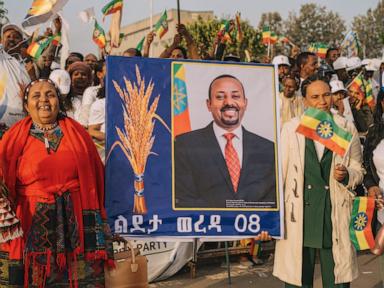
International mainstream media loves a simple tragedy. When the National Election Board of Ethiopia announced that Prime Minister Abiy Ahmed’s Prosperity Party locked down 438 out of 486 contested parliamentary seats, Western newsrooms immediately vomited up the standard, predictable script. They painted a picture of a failed democratic milestone, a vote hopelessly fractured by militia violence in Amhara, insurgencies in Oromia, and the total exclusion of the Tigray region.
They are asking all the wrong questions. They are looking at the 143 shuttered polling stations and a fragmented opposition through a hyper-idealized lens, treating the vote as if it occurred in an stable European suburb rather than a complex, highly volatile state.
I have watched international development agencies sink hundreds of millions of dollars into forcing generic democratic processes onto complex multi-ethnic nations, only to watch those same systems trigger immediate civil collapse. Western commentators are mourning a "loss of democracy" that never existed in the first place, completely missing the structural mechanics driving East Africa. This election was never about Western-style democratic purity. It was a brutal, highly transactional referendum on raw economic survival and the consolidation of state authority.
And right now, that consolidation is exactly what keeps the lights on in Addis Ababa.
The Myth of the Fragmented Opposition
The lazy consensus complains that opposition figures were locked out, harassed, or boycotted the vote entirely, clearing a path for a Prosperity Party supermajority. Critics like Merara Gudina call the results a foregone conclusion that threatens national stability.
Let us be brutally honest about what the opposition actually represents. Ethiopia’s opposition is not a unified front of modern, policy-driven technocrats ready to manage a massive complex economy. It is a deeply fractured collection of highly localized, ethnocentric factions. Had the federal government stepped back to allow an entirely unmanaged political free-for-all, the result would not have been a harmonious coalition parliament. It would have yielded a deeply polarized legislative chamber divided strictly along volatile ethnic lines.
When ethnic factions battle for a zero-sum share of federal power in a diverse state, history shows us exactly what happens: immediate institutional paralysis followed by rapid regional fragmentation. The ruling party did not simply manufacture its victory out of thin air; it filled a massive political vacuum left by an opposition that has consistently failed to build a coherent, pan-Ethiopian economic alternative.
The Trillion-Birr Tradeoff
The real narrative isn't found in the localized clashes with the Fano militia or the Oromo Liberation Army. It is found in the deep financial ledger of the Homegrown Economic Reform program.
Abiy’s administration did something that no previous Ethiopian regime dared to do: they completely dismantled the old state-dominated economic model. They floated the Ethiopian Birr, eased tight foreign exchange controls, opened the banking sector to foreign financial firms, and broke up state monopolies by introducing massive corporate competition like Safaricom into the telecom sector.
+-----------------------------------------------------------------------+
|                   THE COLD POLITICAL REALITY                          |
+-----------------------------------------------------------------------+
| Western Idealism:                                                     |
| Decentralized Power -> Absolute Chaos -> Economic Collapse            |
+-----------------------------------------------------------------------+
| East African Reality:                                                 |
| Centralized Supermajority -> Policy Predictability -> Market Growth   |
+-----------------------------------------------------------------------+
Executing massive, painful structural adjustments requires an absolute monopoly on federal legislative power. Floating a currency triggers intense short-term pain, driving up domestic inflation to roughly 12 percent and squeezing urban households hard. If the federal government had to fight a fragile, highly reactive coalition parliament over every single IMF benchmark or monetary policy adjustment, the entire reform agenda would have stalled out in days.
The primary benefit of this supermajority is absolute policy predictability for foreign direct investment. International markets do not invest in fragile, paralyzed coalition governments. They invest in administrations that possess the raw political weight to pass sweeping regulatory overhauls without domestic legislative friction. The government is projecting GDP growth of over 10 percent, making it one of the fastest-growing economies on the continent. That growth rate is not achieved through democratic debates; it is secured through firm, uninterrupted policy execution.
The Problem with Democratic Preachiness
There is a distinct downside to this approach that we must acknowledge. Centralizing power to force economic liberalization creates deep regional resentment. Excluding Tigray from federal representation for six consecutive years deepens dangerous domestic isolation. Confining international election observers strictly to the capital creates a massive information vacuum regarding the real conditions in the rural interior.
But Western analysts must stop pretending that perfect democratic inclusion and rapid economic modernization can be achieved simultaneously in a country navigating active regional insurgencies. You cannot build a modern market economy on top of a weak, unstable state apparatus.
The National Election Board’s decision to label regions into green, yellow, and red zones is not evidence of a failed state; it is evidence of realistic administrative risk management. The government chose to secure the core economic engines of the nation while managing localized volatility at the periphery. It is an approach that prioritizes macro-stability over abstract political ideals.
Stop evaluating East African political developments using a generic Western scorecard. The Prosperity Party’s crushing supermajority isn't an obstacle to Ethiopia’s stabilization. It is the only functional framework currently preventing the entire regional apparatus from fracturing into absolute structural chaos.