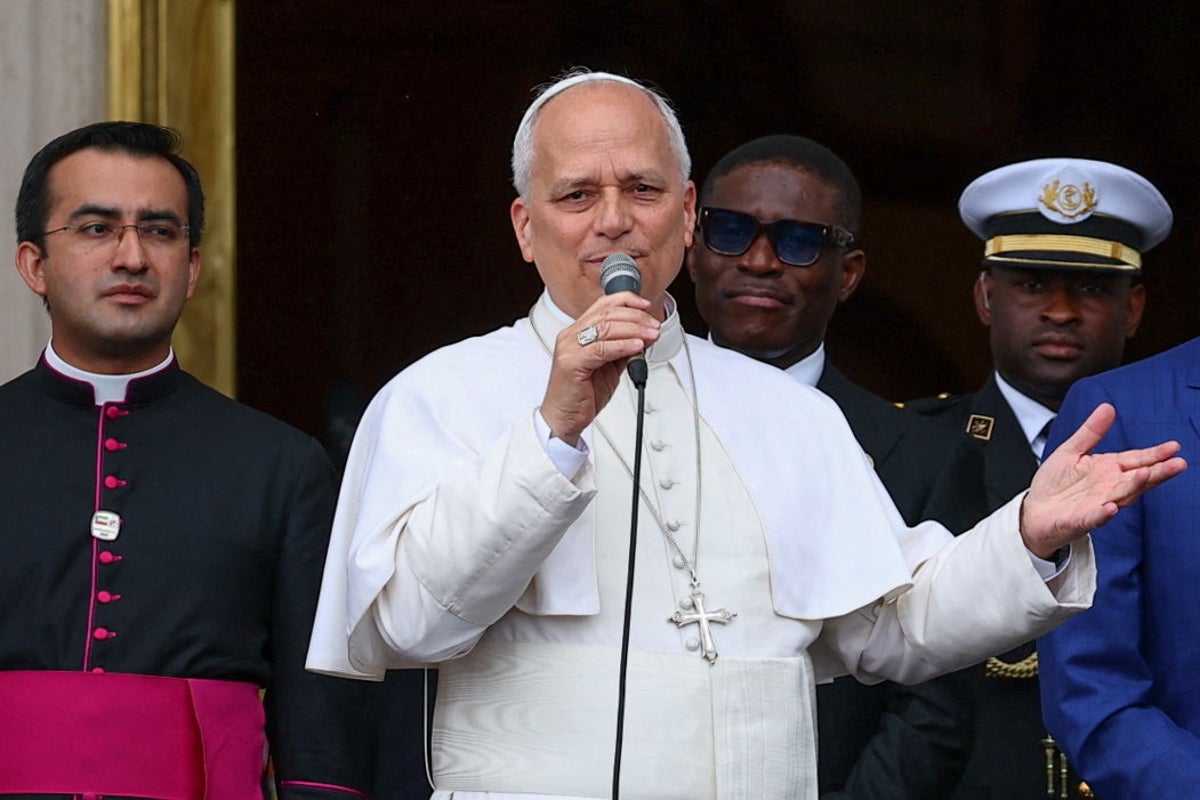
Pope Leo recently wrapped up a high-profile tour across the African continent, punctuating his departure with a predictable flurry of rhetoric regarding inequality and the "scourge" of global indifference. The media followed suit, dutifully recording the optics of a spiritual leader embracing the marginalized while wagging a finger at the nebulous forces of greed. It is a script we have seen for decades. It is also fundamentally broken.
The traditional narrative—championed by the Vatican and echoed by humanitarian NGOs—posits that Africa is a passive victim of external economic malice. While historical exploitation is a fact, the current obsession with "inequality" as a moral failing of the West is a convenient distraction. It allows local leaders to dodge accountability and keeps the continent trapped in a cycle of performative pity.
The False Idol of Equality
Inequality is the natural byproduct of growth, yet the Pope treats it like a virus. When a tech entrepreneur in Nairobi builds a platform that connects thousands of farmers to markets, that entrepreneur becomes wealthy. Inequality increases. Does the farmer care? No. The farmer cares about the price of maize.
By framing the conversation around the gap between the rich and the poor rather than the absolute floor of poverty, the Church prioritizes a feeling of "fairness" over the mechanics of prosperity. For decades, I have watched development experts pour billions into programs designed to "close the gap." Most of that money evaporates into the pockets of the very bureaucrats the Pope claims to oppose.
True progress is messy. It is lopsided. If you demand perfect equity before you allow development, you get neither. You get a stagnant, "equal" level of destitution.
The Moral Hazard of Aid Theology
The Vatican’s rhetoric leans heavily on the idea of redistribution. This is "Aid Theology," and it is poisonous. When the leader of a billion people suggests that the primary solution to African suffering is for the North to "share more," he reinforces a donor-recipient dynamic that erodes agency.
I have walked through markets in Kinshasa and boardrooms in Johannesburg. The people driving change aren't waiting for a handout or a lecture from a European throne. They are fighting against crushing regulatory environments and corrupt internal systems that the Vatican rarely mentions by name. It is far easier to blame "international finance" than it is to call out the specific local dictator who is a member of your own congregation.
The Missing Variable: Rule of Law
The competitor article focuses on the "heart" and "soul" of the people. It ignores the ledger. You cannot pray away a lack of property rights. You cannot "denounce" your way into a stable currency.
If we want to address the "injustice" the Pope speaks of, we need to stop talking about "greed" and start talking about contract enforcement.
- Without enforceable contracts, investment dies.
- Without property titles, the poor cannot leverage their assets.
- Without a functional judiciary, "injustice" isn't a moral failing; it's a systemic feature.
The Church’s focus on the subjective morality of the wealthy ignores the objective reality of the legal structures that keep the poor in the shadows.
The Spectacle of the Whirlwind Tour
There is a specific kind of arrogance in the "whirlwind tour." A leader flies in on a private jet, spends 72 hours in a curated bubble of choreographed poverty, delivers a speech written by theologians in Rome, and flies away feeling "inspired."
This isn't engagement. It’s moral tourism. It provides the West with a brief moment of catharsis—a chance to feel bad about their wealth—without requiring any actual change in trade policy or a serious look at how ecclesiastical power structures often mirror the very hierarchies they criticize.
Imagine a scenario where, instead of a sermon on inequality, the Vatican used its immense diplomatic weight to negotiate the removal of agricultural subsidies in Europe that crush African farmers. That would be a "game-changer," to use the tired jargon of the industry. But that would be political. That would be difficult. It is much easier to talk about the "heart."
The "Greed" Fallacy
The Pope's favorite target is "unbridled capitalism." It’s a classic straw man. Most of the regions he visited aren't suffering from too much capitalism; they are suffering from a total lack of it. They are trapped in mercantilist systems where the state controls the means of success.
In these environments, "greed" isn't the problem—rent-seeking is. When the only way to get ahead is to be close to power, you don't get innovation; you get corruption. By labeling the pursuit of profit as inherently suspect, the Church inadvertently discourages the very entrepreneurial class needed to build a middle class.
What People Also Ask (and the Real Answer)
Q: Can religious leaders actually influence economic policy in Africa?
The Harsh Reality: Only if they stop being vague. General statements about "justice" are ignored by everyone except the press. If the Church wants to be a force for good, it should focus on local transparency and the protection of individual rights, not macro-economic theories it doesn't understand.
Q: Isn't inequality the biggest threat to stability?
The Counter-Intuitive Truth: No. The lack of opportunity is. People will tolerate a billionaire next door if they can see a clear path to becoming a millionaire. They revolt when they are stuck in the mud while the elite ship their money to offshore accounts. The Pope attacks the symptom (the gap) while ignoring the disease (the wall).
The Path Forward is Not Pity
If we actually value the dignity of the human person, we have to stop treating a continent of 1.4 billion people as a charity case for the soul. The "poor" are not a monolith for the Vatican to use as a backdrop for moral lessons.
We need to dismantle the idea that "social justice" is something granted by the benevolence of the powerful. It is something claimed by the empowerment of the individual.
- Stop asking for "solidarity" and start demanding market access.
- Stop preaching against "materialism" to people who don't have clean water.
- Stop the tours.
The next time a global leader visits, the message shouldn't be about how the world needs to change its heart. It should be about how the continent is ready to compete, provided the world stops treating it like a museum of misery.
The era of the "white-robed savior" is over. Africa doesn't need more sermons on the evils of wealth; it needs the tools to create its own. Anything else is just spiritual vanity.
Stop nodding along to the platitudes. The "injustice" isn't that some have more; it’s that the structures of power—including the ones wearing the robes—are more interested in maintaining the narrative of the victim than they are in the reality of the victor.
Burn the script.