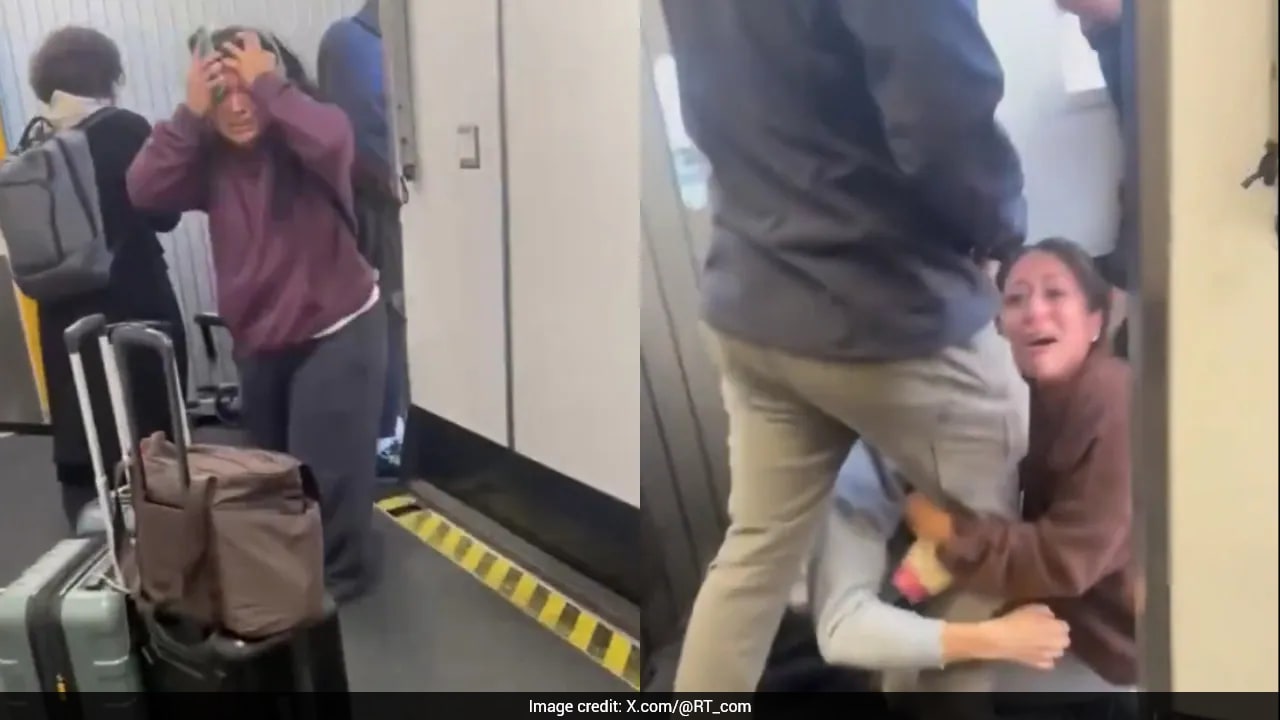
You have seen the clip. Shaky vertical smartphone footage, overhead fluorescent lights, muffled shouting near a jet bridge, and a caption screaming about "chaos" as federal agents pull passengers out of a boarding line at Seattle-Tacoma International Airport.
It is pure algorithmic rocket fuel. It triggers instant outrage, rack-ups millions of views in hours, and invites thousands of comments from armchair constitutional scholars who have never read Title 8 of the United States Code. You might also find this related coverage useful: What Most People Miss About Nepal and India Diplomatic Visits.
The mainstream media covers these moments like sudden, chaotic ambushes—isolated explosions of enforcement theater designed to shock travelers. That narrative is lazy, sensationalist, and fundamentally backwards.
If you think an arrest at a boarding gate at Sea-Tac is a spontaneous ambush, you do not understand how modern aviation security, customs passenger targeting, or administrative immigration law actually operate. What looks like sudden chaos on a 30-second TikTok clip is almost always the final, predictable ten seconds of a bureaucratic paper trail that started days—sometimes weeks—before the passenger ever stepped into an Uber to the airport. As extensively documented in recent reports by BBC News, the results are widespread.
The Myth of the Random Gate Ambush
Legacy outlets love the word "chaos." It absolves them of having to explain administrative procedure. When a reporter writes that Immigration and Customs Enforcement (ICE) agents "dragged away fliers before boarding," they are painting a picture of dragnet sweeps—agents randomly prowling Concourse A, checking accents, and grabbing people out of the Priority Boarding queue.
That is not how federal aviation enforcement works. Operational budgets, jurisdictional friction with the Port of Seattle Police, and strict Department of Homeland Security (DHS) targeting protocols make random gate sweeps practically nonexistent.
Here is the actual mechanic behind a boarding-gate apprehension: Advance Passenger Information System (APIS) matching.
Every commercial airline operating into, out of, or within the United States transmits passenger manifests to U.S. Customs and Border Protection (CBP) well before departure. For international flights, carriers transmit data up to 72 hours prior to takeoff, with final updates locked in 30 minutes before the cabin door closes. Even on domestic itineraries, Transportation Security Administration (TSA) Secure Flight vetting cross-references full names, dates of birth, and redress numbers against federal watchlists, active criminal warrants, and specific immigration enforcement databases—specifically the National Crime Information Center (NCIC) and DHS's own TECS system.
When a passenger with an active administrative removal order, an absconder warrant, or a felony re-entry flag checks in at the kiosk or clears the TSA checkpoint, a silent alert triggers at the local field office.
The agents waiting at the jet bridge did not stumble onto that flight. They knew the exact seat number, the exact boarding group, and the exact minute that boarding pass would scan at the podium.
Why wait until the gate? Operational control.
I have spent over a decade analyzing transportation security protocols and advising corporate mobility teams on cross-border compliance. Whenever an executive or a traveler gets intercepted at a terminal, the legal team always asks why agents didn't show up at their house. The answer is tactical predictability. A residential arrest requires a perimeter, carries high variables, and risks third-party interference. An airport concourse is a sterile, weapon-free environment where the subject has already been screened by TSA magnetometers and millimeter-wave scanners. From a law enforcement risk-assessment standpoint, the sterile side of an airport terminal is the safest possible venue to execute a targeted apprehension.
The "chaos" you see on video isn't a breakdown of order. It is the friction between a sterile, pre-planned federal arrest and a crowd of bystanders who have no context for why it is happening.
Why Seattle-Tacoma Is a Magnet for These Flashpoints
Geography and local politics turn Sea-Tac into the ultimate stage for viral enforcement clips.
First, look at the jurisdiction. Seattle and King County operate under strict sanctuary ordinances. Under Washington State’s Keep Washington Working Act (RCW 43.17.425) and local King County policies, local law enforcement and county jails generally do not honor civil immigration detainers from ICE unless accompanied by a judicial warrant signed by a federal judge.
When local jails release individuals with outstanding federal removal orders without notifying ICE, federal agents lose their primary, low-visibility transfer mechanism. Where do those individuals eventually go when they need to travel for work, family emergencies, or relocation? They go to the region's only major international aviation hub.
Second, look at the facility itself. Sea-Tac was built for a fraction of the 50-plus million annual passengers it currently processes. The gate areas—especially in the North and South Satellites and Concourse D—are notoriously cramped. There is zero buffer zone between the boarding podium, the main pedestrian artery, and the seating areas.
When four plainclothes Homeland Security Investigations (HSI) or Enforcement and Removal Operations (ERO) officers step in to detain one person at Gate D4, they are doing it within four feet of two hundred stressed-out travelers staring at delayed flight boards with their smartphones already in their hands.
In Houston or Dallas, wide concourses and different local cooperation dynamics keep these arrests largely out of sight. In Seattle, tight architecture plus local sanctuary friction guarantees that federal enforcement happens in front of a captive, hostile audience with 4K cameras rolling.
The Legal Reality Most Travelers Completely Misunderstand
Whenever a viral airport video drops, the comment section immediately fills up with the exact same flawed questions. Let’s dismantle the biggest misconceptions people search for after watching these clips.
Can ICE agents legally arrest you inside an airport without a judicial warrant?
Yes, under specific statutory authority—and confusing civil immigration authority with Fourth Amendment criminal standards is why so many people misread these encounters.
Under 8 U.S.C. § 1357 (Section 287 of the Immigration and Nationality Act), immigration officers have the statutory authority to arrest without a judicial warrant if they have "reason to believe" that an individual is in the United States in violation of immigration law and is likely to escape before a warrant can be obtained. Furthermore, ICE routinely operates using administrative warrants (Form I-200 or Form I-205) signed by authorized immigration officials, not federal judges.
While an administrative warrant does not grant agents the right to kick down the front door of a private home without consent, an airport boarding gate is not a private residence. It is a public commercial space with a drastically reduced expectation of privacy. Once a traveler enters the sterile area of an airport, Fourth Amendment protections regarding searches and seizures operate under entirely different administrative rules.
Does the "100-Mile Border Zone" explain why they are at Sea-Tac?
People love citing the 100-mile border rule as if it is a magic wand that suspends the Constitution. It is mostly a red herring in this context.
Yes, under 8 C.F.R. § 287.1, CBP has expanded authority to conduct warrantless stops and searches within 100 air miles of any external U.S. boundary—and because Sea-Tac sits right on Puget Sound, an international waterway, the entire Seattle metro area falls inside that zone.
However, CBP’s border-search authority is designed for customs inspections and inbound/outbound border control. When ICE arrests someone boarding a domestic flight, they are rarely relying on the 100-mile border rule. They are executing a targeted enforcement action based on a pre-existing database hit, an active deportation order, or an ongoing criminal investigation by HSI. Blaming the 100-mile zone misses the point: if you have an active federal warrant or final removal order in NCIC, you can be picked up at the boarding gate in Denver, Kansas City, or St. Louis—all well outside the 100-mile perimeter.
What about recording the agents? Is that actually helping or making it worse?
Bystanders have a clear First Amendment right to record law enforcement officers performing their duties in public spaces, provided they do not physically obstruct or interfere with the arrest.
Yet there is a massive gap between exercising a constitutional right and creating a physical hazard. In viral clips where agents appear aggressive or frantic, look closely at the perimeter. Bystanders frequently step within arm's reach of officers who are trying to apply restraints. From a tactical perspective, an unvetted bystander encroaching within three feet of an officer’s duty belt is an immediate threat variable. Agents are trained to create space forcefully when a crowd closes in. What looks like unprovoked aggression on camera is often a standard crowd-control push triggered by bystanders stepping across an invisible safety threshold.
The Uncomfortable Downsides of High-Visibility Gate Enforcement
Acknowledging the operational logic behind gate arrests does not mean pretending the tactic is flawless. Even from a purely strategic standpoint, public terminal arrests carry serious drawbacks that DHS leadership consistently underestimates.
- Public Trust Erosion: Airlines and airport authorities spend billions trying to keep terminals calm, predictable, and efficient. When federal agencies turn a boarding gate into a physical struggle, it creates panic. Passengers who cannot see the badges on plainclothes agents often assume they are witnessing a kidnapping, a violent assault, or an active security breach. That panic can trigger self-evacuation stampedes—one of the most dangerous scenarios in aviation safety.
- Collateral Delays: A gate arrest rarely affects just the target. When an incident escalates, airline gate agents must freeze boarding, offload checked luggage belonging to the detained passenger (a strict FAA/TSA positive passenger bag match requirement), and file security incident reports. A five-minute arrest easily turns into a 90-minute ground delay, cascading across an airline’s entire afternoon schedule.
- Zero Context Optics: Because DHS rarely comments on specific operational details immediately after an incident due to privacy laws and ongoing litigation, the viral video owns the narrative unchallenged for 48 hours. Even if the individual detained had a violent felony conviction or multiple prior deportations, the public only sees the struggle, cementing the perception of arbitrary state violence.
How Smart Travelers and Global Mobility Teams Actually Navigate Risk
If you are a frequent flyer, an immigrant navigating a complex status adjustment, or a corporate travel manager moving international staff through U.S. hubs, relying on outrage news cycles will leave you completely exposed. You need to treat airport transit like an intelligence and compliance operation.
Stop assuming that holding a valid driver's license or a boarding pass means you are cleared to fly. TSA’s REAL ID enforcement verifies identity, not legal status or warrant clearance. Those are separate data streams.
Run a pre-travel compliance audit if there is any ambiguity in your record.
If you or an employee have ever missed an immigration court date, had a visa overstay, experienced a prior border turnaround, or dealt with a dismissed criminal charge that might still linger as an administrative hold, do not test the system at a boarding gate. An immigration attorney can file a Freedom of Information Act (FOIA) request with CBP, ICE, and USCIS—or run an FBI Identity History Summary Check—to see exactly what populates when your name hits a federal terminal.
Understand the difference between plainclothes HSI and uniformed CBP.
In airport clips, travelers routinely confuse agencies. Uniformed officers at international arrivals are CBP. Plainclothes agents with tactical vests pulled over hoodies at domestic gates are almost always ICE (ERO or HSI) or U.S. Marshals. Do not argue legal technicalities with arresting officers at a jet bridge. A boarding gate is not a courtroom; no agent has ever canceled an arrest because a bystander shouted case law at them.
If you are a bystander, hold the line—literally.
If you choose to film an enforcement encounter in a terminal, plant your feet at least ten to fifteen feet back, keep your hands visible, and hold the phone steady in landscape orientation. Do not step into the boarding lane, do not touch an officer, and do not shout conflicting instructions at the person being detained. Your footage is only useful as an objective record if you are not actively escalating the physical threat environment.
Stop Watching the Gate and Start Watching the Data
The next time a clip of a frantic arrest at Sea-Tac, JFK, or O'Hare floods your feed, ignore the breathless headline calling it sudden chaos.
The cameras only start rolling when the handcuffs come out, which tricks the public into thinking the enforcement action began at the podium. It didn't. The outcome was locked in the moment an airline computer transmitted a passenger manifest to a federal server, matching a name to an unresolved legal file.
If you want to understand modern border and immigration enforcement, stop staring at shaky cell phone videos of jet bridges—start looking at the automated data pipelines deciding who gets onto the plane before they ever leave home.


