Mainstream defense desks treat every ballistic launch toward Riyadh like the opening bell of World War III. They run frantic live blogs. They plaster red sirens across homepages. They amplify Houthi press releases as if a claim of targeting King Khalid International Airport equals a crater on the tarmac.
It is lazy journalism, and it completely misunderstands modern asymmetric warfare. For a different view, read: this related article.
When the Houthis announce a missile strike on Riyadh, they are not executing a tactical military operation designed to destroy aviation infrastructure. They are running an information campaign aimed squarely at Western wire services, insurance underwriters, and nervous retail investors. Every time an outlet publishes a breathless live update repeating Houthi claims uncritically, the group achieves its primary strategic objective without a single warhead needing to survive atmospheric reentry.
The Economics of Asymmetric Theater
To understand why these headlines miss the point, look at the balance sheet of air defense. Further insight on this matter has been published by Al Jazeera.
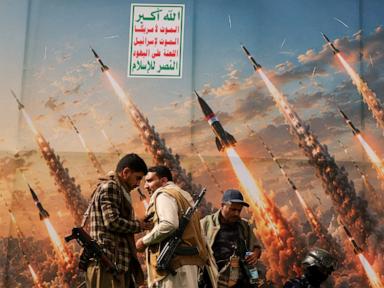
On one side, you have an irregular force operating out of northern Yemen, assembling extended-range ballistic missiles—such as the Burkan series, derived from Scud airframes and Iranian Qiam components—alongside long-range one-way attack drones like the Samad-3. These systems suffer from notorious circular error probable (CEP) metrics. At ranges exceeding 800 kilometers, a liquid-fueled, unguided or crudely guided ballistic missile is not a precision scalpel. It is a flying telephone pole aimed at a zip code.
On the other side sits one of the densest, most battle-tested integrated air and missile defense (IAMD) networks on the planet. Saudi Arabia operates layered batteries of American-made MIM-104 Patriot PAC-2 and PAC-3 interceptors, Terminal High Altitude Area Defense (THAAD) units, and older Hawk systems, backed by airborne early warning aircraft and space-based infrared tracking.
I have spent years analyzing regional defense procurement and watching defense contractors burn through billions in interceptor stockpiles across the Gulf. The real story is never whether a missile hits Riyadh's main terminal. The real story is the cost-exchange ratio.
- Offense: A modified ballistic missile or long-range drone costs anywhere from $20,000 to $150,000 to fabricate and smuggle in pieces.
- Defense: A single PAC-3 MSE interceptor costs roughly $4 million. Standard doctrine often dictates firing two interceptors per incoming ballistic target to guarantee a high probability of kill ($P_k$).
When wire services scream about an attack on Riyadh airport, they ignore this brutal math. The Houthis do not need to destroy a Boeing 777 to win the exchange. They only need to force a $8 million defensive response and trigger a 48-hour spike in war-risk maritime and aviation insurance premiums.
Why "Live Updates" Are a Strategic Gift to Sanaa
Live-blogging breaking military claims creates a structural bias toward exaggeration. In the rush to publish within seconds of a Telegram post from Houthi military spokesperson Yahya Saree, editors abandon basic verification protocols.
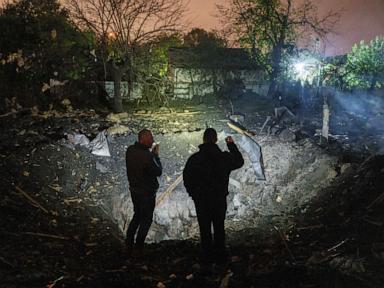
Consider how these announcements actually work. The Houthis routinely claim direct hits on sensitive targets—airports, Aramco facilities, military headquarters—hours before independent satellite imagery or flight-tracking data can confirm whether a single piece of shrapnel even reached the perimeter. By the time commercial satellite providers like Maxar or Planet Labs capture high-resolution passes showing intact runways and uninterrupted flight schedules, the news cycle has already moved on. The correction, if it appears at all, gets buried in paragraph twelve.
This pattern rewards fabrication. If claiming a hit on a major international hub guarantees global front-page coverage, there is zero incentive for an insurgent group to report its own failures.
Worse, this framing misleads readers about what actually threatens global commerce. Riyadh's King Khalid International Airport sits roughly 35 kilometers north of the city center, protected by multiple overlapping radar engagement zones. A sporadic ballistic launch toward the Saudi capital is a high-visibility, low-probability stunt. Compare that to the quiet, methodical chokehold on maritime traffic in the Bab el-Mandeb Strait, where anti-ship ballistic missiles and unmanned surface vessels operate at a fraction of the range with vastly higher hit rates.
Covering a long-range potshot at Riyadh with the same urgency as a sustained blockade of the Red Sea confuses noise with signal.
Dismantling the Common Questions Around Gulf Air Defense
When headlines flare up, readers inevitably search for the same basic answers—and mainstream coverage feeds them flawed premises.
Can Houthi missiles actually bypass Saudi air defenses?
Rarely, and almost never against high-value point targets like major international airports. Ballistic missiles flying high-apogee trajectories over 800 kilometers are textbook targets for Patriot and THAAD radars. Their radar cross-section is large, their trajectory is predictable once boost phase ends, and Saudi operators have logged more live-fire intercepts over the past decade than almost any other military on earth. Where air defenses face genuine stress is against low-altitude, terrain-hugging cruise missiles and swarms of slow-moving drones that exploit radar horizon limits—not high-flying ballistic shots aimed at Riyadh.
Does a missile claim mean flights to Riyadh are unsafe?
Civil aviation authorities do not operate on vibes or Telegram statements. Both the Saudi General Authority of Civil Aviation (GACA) and international bodies like the FAA and EASA maintain strict airspace closure protocols tied to real-time radar tracking. When an incoming threat is detected, airspace sectors are cleared immediately, holding patterns are established, and flights are diverted until the debris field is assessed. The greatest physical danger to civilians on the ground during these events is not an intact warhead hitting a terminal; it is falling debris from a successful mid-air interception over populated suburbs.
Is this proof that Iran is directly escalating against Saudi Arabia?
Treating the Houthis as a simple remote-controlled drone operated from Tehran is another analytical shortcut that fails under scrutiny. While Iran's Islamic Revolutionary Guard Corps (IRGC) Quds Force supplies critical components, propulsion tech, and intelligence, the Houthis possess their own domestic political imperatives. They use external confrontation to consolidate internal control, distract from economic collapse in northern Yemen, and extract concessions during diplomatic negotiations. Assuming every launch is ordered directly by Tehran strips the Houthis of their own agency and leads policymakers to misread deterrence signals.
The Uncomfortable Truth About Deterrence
Analysts love to talk about restoring deterrence, usually implying that a single decisive airstrike will silence launch sites permanently. That is a fantasy.
Mobile transporter-erector-launchers (TELs) can be hidden in caves, wadis, and civilian warehouses across Yemen's mountainous terrain. Decades of aerial campaigns have proven that you cannot eliminate a decentralized missile force from the air alone. Even the most sophisticated intelligence, surveillance, and reconnaissance (ISR) networks struggle to maintain persistent custody over dispersed, low-signature launch teams.
However, acknowledging the limits of offensive strikes does not mean accepting the panic narrative. My assessment has its own blind spot: relying too heavily on historical interception rates assumes interceptor magazines are infinite. They are not. Global production lines for PAC-3 and SM-6 missiles are strained across multiple theaters, from Eastern Europe to the Indo-Pacific. A sustained, high-volume saturation campaign could eventually test magazine depth.
Yet we are nowhere near that threshold in central Saudi Arabia. A single claimed strike on Riyadh airport is not a shift in the strategic balance. It is a press release with a rocket motor attached.
How to Read Middle East Security News Without Getting Played
If you want to understand what is actually happening when the next breaking alert hits your screen, ignore the initial claim and track three hard metrics instead:
- Flightradar24 and ADS-B Exchange data: Check real-time commercial transponder patterns over Riyadh. If wide-body international carriers continue landing on schedule within two hours of a claimed strike, the runway was never touched.
- Lloyd's List and war-risk underwriter bulletins: Follow the money, not the headlines. Insurers price actual kinetic risk with ruthless accuracy. If hull war-risk rates for aviation into Riyadh remain flat, the threat is theatrical.
- NOTAMs (Notices to Air Missions): Official aviation advisories reveal exact airspace closures, altitude restrictions, and duration. A 30-minute temporary restriction tells a completely different story than a multi-day suspension.
Stop letting militant media offices dictate the emotional temperature of your news feed. Until satellite imagery shows scarred concrete or insurers pull coverage, a claimed missile strike on Riyadh airport is just another loud distraction—and every breathless live update only gives the shooters the exact attention they couldn't buy with their hardware.