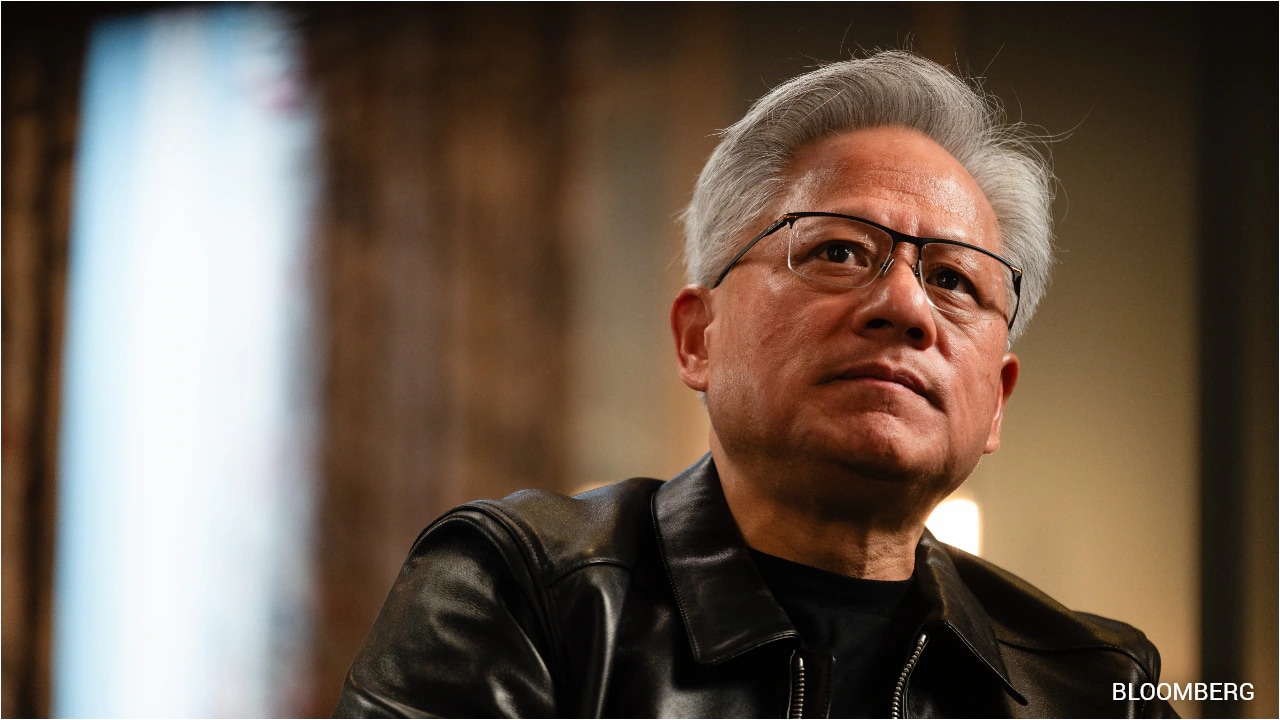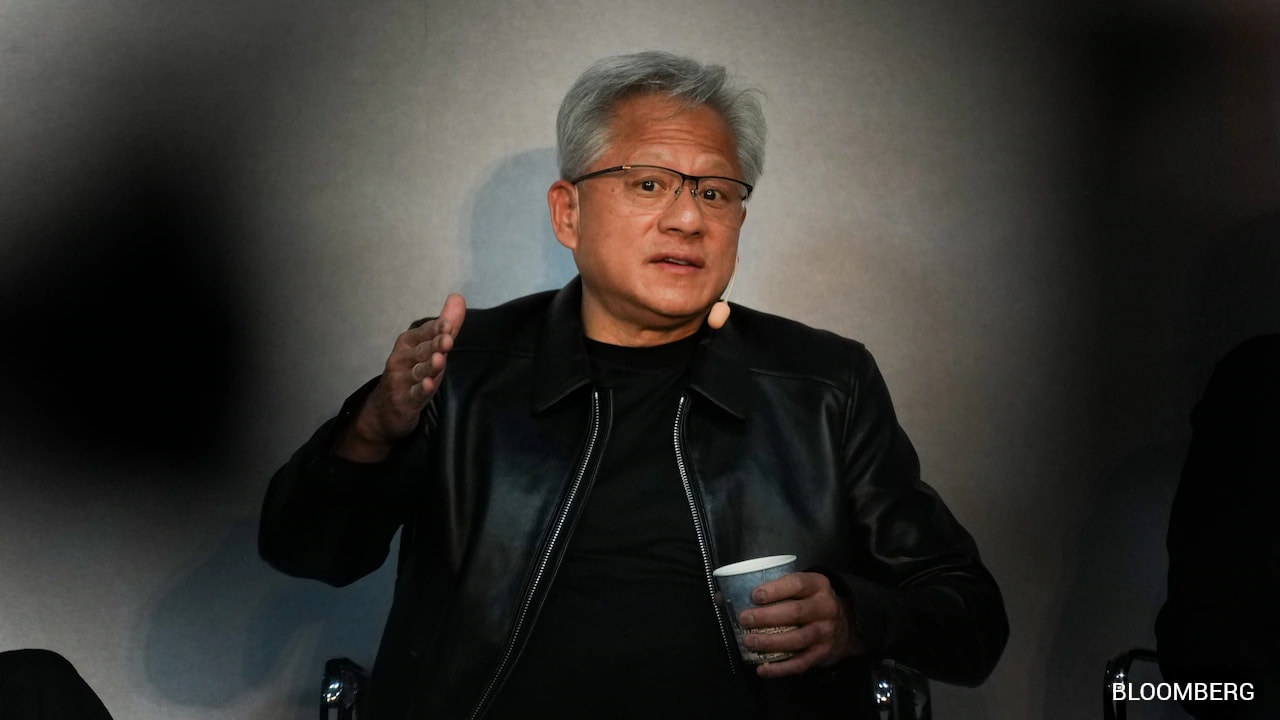
The financial press loves a Shakespearean tragedy. Give reporters a billionaire in a leather jacket muttering "I'm a piece of sh*t" during a late-night Zoom call, and they will write ten thousand words of breathless psychodrama about hubris, shattered egos, and the fall of a king.
They completely missed the real story.
When Bloomberg reconstructed Jensen Huang’s November 11 resignation from Nvidia, the coverage framed those final hours as a moral reckoning. The lazy consensus went like this: a legendary founder succumbed to human weakness, got caught in extramarital affairs with an alleged foreign intelligence asset and two direct reports, and collapsed under the weight of his own shame.
Eleven days later, the same board that supposedly forced his "unconditional surrender" voted unanimously to put him right back in the corner office.
If you bought the press's melodrama on November 13, you looked like an idiot on November 23. The tearful confession wasn't the end of an era. It was the opening move in a high-stakes corporate reset that exposed how modern tech governance actually works when trillions of dollars—and Washington's industrial policy—are on the line.
The Myth of the Broken Founder
Let’s look at what the competitor coverage treated as gospel: that Huang’s slowed email replies, his "whatever, I don't care" attitude, and his self-flagellation proved a man defeated.
Anyone who has sat inside a crisis war room during a multi-front regulatory and governance meltdown knows what that behavior actually is. It isn't surrender. It is acute cognitive exhaustion from fighting a two-front war with zero air cover.
I’ve watched founders blow nine-figure exits because they confused personal endurance with institutional insulation. For 33 years, Huang ran Nvidia like an oversized startup. Sixty executives reported directly to him. Every employee sent him their top five priorities via email. He had no Chief Operating Officer, no groomed successor, and no compliance buffer between the CEO’s desk and geopolitical firestorms.
That flat hierarchy is a superpower when you are shipping Hopper and Blackwell architectures faster than competitors can draw schematics. It becomes a catastrophic single point of failure the second a classified State Department memo hits the front page of The New York Times.
When the board convened on November 11 after reports surfaced linking Huang to Megaspeed’s Alice Huang—and subsequently to Nvidia healthcare VP Kimberly Powell and a second unnamed employee—the directors didn't fire him out of moral outrage. Corporate boards do not care about marital fidelity. They care about fiduciary exposure and regulatory contagion.
Sleeping with a direct report triggers automatic HR and shareholder derivative liability. Being romantically linked to a figure under federal scrutiny over H200 chip routing to China threatens export licenses, government contracts, and a multi-trillion-dollar valuation. Huang’s "I don't care" wasn't the sound of a broken man giving up on life. It was the sound of a founder realizing that fighting the board in the middle of a media feeding frenzy was burning company equity faster than stepping aside.
What "No Succession Plan" Really Meant
Critics pounced on Nvidia's lack of a clear heir as proof of Huang's arrogance. Conventional MBA wisdom preaches that every great CEO builds their own replacement.
Conventional MBA wisdom is wrong about founder-led monopolies.
Look at what happened during the 11 days CFO Colette Kress served as interim CEO. Nvidia’s market cap shed over $1 trillion from its October peak. The board approached Arm CEO Rene Haas, who took one look at the political crossfire and quickly locked himself into a commitment at Arm through 2033. Internal heavyweights like data-center chief Ian Buck were suddenly asked to step into a role where the entire vendor, hyperscaler, and sovereign AI ecosystem was built around one man's personal handshake.
Founder dependency isn't a bug in Nvidia's operating model; it is the moat. Customers don't just buy CUDA and NVLink; they buy Huang's willingness to bet the company's balance sheet five years ahead of demand. You cannot hire a caretaker CEO from a recruiting firm to replicate that risk appetite, just as Apple couldn't hire a supply-chain manager to replace Steve Jobs in 1985—and OpenAI's board couldn't survive three days without Sam Altman in 2023.
The board’s November 17 claim on the Q3 earnings call that it "did not intend to reinstate Jensen" was pure theater aimed at buying time while Wachtell, Lipton, Rosen & Katz and independent counsel scrubbed the compliance exposure. They needed to know two things before bringing him back:
- Did the CIA, FBI, or DOJ have hard evidence that Alice Huang extracted classified U.S. national security secrets or that Jensen knowingly violated export controls?
- Would the White House back his return or crucify the board for reversing course?
Once the intelligence community's assessment came back without a smoking gun on espionage—and President Trump personally weighed in to declare Huang posed no national security risk—the board's "permanent" ouster evaporated in 48 hours.
The Questions Investors Were Asking Wrong
If you spent the past two weeks debating whether Huang is a "good guy" or whether his apology was sincere, you were asking the wrong questions. Here is what actually matters if you allocate capital or run a tech company.
Why didn't U.S. intelligence warn Huang if Alice Huang was under surveillance?
Because counterintelligence agencies do not exist to protect CEOs from bad personal choices. A defensive briefing tips off the target that their communications are compromised. In Washington, watching a suspected Ministry of State Security asset operate is often more valuable than saving a billionaire's marriage or a chipmaker's stock price. Expecting the FBI to act as your executive security detail is naive.
Did Nvidia's board cave to political pressure?
They didn't cave; they executed a governance trade. Look at the fine print of the November 23 reinstatement announcement. Huang got his titles back—President, CEO, and Board Director. In exchange, the board stripped away his unchecked structural autonomy. They established a dedicated National Security and Export Control Oversight Committee and launched a search for an independent Chief Compliance Officer reporting directly to the Nominating and Corporate Governance Committee, not to Jensen.
That is the real takeaway from his "final hours." The old Nvidia—where one man had 60 direct reports and zero formal compliance guardrails—is dead. He came back as CEO, not as an absolute monarch.
Is the scandal actually over?
Not even close. House committees still have him scheduled for closed-door testimony on December 1, with a public Senate Banking Committee hearing looming. Shareholder lawsuits over the direct-report relationships are inevitable. Reinstatement stopped the bleeding on the stock chart—sending shares up 33% at Monday's open—but it did not erase the legal discovery process.
How to Audit Your Own Organization Before a Crisis Hits
You don't run a $3 trillion semiconductor giant, but the structural flaws that nearly destroyed Nvidia exist in almost every high-growth company I advise. Here is what you fix before your own midnight board call:
- Kill the flat-org vanity metric. Having 40 or 60 direct reports doesn't make you an agile, hands-on leader. It guarantees that legal, compliance, and HR escalations bottleneck in your inbox until they detonate in public. Build an operational layer that owns risk before it reaches the founder.
- Separate founder vision from compliance reporting. If your head of legal or compliance reports solely to the CEO, you don't have compliance—you have a PR buffer. Route compliance oversight directly to an independent board committee. It protects the founder as much as the shareholders.
- Treat personal relationships inside the reporting chain as existential debt. Boards can survive missed earnings and product delays. They cannot survive the discovery phase of a workplace relationship lawsuit involving a senior executive. Enforce strict recusal and reporting transfers on day one, not after the New York Times calls for comment.
- Stop confusing charisma with governance. To be fair, adding compliance layers and board oversight slows down decision-making. You will lose some of the raw speed that made the company win in the first place. Accept the tax. A 10% drag on execution speed beats a 30% wipeout of your company's valuation in ten days.
Read the Fine Print, Not the Confession
Reporters love quotes like "I'm a piece of sh*t" because pain is easy to sell. Power is harder to explain.
Jensen Huang didn't lose his job because he had a moment of self-loathing on a Wednesday night, and he didn't get it back because the board suddenly forgave him. He stepped down because a founder-centric governance model collided with national security politics, and he returned because the market proved Nvidia's intellectual property is worthless without the architect running the room.
Next time a tech CEO stages a dramatic exit in the press, ignore the apology tour. Check the SEC filings for who controls the compliance committee.