Bridge versus tunnel. Uniforms versus social workers. SkyTrain extensions versus bus frequency.
British Columbia’s political theatre treats mobility and public safety like a sports match between two rival camps. One side screams concrete and sirens. The other chants transit and compassion. Both sides keep the argument locked inside a narrow, comfortable box where nobody has to admit that the real bottleneck is political whiplash itself.
Standard campaign coverage reports these clashes like scorecards. Party A promised a bridge. Party B defended a tunnel. Party C talked about affordability and workers. Everyone nods, checks their watch in gridlock, and votes on a myth.
Here is the uncomfortable truth that campaign press releases never put on a glossy graphic: the crossing design under the Fraser River is a distraction if politicians keep resetting the clock every election cycle, and policing alone cannot cure transit fear when the system treats order and dignity as enemies.
The Lazy Consensus Around Bridge vs. Tunnel
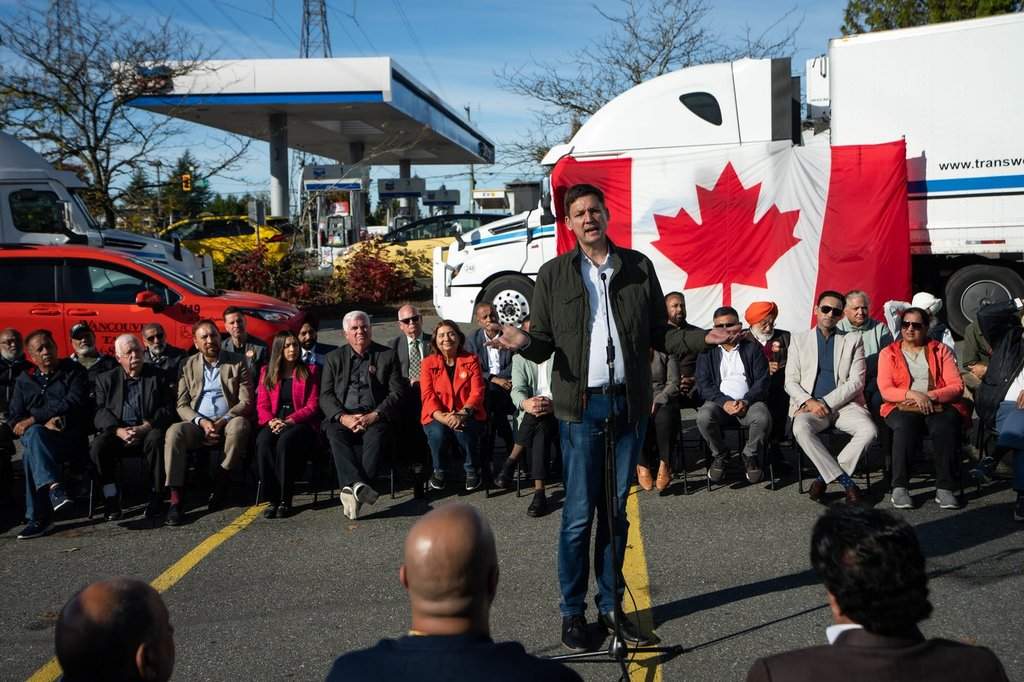
Step back from the shouting match over the George Massey Tunnel replacement and look at what actually happened. For years, drivers between Delta and Richmond sat bumper-to-bumper in an aging tube while politicians traded blueprints like trading cards. One administration favoured a bridge, scrapped it, pivoted to an immersed-tube tunnel, signed early works, hit commercial friction over final construction terms, and opened the door to multi-package retendering—only for a Conservative campaign led by Lorne Doerkson to pledge scrapping the tunnel in favour of a bridge and later call for a pause on work while a new government took shape.
Campaign reporting frames this as a pure clash of engineering wisdom and taxpayer thrift: bridges are supposedly faster and cheaper, tunnels are supposedly greener and lower-profile. That framing misses the bigger trap.
What Bridge vs. Tunnel Misses
- Permanence beats perfection. A mediocre crossing built on schedule delivers value decades sooner than a "superior" crossing stuck in endless redesigns, contract terminations, and political U-turns.
- Induced demand does not care about concrete. Transport economist Anthony Downs formulated the fundamental law of highway congestion back in 1962: expanding road capacity routinely attracts suppressed and newly generated vehicle trips until congestion returns near previous equilibrium levels. Later empirical work by Gilles Duranton and Matthew A. Turner reinforced how strongly vehicle kilometres travelled respond to road capacity expansions. Adding lanes across a river helps movement only if paired with real transit priority and land-use discipline—not wishful thinking that extra asphalt cures rush hour forever.
- Sunk costs are already spent in time, not just dollars. Every year spent ripping up contracts and starting over taxes every freight hauler, nurse, tradesperson, and family crossing the river.
I have watched major infrastructure programs across North America burn tens of millions of dollars on feasibility studies, scope re-baselining, and contractor disputes before a single permanent commuter benefit arrived. You do not fix a choke point by keeping the choke point frozen in amber while arguing over the paint colour.
Why Transit Safety Is Not a Binary Tug-of-War
Walk onto a late-night platform or watch a bus loop after dark and you will hear two competing diagnoses of transit safety. One camp insists the answer is harder enforcement, more police presence, and zero tolerance for disorder. The other insists that enforcement without mental health outreach, addiction support, and shelter capacity only shuffles visible distress from one corner of the region to another.
Both sides have half a point and blind spots the size of a SkyTrain car.
A rider who feels unsafe or threatened on a platform does not care about academic debates over root causes in the middle of an encounter. Safety is a prerequisite for ridership; if people stop trusting the system after 8 p.m., farebox and political support erode fast. Data from Technical Safety BC and TransLink covering SkyTrain incidents from 2016 through 2025 also underscores how human behaviour—accidental missteps near platform edges, rushing doors, unauthorized guideway entry, and severe mental health crises—drives serious outcomes on the network.
At the same time, treating transit police as a substitute for a broken mental health and housing pipeline is like using a fire extinguisher to put out a drought. Officers can respond to immediate threats and keep stations orderly, yet they cannot conjure supportive housing out of thin air or permanently resolve untreated psychosis on a Tuesday afternoon.
The Questions Voters Should Ask Instead
When voters ask "Should we build a bridge or a tunnel?" they are usually asking the wrong question. The sharper question is: How do we stop a vital river corridor from becoming a permanent political hostage, and how do we move people reliably without forcing them onto jammed highways?
Consider a thought experiment. Imagine a scenario where a provincial government locks in a firm, transparent schedule for a Fraser River crossing—whether bridge or tunnel—backed by binding milestones, dedicated bus-rapid-transit or transit lanes, and strict penalties for political scope creep. Even if every driver did not get their favourite design, certainty alone would change how businesses invest, how logistics firms schedule deliveries, and how families choose where to live.
Brutal Answers to "People Also Ask"
- "Is a bridge always cheaper and faster than a tunnel for the Massey crossing?" Not automatically. While a bridge can avoid certain marine excavation complexities, it faces wind, marine clearance, approach ramp footprints, and environmental or community pushback; an immersed-tube tunnel avoids high-rise visual impacts and ship-height constraints but brings complex dredging, casting, and commercial contract risk. Any politician claiming a clean, painless shortcut without showing risk-adjusted numbers is selling campaign sizzle.
- "Will more police and transit security make SkyTrain and buses safe overnight?" Visible presence and fast response deter aggressive behaviour and reassure riders, especially when paired with station lighting, staff visibility, and clear rules. Alone, without rapid crisis intervention and downstream care, enforcement manages symptoms rather than curing chronic street-level crisis.
- "Does expanding rapid transit actually take cars off the road?" Only when transit is faster, more frequent, and better connected to where people actually live and work than sitting in traffic. A train line that drops commuters miles from their final destination or runs infrequently after evening shifts will never win over time-starved drivers.
Actionable Moves That Actually Work
If you want real progress on BC transit, river crossings, and everyday safety instead of recycled campaign slogans, push for mechanics that survive election cycles.
- Enforce a "Build-Lock" rule on major crossings. Require any major crossing change to publish an audited cost, schedule, and delay impact—including lost commuter hours—before halting active work.
- Pair river capacity with dedicated transit priority. Never build or replace a major regional bottleneck without ring-fencing priority lanes or rail/bus connections so transit beats single-occupant cars during peak hours.
- Split immediate order from long-term care. Fund visible transit security and rapid station response for immediate safety, while tying dedicated mental health and crisis teams directly to high-incident transit hubs so police are not left holding the bag alone.
- Prioritize frequency and first-mile/last-mile links. A rider cares far more about waiting six minutes instead of twenty—and getting home safely from the stop—than about ribbon-cutting speeches.
Where This Contrarian Play Can Backfire
Honesty requires owning the risks of pushing certainty and pragmatism over ideological purity. Locking in a project quickly can lock in design flaws if engineering risks were rushed, and prioritizing fast delivery can anger purists who wanted a radically different mode or alignment. Similarly, pushing harder on visible order can draw criticism from advocates worried about over-policing vulnerable residents, while pushing for deeper care integration can frustrate commuters who want immediate results today.
That tension is real. Governing a growing region with tight budgets and high expectations is messy, expensive, and rarely neat.
Stop letting politicians fight over a single word—bridge or tunnel, tough or soft—while commuters lose hours of their lives every week. Demand delivery, accountability, and speed.