The Asphalt Vigilante Myth
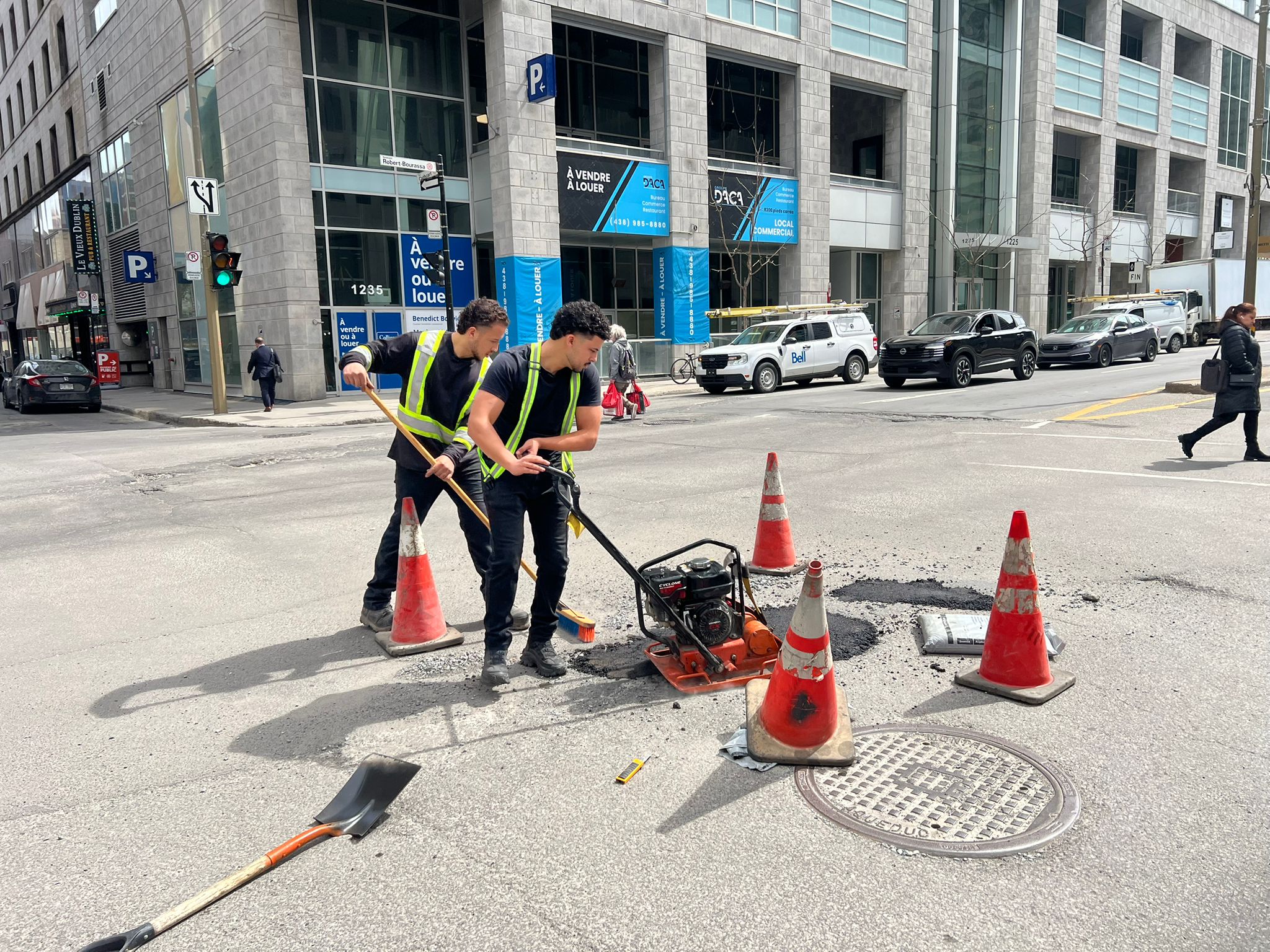
Montrealers love a good martyr. We celebrate the "pothole Robin Hoods" who creep out at midnight with bags of cold-patch asphalt and a sense of moral superiority. They claim they are fixing a broken system. They say they are doing what the city won't.
They are actually making the problem worse.
The heartwarming narrative of the DIY repairman is a dangerous distraction from the cold reality of civil engineering. When a civilian dumps a bag of hardware-store gravel into a crater on Sherbrooke Street, they aren't saving the city. They are creating a literal and legal speed bump that ensures the road stays broken longer. It is time to stop romanticizing amateur hour in our streets.
The Physics of Failure
A pothole is not just a hole. It is a symptom of a systemic structural failure in the road’s sub-base. The "lazy consensus" suggests that filling the void solves the issue. It doesn’t.
Road engineering relies on a specific drainage profile and compaction ratio. When a vigilante fills a hole without proper excavation, moisture removal, or a tack coat, they are essentially placing a loose plug in a pressurized pipe.
- Thermal Expansion Incompatibility: Consumer-grade cold patch has a different expansion coefficient than the industrial hot-mix used by municipal crews. When the temperature swings—as it does violently in Montreal—the DIY patch expands at a different rate than the surrounding pavement, widening the original crack.
- Hydrostatic Pressure: By "sealing" the top of a hole without addressing the water trapped underneath, you create a hydraulic pump. Every time a car drives over your "fix," it forces that trapped water deeper into the sub-grade, liquefying the foundation of the road.
I have watched municipal budgets balloon because a simple patch job turned into a full-depth reclamation project. Why? Because amateur repairs hid the underlying degradation until the entire lane collapsed. You didn't fix a pothole; you buried a cancer.
Liability is the Elephant in the Room
Let’s talk about the part the feel-good news stories ignore: Liability.
Imagine a scenario where a motorcyclist hits a "volunteer" patch that has degraded into a slippery pile of loose aggregate after three days of rain. The city didn't put it there. There is no record of the repair. The "vigilante" has effectively created an undocumented road hazard.
When you interfere with public infrastructure, you are assuming a level of risk that your homeowner's insurance will not cover. You are creating a legal nightmare for the city and a physical one for every two-wheeled vehicle on the road. If the city's unionized crews arrive to find a hole filled with substandard material, they often have to spend more time and taxpayer money removing your "fix" before they can apply a professional one.
The False Economy of Citizen Labor
The "People Also Ask" section of the internet is obsessed with why Montreal can't just "fix it faster." The premise is flawed. The bottleneck isn't a lack of hands; it's a lack of window.
Montreal operates in a climate where the freeze-thaw cycle happens up to 80 times a year. We are building roads on what is essentially a shifting swamp. To suggest that volunteers can solve this is like suggesting that a group of enthusiasts with Band-Aids can perform heart surgery.
We don't need more "love for the city" expressed through bags of asphalt. We need an aggressive, uncomfortable pivot toward high-cost, high-durability infrastructure.
Why the Status Quo is Addicted to Failure
The current system thrives on the "patch and pray" model because it is politically palatable. It looks like work. It’s visible. It’s cheap in the short term. Vigilantes are just the extreme version of this failed logic.
If we actually wanted to fix the roads, we would stop asking for more patches and start demanding:
- Rigid Pavement Adoption: Moving away from flexible asphalt to reinforced concrete in high-traffic intersections.
- Service Life Hooking: Contracts that penalize private contractors if their paving fails within five years.
- Automated Patching Technology: Replacing the manual three-man crew with jet-patching trucks that use high-pressure air to clean the hole and heated emulsion to bond the fix.
The Harsh Reality of Your "Help"
Every hour spent praising a volunteer is an hour we aren't talking about the $500 million infrastructure deficit. Vigilantism provides a "safety valve" for incompetent administration. When citizens do the work for free, the pressure on the city to reform its procurement process evaporates.
You aren't a hero. You are a scab for a broken bureaucracy.
If you truly want to save the suspension of your fellow citizens, put down the shovel. Take a photo of the hole. Report it through the 311 app. Then, call your city councilor every single day until the professional crew shows up.
Infrastructure is not a hobby. It is a science of load-bearing surfaces and moisture barriers. If you aren't prepared to dig three feet down and address the soil compaction, you aren't "helping." You’re just littering with extra steps.
Stop treating the symptoms and start hating the disease. The disease isn't the pothole; it’s the belief that our city’s foundation can be maintained by well-meaning amateurs with a weekend's worth of spare time.
Leave the asphalt to the engineers. Demand better, not more.