Every six months, a beauty editor flies to Seoul, wanders into an Olive Young in Myeongdong, and returns with a breathless exposé revealing that COSRX snail mucin and Laneige lip masks are barely touched by local shoppers.
They treat this discovery like an investigative scoop. It is not. It is a fundamental misunderstanding of how global cosmetic manufacturing works.
The prevailing lazy consensus in Western beauty journalism argues that if a skincare product isn't topping the Hwahae app charts in South Korea, it is somehow inauthentic, watered-down, or purely a tourist trap. This gatekeeping logic assumes that domestic popularity equals formulation superiority. In reality, judging export-focused Korean skincare by Seoul street trends is like judging Italian sports cars by what commuters drive in Milan.
You are asking the wrong question. Stop worrying about whether a 22-year-old in Gangnam uses your favorite serum. Start asking why global K-beauty brands formulate differently for international markets—and why those export formulas are frequently better suited for your skin than the domestic hits.
The Myth of the Monolithic Seoul Routine
Western consumers love a clean narrative. For years, that narrative was the 10-step routine, sold as an ancient, uniform ritual practiced by every person on the Korean peninsula. When TikTok dismantled that myth, the pendulum swung hard in the opposite direction. Suddenly, the new gospel became "authentic" K-beauty—hunting down obscure pharmacy creams, barrier-repair lotions, and niche indie labels that never leave the domestic market.
I have watched brand founders and Western retail buyers blow hundreds of thousands of dollars trying to import domestic Korean chart-toppers, only to watch them die on American and European shelves. Why? Because they ignored basic formulation chemistry, regulatory hurdles, and climate realities.
Domestic Korean skincare is engineered for a very specific demographic and environment:
- High humidity summers and brutal, dry winters dictated by the East Asian monsoon climate.
- Relatively homogenous skin phototypes (primarily Fitzpatrick types II through IV) with lower average melanin density than global populations, shifting the clinical focus toward preventing hyperpigmentation and erythema rather than treating deep, post-inflammatory melasma common in darker skin tones.
- A hyper-competitive retail cycle where product lifespans average nine to twelve months before consumers move on to the next novelty ingredient.
When an indie brand like Torridin, Round Lab, or Torriden explodes on Hwahae or Glowpick, it is rarely because they discovered a molecule unavailable to the rest of the world. It is because their marketing teams mastered localized viral mechanics, aesthetic packaging, and aggressive sampling through Olive Young's promotional calendar.
Why "Export-Only" Is Not a Dirty Word
The biggest insult in beauty forums is calling a brand "Westernized." Brands like Beauty of Joseon, Skin1004, and COSRX frequently catch flak from skincare purists because their massive revenue streams come from Amazon, Sephora, and international distributors rather than domestic drugstores.
This snobbery completely ignores the business reality of South Korean OEM and ODM (Original Equipment Manufacturer and Original Design Manufacturer) giants like Cosmax and Kolmar Korea.
When you buy a bottle of Beauty of Joseon Relief Sun or a jar of COSRX Advanced Snail 96 Mucin Power Essence, you are not buying a cheap knockoff made for gullible foreigners. You are buying formulas developed in the exact same world-class Seoul laboratories that supply Amorepacific, LG H&H, and major Western luxury conglomerates.
In fact, export-driven Korean brands enjoy massive structural advantages over domestic darlings:
- Higher Active Concentrations: South Korea's Ministry of Food and Drug Safety (MFDS) maintains strict functional cosmetic guidelines. To claim brightening or anti-wrinkle benefits domestically, brands must use specific, pre-approved ingredients at capped percentages (like 2% to 5% niacinamide or 0.04% adenosine) or undergo expensive, slow clinical trials. Brands formulating primarily for the US and global markets routinely push niacinamide to 10%, incorporate higher percentages of encapsulated retinoids, and utilize multi-acid chemical exfoliants that would struggle to clear domestic regulatory classifications.
- Inclusive Sensory Profiles: Domestic Korean products heavily favor watery, ultra-lightweight textures designed for layering and rapid absorption in humid weather, often leaving a subtle dewy finish that reads as straight-up greasy in Texas or London. Export-focused brands test their emulsions across diverse skin types, adjusting lipid ratios and silicone alternatives so the product performs on oily, melanin-rich, or dry skin without pilling under Western makeup.
- Stability Over Novelty: Domestic Korean brands live and die by speed-to-market. If heartleaf (Houttuynia cordata) or mugwort is trending, brands rush a formula to shelves in four months. Export brands have to survive six-week ocean freight journeys, fluctuating warehouse temperatures, and two-year retail shelf lives. Their preservative systems, emulsion stability, and packaging integrity are stress-tested to a degree that fast-fashion domestic brands simply do not need to match.
Dismantling the "Olive Young Bestseller" Obsession
Every time an influencer posts an "Olive Young Top 10" haul, Western shoppers scramble to buy grey-market imports at a 40% markup. Let's look at what actually dominates those domestic charts and why half of it is useless—or actively counterproductive—for international buyers.
Tone-Up Creams and Cushions
Walk into any store in Seoul and you will see walls of "tone-up" sunscreens and cushions. In South Korea, these are daily staples used to instantly brighten dull complexions and neutralize yellow undertones. On anyone with a medium-deep to deep skin tone, these formulas—loaded with uncoated titanium dioxide and pink pigments—look like chalky, violet paint. Yet Western trend-chasers constantly import them, shocked when a product designed for pale East Asian skin leaves a violent white cast.
Mild, Low-Acid Exfoliants
Western beauty editors love to claim that Korean skincare is superior because it avoids harsh acids in favor of gentle PHAs and LHA. That is half true. Korean consumers generally prefer daily, low-irritation maintenance over aggressive resurfacing, largely because in-office dermatological procedures—laser toning, Rejuran healer injections, Pico lasers—are inexpensive and normalized in Seoul. A Korean consumer does not need a 10% glycolic acid serum at home when they can walk into a clinic in Gangnam on their lunch break for a $60 laser session. If you live in Ohio and cannot drop $800 at a dermatologist every month, relying solely on mild domestic Korean toners will leave your texture untouched.
The Single-Ingredient Hype Cycle
Domestic Korean rankings are notorious for herd mentality. One year, every single top-rated toner is 100% centella asiatica. The next year, it is birch juice. Then it is panthenol. These minimalist, single-extract formulas are great for soothing mild irritation, particularly if you are layering them under heavy prescription topicals. On their own, however, they often lack the complex humectant-occlusive balance and multi-pathway active delivery required to actually remodel collagen or clear stubborn cystic acne.
The Sunscreen Loophole Everyone Gets Wrong
If there is one area where domestic Korean formulas genuinely outpace Western store shelves, it is UV filters. Even here, the internet gets the mechanics completely backward.
The US Food and Drug Administration classifies sunscreen as an over-the-counter drug and has not approved a new UV filter since 1999. Meanwhile, South Korea regulates sunscreens as functional cosmetics, allowing formulators to use modern photostable filters like Uvinul A Plus, Tinosorb S, and Mexoryl SX. These molecules absorb UVA rays efficiently without degrading in sunlight or stinging your eyes.
Here is the catch that beauty TikTok refuses to admit: you cannot legally buy the authentic Korean version of those sunscreens through official US retail channels.
When a brand like Beauty of Joseon or Skin1004 launches in US Sephora or Ulta, they are legally forced to reformulate using outdated FDA-approved filters like avobenzone and homosalate. If you buy a Korean sunscreen from a domestic American retailer, you are getting an American formula in Korean packaging. To get the actual Seoul-formulated UV filters, you must order directly from overseas distributors like Olive Young Global, YesStyle, or Stylevana, accepting the shipping delays and grey-market risks that come with it.
Furthermore, domestic Korean sunscreens are designed for incidental UV exposure—walking from the subway to an office under a UV-blocking parasol. They are rarely water-resistant or sweat-proof. If you wear a viral Korean "water-fit" sun serum to a humid outdoor workout or a beach in Florida, it will melt off your face in twenty minutes, leaving you burned regardless of its PA++++ rating.
The Downside of the Global K-Beauty Machine
Admitting that export-focused K-beauty is often better engineered for global consumers does not mean the industry is flawless. In fact, the hyper-commercialization of global K-beauty has created massive blind spots that savvy buyers need to watch out for.
First, marketing budgets are eating R&D budgets. When a brand realizes it can pay twenty micro-influencers to go viral on TikTok Shop, the financial incentive to innovate drops. We are currently drowning in "me-too" products—dozens of brands releasing the exact same milky rice toner or peptide lip tint sourced from the exact same Kolmar base formula, differentiated only by font choice and pastel caps.
Second, transparency is slipping. Domestic Korean consumers use apps like Hwahae to dissect ingredient lists down to the percentage of potential allergens, forcing domestic brands to formulate cleanly and disclose concentrations. Global consumers rarely scrutinize INCI lists with that level of forensic obsession. As a result, some export-only lines quietly pad their formulas with cheap fillers, synthetic fragrances, and trace "hero" extracts (known in the industry as pixie dusting—putting 0.001% ginseng in a cream just to put a root on the box).
How to Actually Shop K-Beauty Like an Insider
Stop treating Korean skincare like an anthropological treasure hunt. Authenticity is a marketing buzzword designed to make you feel superior to other shoppers. Your skin barrier does not care whether a serum is trending in Hongdae or sitting in an Amazon warehouse in New Jersey.
If you want to build a routine that actually delivers clinical results, use this filter instead:
- Ignore the "Seoul Bestseller" label; read the manufacturer. Flip the bottle over. Look for Cosmax, Kolmar Korea, Cosmecca, or ANCORS. These are the powerhouse labs driving real cosmetic chemistry. If a trendy indie brand is manufactured by one of these giants, the baseline emulsion technology is solid, regardless of where it is sold.
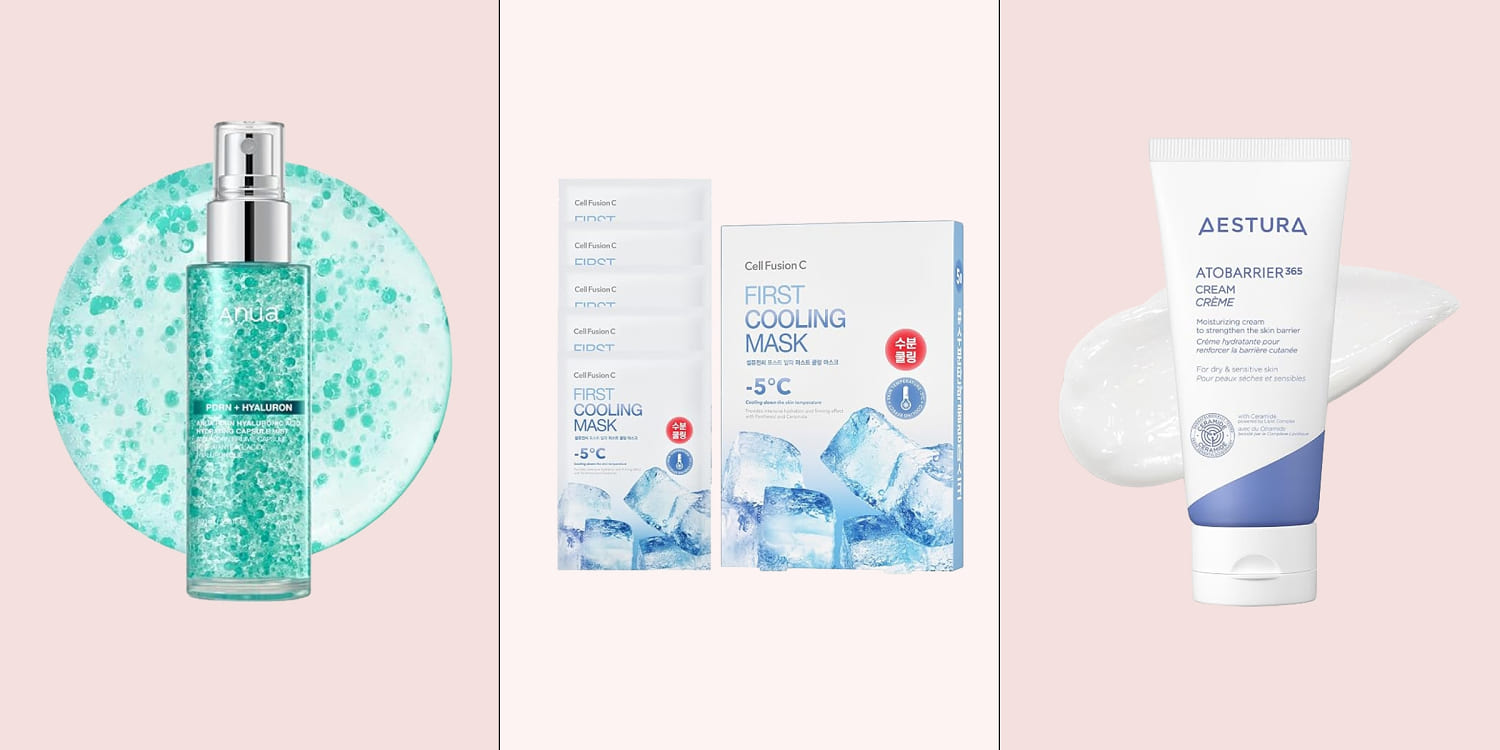
- Buy global brands for actives; buy domestic brands for barrier repair. If you want retinoids, vitamin C derivatives, high-percentage niacinamide, or exfoliating acids, stick to brands targeting the international market (like COSRX, Purito, or By Wishtrend). They formulate with higher active thresholds to compete with Western clinical brands. Save your overseas Olive Young orders for basic barrier creams (like Aestura Atobarrier 365 or Illiyoon Ceramide Ato Concentrate), where Korean lipid-encapsulation technology genuinely beats almost everything in a Western drugstore.
- Match the climate, not the country. Do not use a watery Korean gel cream in the middle of a dry, freezing winter just because a creator in humid Seoul swore by it. Look at the humectant-to-occlusive ratio. If glycerin and hyaluronic acid are at the top of the list without heavy emollients like shea butter, squalane, or petrolatum to seal them in, that formula will pull moisture out of your skin in an arid climate.
- Verify your UV filters. Never assume a Korean brand name guarantees Korean sunscreen technology. Check the active ingredients panel. If you see Avobenzone, Octinoxate, or Zinc Oxide listed under a "Drug Facts" box, you are holding a Western reformulation. Look for Diethylamino Hydroxybenzoyl Hexyl Benzoate and Bis-Ethylhexyloxyphenol Methoxyphenyl Triazine on the standard ingredient list if you want the real thing.
The obsession with what Korean locals buy is rooted in insecurity. Western shoppers are terrified of being fooled by clever marketing, so they outsource their judgment to an idealized version of a Seoul consumer who supposedly holds the secret to glass skin.
Drop the gatekeeping. Cosmetic chemistry is governed by molecular weight, pH levels, and clinical testing—not zip codes. Buy the formula that solves your specific biological problem, even if nobody in Gangnam has ever heard of it.


