Every summer, the media dusts off the same panic playbook. Red maps flash across screens, dramatic anchors warn tourists away from Southern Europe, and the internet erupts into hand-wringing about Spain and France burning to the ground. Headlines scream about raging infernos, apocalyptic heatwaves, and the end of the Mediterranean holiday.
It is lazy journalism, and it is entirely wrong.
If you are canceling your trip to the Costa del Sol or abandoning plans for a Provençal road trip because a heat map turned crimson, you are falling for the oldest trick in the sensationalism book. You are reacting to absolute numbers instead of structural reality. I have spent two decades analyzing land management, emergency response, and tourism logistics across the European Union. I have watched billions of euros in tourism revenue evaporate overnight because travelers panic over maps that show acreage burned without telling them a single thing about risk, geography, or actual danger.
Let us dismantle the panic.
The Lazy Consensus Of The Red Map
The standard narrative goes like this: Climate change causes heatwaves, heatwaves cause fires, therefore France and Spain are giant tinderboxes waiting to incinerate your resort.
It sounds logical if you live in a high-rise and have never managed an acre of land in your life. But it collapses the moment you look at how European geography actually works. A wildfire alert covering the entire Var department in France or the province of Málaga in Spain treats a jagged, million-acre territory as if it were a single pile of dry brush.
When a map shows a wildfire alert spanning half of southern Europe, people picture a wall of flames sweeping across beaches, historic towns, and highway rest stops. Reality is radically different. Mediterranean fires are almost exclusively localized to high-altitude scrubland, dense interior forests, and abandoned agricultural terraces. They do not materialize in the middle of coastal promenades.
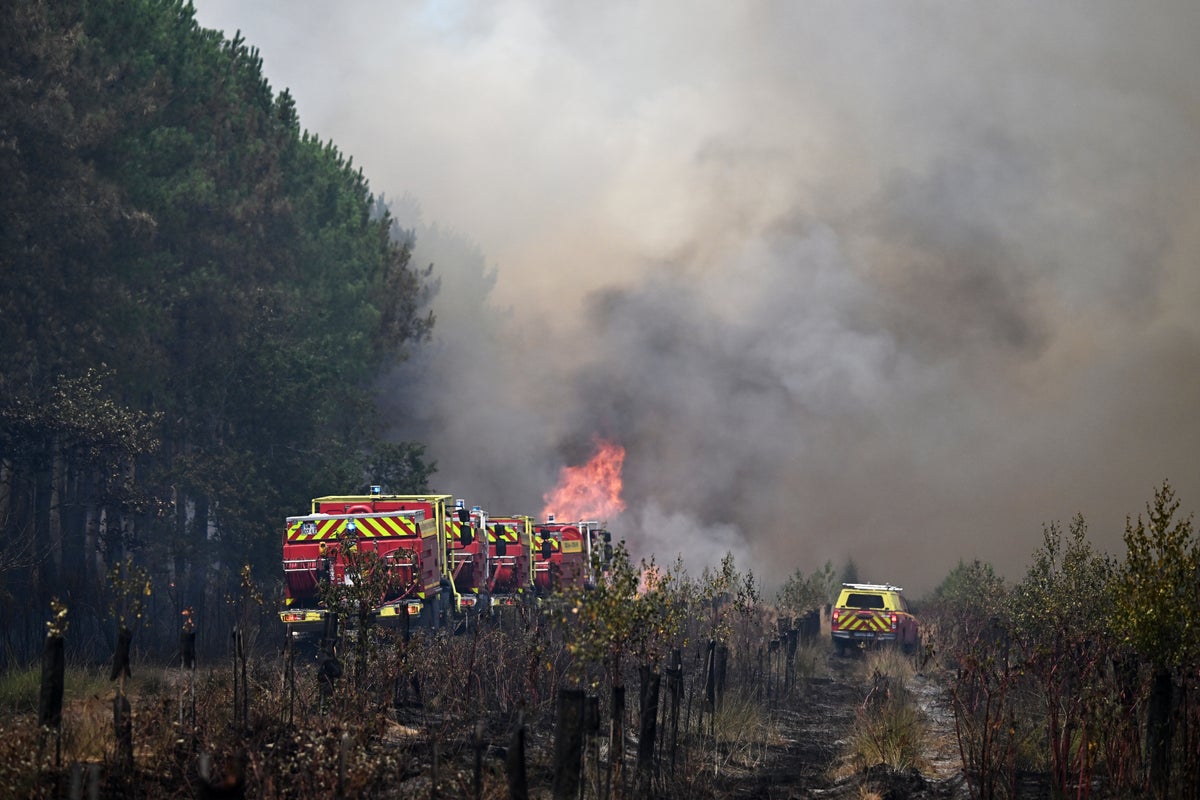
The media loves the visual of a burning pine tree. They rarely show the mosaic pattern of modern European firefighting, where rapid initial attacks contain ninety percent of ignitions before they cover more than a few hectares.
The Geography They Refuse To Explain
To understand why the panic is manufactured, you have to look at fuel loads, not just temperatures.
For centuries, rural Mediterranean communities practiced active land management. Goats grazed the underbrush. Farmers cleared firebreaks. Villagers harvested timber and scrub for fuel. It was a brutal, low-tech system, but it kept fuel loads artificially low.
Then rural depopulation happened. Millions abandoned the interior hills of Spain and the French hinterlands for office jobs in Madrid, Barcelona, Paris, and Marseille. The land was left to its own devices. Nature, being efficient, filled the vacuum with dense, unbroken corridors of flammable vegetation.
When a heatwave hits, the issue is not just that it is hot. The issue is that decades of neglected land management have created an unnatural powder keg in the interior, miles away from where tourists actually sleep, eat, and lounge.
Yet the panic map paints the entire country with the same brush. If a brush fire breaks out in an uninhabited ravine thirty miles north of Valencia, the alarm triggers for the entire region. You read that alert while sitting on a hotel terrace in the city center, breathing clean air, sipping a local Albariño, and wondering if you should pack your bags.
That is not risk assessment. That is mass delusion driven by graphic design.
The Myth Of The Unescapable Inferno
Another favorite trope of the summer news cycle is the trapped tourist. We get dramatic testimonials from travelers who had to evacuate a campsite or a rural lodge.
Yes, evacuations happen. They are a sign that emergency protocols are working, not that civilization is collapsing. European civil protection agencies, particularly in France and Spain, are among the most sophisticated in the world. Greece and Portugal take massive hits, but the French Sécurité Civile and Spain's BRIF (Brif de Refuerzo en Incendios Forestales) operate with military precision.
When a fire threatens a populated zone, authorities pull the trigger on evacuations early. They do not wait for the flames to jump the perimeter. They move people out of harm's way precisely because they are hyper-cautious.
What the media fails to mention is that an evacuation in a Mediterranean tourist zone usually means moving a few hundred people from a rural campsite to a municipal gymnasium or a neighboring hotel for twelve hours. It is an inconvenience. It is an annoyance. It is not an extinction-level event.
Yet the headline reads: "Tourists Fleee For Their Lives As Inferno Consumes Resort Area."
It is theatrical fiction.
What You Should Be Doing Instead
If you want to travel smart in the Mediterranean during the peak summer months, stop looking at national weather maps and start looking at local wind patterns, topography, and municipal zoning.
Here is how you actually evaluate your risk:
- Ignore country-level alerts: A wildfire warning for "Spain" or "France" is as useful as a weather warning for "North America." It tells you nothing about your specific coordinates.
- Check the wind, not just the thermometer: Heat does not start fires; ignition sources and wind spread them. A 40-degree day with zero wind is manageable. A 30-degree day with 40-knot mistral winds is dangerous. Look at wind direction relative to your location.
- Stay on the coast or in urban centers: The vast majority of major tourism infrastructure is built on hardscape, coastal plains, or heavily cleared zones. The risk gradient drops off a cliff the moment you move away from unbroken interior forests.
- Download local emergency apps: In France, monitor local prefecture feeds. In Spain, follow regional 112 emergency Twitter accounts. They provide hyper-local, real-time data instead of panicky international roundups.
The Real Cost Of The Panic
The irony of the wildfire hysteria is that the panic does more damage than the fires themselves.
Local economies in the interior and southern peripheries rely entirely on summer tourism. When international travelers cancel their bookings because they think Spain is melting into magma, small family-run guesthouses, olive oil producers, and restaurants take a financial beating.
These businesses cannot afford the loss. Ironically, vibrant rural tourism and active agricultural communities are the only long-term solution to the wildfire crisis, because they put people back on the land to manage the brush.
When you cancel your trip out of misplaced fear, you starve the very local economies that keep the landscape clear, maintained, and resilient. You feed the exact cycle of abandonment that makes future fires worse.
Stop checking the apocalyptic maps. Stop reading the breathless dispatches from journalists sitting in air-conditioned London newsrooms who have never smelled burning scrub oak in their lives. Pack your bags, support the local economies, and keep your wits about you.
The Mediterranean has been burning and recovering since the dawn of human history. The only thing that has changed is the size of the digital megaphone amplifying the noise.