Cable news pundits and political commentators love to parrot a familiar script when a high-profile U.S. Senate race comes down to a razor-thin margin: "Wait for the recount." They construct elaborate graphics, bring on election analysts, and explain the mechanics of tabulator margins and optical scanners.
It makes for great television. It is also completely irrelevant in the state of Mississippi.
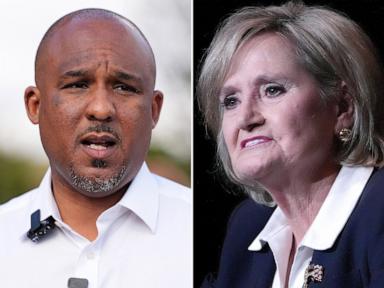
The media is currently treating the tight Senate contest between Democratic challenger Scott Colom and Republican incumbent Cindy Hyde-Smith as a standard recount drama. They are asking the wrong questions, applying rules from other jurisdictions, and selling viewers a procedural phantom.
Here is the stark truth that mainstream coverage systematically ignores: Mississippi has no recount law. None.
If you are waiting for an automatic recount or a state-mandated machine rerun to clarify the outcome of this race, you are waiting for something that literally does not exist in Mississippi statutory code.
The Lazy Consensus: Confusing Recounts with Judicial Contests
The superficial analysis dominating national coverage assumes that every state operates with a modern election infrastructure where a candidate trailing by a few hundred votes simply files a petition, pays a fee, and triggers a statewide recount.
In reality, election law across the 50 states is an uncoordinated patchwork. While 26 states and Washington, D.C., mandate automatic recounts for paper-thin margins, and 41 states allow candidates to formally request one, Mississippi stands in a tiny, isolated category of its own. State statute (Title 23, Chapter 15 of the Mississippi Code) provides zero legal mechanics for a candidate to request a recount, nor does it contain a single trigger for an automatic re-tally.
Media outlets fall into this trap because they confuse an election contest with an election recount.
A recount is an administrative process: you take the ballots, run them back through the scanners or count them by hand, and see if the arithmetic matches the first pass. An election contest is an adversarial lawsuit filed in Circuit Court.
When commentators talk about a "recount battle" in Mississippi, they are lazily applying a administrative term to what will actually be a brutal, drawn-out legal war fought in trial courts.
The Real Mechanics: How Mississippi Elections Are Actually Fought
Having spent years analyzing state election litigation and watching campaigns burn through millions of dollars on post-election motions, I can tell you that an election contest is vastly more chaotic—and far more partisan—than a standard recount.
Without a legal mechanism to force a simple recount, a candidate seeking to overturn or challenge an unofficial margin cannot just ask for the cards to be re-shuffled. They must file a formal petition under Mississippi Code § 23-15-927 or initiate a statutory contest in court, asserting specific irregularities, fraud, or illegal ballot disqualifications.
+-----------------------------------------------------------------------+
|                       POST-ELECTION RESOLUTION                        |
+-----------------------------------------------------------------------+
| Standard Recount State               | Mississippi Reality            |
|--------------------------------------|--------------------------------|
| • Administrative re-tally            | • Zero statutory recount rules |
| • Automatic trigger by margin        | • Immediate litigation required|
| • Focus: Arithmetic accuracy         | • Focus: Individual ballots    |
| • Handled by Election Boards         | • Handled by Special Judges    |
+-----------------------------------------------------------------------+
Here is what actually happens when a Mississippi federal or statewide election enters the legal danger zone:
1. The County Canvass and Affidavit Battle
Before any court gets involved, the actual leverage sits with individual County Election Commissioners. Because Mississippi relies heavily on affidavit ballots (cast when a voter's eligibility or registration cannot be immediately verified at the precinct) and strict mail-in postmark deadlines, the initial post-election window is an exercise in hand-to-hand combat county by county.
Campaign lawyers do not sit in a central state office watching digital feeds. They dispatch teams to inspect individual affidavit envelopes, arguing over signature matching, residency documentation, and precise postmark dates. This is not a recount; it is the initial, highly discretionary qualification of votes.
2. Filing the Formal Contest
Once the Secretary of State certifies the election results based on county returns, the losing candidate has a narrow statutory window to file a contest. But here is the catch: you cannot simply allege that "the vote count might be wrong."
The contestant must state with specificity which precinct records, ballot boxes, or specific categories of votes contained illegalities sufficient to change the outcome of the race.
3. The Appointment of a Special Judge
Unlike a state election board managing a recount, a Mississippi election contest triggers a judicial mechanism. The Chief Justice of the Mississippi Supreme Court appoints a Circuit Judge from a non-adjacent district to sit as a Special Judge and hear the contest.
That judge has sweeping authority. They can order ballot boxes opened, examine individual paper ballots, subpoena poll managers, and decide whether specific uncounted affidavit or absentee ballots must be added to the official tally.
Why the "Recount" Narrative Is Dangerous
The media's insistence on calling this a potential "recount" is not just technically incorrect; it misinforms the public about how election integrity is preserved—and how elections are won or lost in court.
When the public is told to expect a "recount," they expect a clean, mechanical recount completed in days. When they instead see process servers, circuit judges, subpoenaed ballot boxes, and legal arguments over individual voter qualification, it fuels bad-faith narratives of a "stolen" outcome.
The process is messy because Mississippi's election code was constructed in an era before automated voting machines and modern administrative recount standards. The state relies on local county autonomy and judicial review rather than centralized administrative standard operating procedures.
Imagine a scenario where Candidate A leads Candidate B by 150 votes after certification. In a state like Georgia or Florida, an automatic recount would re-scan the paper ballots to ensure no scanner jammed or misread a mark. In Mississippi, Candidate B cannot ask a machine to re-scan anything. Candidate B must sue, present evidence that 151 specific ballots were improperly excluded or included, and convince a single judge to order those specific votes counted or tossed.
That is not a recount. That is a trial.
The Counter-Intuitive Truth: Lack of a Recount Statute Advantages the Leader
Pundits like to suggest that an absence of clear recount rules creates an even playing field for lawsuits. The reality is precisely the opposite.
The lack of a statutory recount process places a massive burden of proof on the challenger. In a standard recount, a trailing candidate gets a free administrative double-check just by virtue of the tight margin. In Mississippi, the candidate holding the certified lead holds an almost insurmountable advantage.
To overturn a certified result in a judicial contest, the challenger must overcome a strong legal presumption of correctness attached to official election returns. You do not just need to show that the election was close; you must present clear and convincing evidence of specific legal errors that altered the outcome.
Courts are historically loath to invalidate certified election returns without proof of systemic failure or deliberate fraud. Consequently, challenging a close election in a state with no recount mechanism is an uphill battle fought over high legal hurdles, not an administrative check on machine math.
Stop watching for a recount in Mississippi. Watch the Circuit Court docket instead. That is where the actual fight takes place.
To better understand how state-level election challenges differ across the country, check out this breakdown on election recount procedures.
http://googleusercontent.com/lmdx_content/vtTZpHaUdxYsMWRQmlWsTXtjPMANWDbpNkXqoxJMzRNbeNkVwnyZwBtgtLksvsllyahAbCTntOwcLiSkaPqxgQcPaxadNLGMWTEpLqhdFVpxcIb82639
This video explains the legal distinction between administrative recounts and judicial election contests across different state jurisdictions.