The South African Procurement Trap
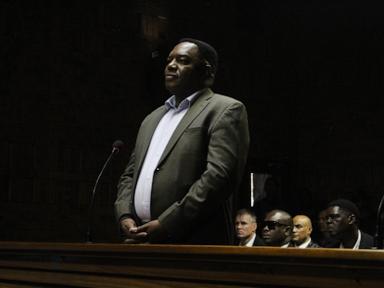
The news cycle is currently salivating over the spectacle of a former South African police chief standing in the dock for a $21 million (R300 million) unlawful contract. It is the perfect villain story. It fits the narrative of "State Capture" neatly into a box with a single face on it.
But if you think throwing one person in jail fixes the South African Police Service (SAPS) or the national treasury, you are falling for the oldest trick in the political playbook.
Public outrage is being channeled into a single legal battle while the actual machinery that allowed this to happen remains untouched, greased, and ready for the next "unlawful contract." The focus on the individual is a distraction from the systemic failure of Public Finance Management Act (PFMA) compliance that has become the standard operating procedure, not the exception.
The Myth of the Rogue Official
The media loves the "rogue official" trope. It suggests that if we just find the bad apple, the barrel is saved. This is a fundamental misunderstanding of how high-level government procurement functions.
A $21 million contract for emergency equipment or forensic services doesn't happen with a single signature in a vacuum. It requires a chain of command. It requires supply chain management (SCM) committees to look the other way. It requires treasury officials to hit "approve." It requires auditors to miss "red flags" that are actually glowing neon signs.
When a police chief is charged with corruption, they are often just the person whose turn it was to get caught. I have seen procurement systems in emerging markets where the "deviations" from standard bidding processes are so frequent that the "emergency" loophole becomes the primary highway for spending.
The Emergency Loophole
In the case of the SAPS contracts, "emergency procurement" is often the weapon of choice. By declaring an urgent need—whether for forensic lights, water cannons, or IT infrastructure—officials can bypass the competitive bidding process.
- The Setup: Claim an imminent threat to public safety.
- The Bypass: Invoke Treasury Regulation 16A6.4 to skip the three-quote minimum.
- The Payoff: Award the contract to a pre-selected "service provider" at a 400% markup.
The problem isn't just that a chief signed the paper; it's that the law provides a massive, gaping hole for anyone with enough rank to drive a truck through.
Why Prosecution is Not Prevention
South Africa has a storied history of high-profile arrests that lead to zero systemic change. We see the "orange jumpsuit" parades on television, yet the Auditor-General’s reports continue to show billions in irregular expenditure year after year.
In the 2022-2023 financial year, South African government departments racked up billions in irregular expenditure. Irregular expenditure isn't always corruption, but it is always the soil in which corruption grows. By the time the National Prosecuting Authority (NPA) gets a case to court, the money is gone. It has been laundered through six different shell companies, moved offshore, or spent on depreciating luxury assets.
Prosecution is reactive. It is the autopsy of a crime, not the cure for the disease.
If we want to stop the bleeding, we have to stop talking about "integrity" and start talking about automated friction.
Stop Asking for Honesty and Start Demanding Friction
The "People Also Ask" sections of the internet are filled with queries like "How can we stop corruption in SAPS?" or "Why is South Africa so corrupt?"
The premise of these questions is flawed. It assumes corruption is a moral failing of a few people. It isn't. Corruption is a rational response to a high-reward, low-risk environment.
If you can make $5 million in a single afternoon by signing a document, and the chance of going to jail is less than 5% (given the backlog at the NPA), any rational, self-interested actor will take that deal. To fix this, you don't need a "moral regeneration" campaign. You need to make the crime technically impossible to commit without triggering an immediate, automated shutdown of the funds.
The Solution Nobody Wants to Implement
True reform would involve stripping human discretion out of the procurement phase.
- Blockchain-Verified Tendering: Every bid, every timestamp, and every evaluation score should be on a public, immutable ledger. No more "lost" folders.
- Price Benchmarking AI: If the SAPS tries to buy a forensic kit for $5,000 that retails for $500, the system should automatically block the payment before it reaches the "Chief" for signature.
- Beneficial Ownership Transparency: No contract should be awarded to any company whose ultimate owners are not verified against a database of politically exposed persons (PEPs).
Why hasn't this happened? Because the "lazy consensus" among the political elite is that the current system works—it works exactly for the people it was designed to enrich.
The Cost of the "Success" Story
When the NPA announces a case like this $21 million contract, they want a pat on the back. But look at the opportunity cost. While this case drags through the courts for the next five to ten years—clogging the docket and costing taxpayers millions in legal fees—the police force itself is crumbling.
The "insider" truth is that for every $21 million contract that makes the headlines, there are a thousand **$50,000** contracts that are just as dirty but too small for the media to care about. These are the contracts for vehicle repairs, station maintenance, and basic supplies. This "micro-looting" is what actually kills the efficacy of a police force. It’s why 20% of the police fleet is often out of commission at any given time.
The Professionalism Facade
Do not be fooled by the professional tone of the "internal investigations" mentioned in these court cases. These investigations are frequently used as tools for internal purges.
In my experience, "anti-corruption" drives within large state bureaucracies are often just a way for one faction to clear out the previous faction’s people so they can install their own preferred "service providers." If you aren't changing the procurement architecture, you aren't fighting corruption; you’re just changing the names on the bank accounts.
Stop Watching the Courtroom
If you want to know if South Africa is actually fixing its police force, stop looking at the dock. Don't look at which former chief is wearing a suit in front of a judge.
Look at the Annual Report. Look at the "Deviations from Competitive Bidding" section.
If that number isn't shrinking, the corruption hasn't stopped. It has just learned how to fill out the paperwork better. The $21 million contract isn't an anomaly. It is the blueprint. Until the "emergency" loophole is welded shut and the procurement process is digitized beyond the reach of "discretionary" signatures, the court cases are just theater for a frustrated public.
The system isn't broken. It’s performing exactly as it was built to.
Stop cheering for the arrest and start demanding the destruction of the process that made the arrest necessary.


