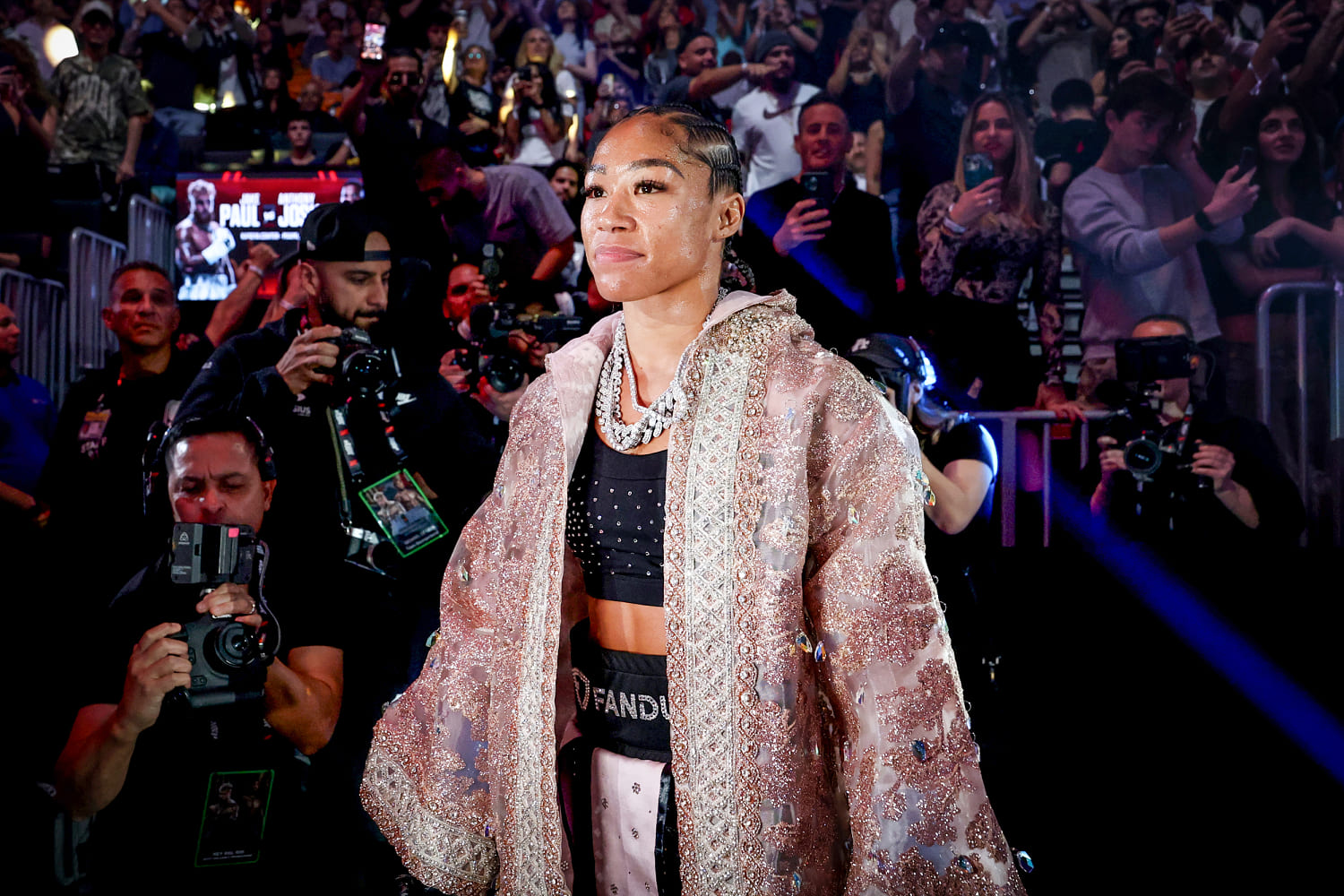
The narrative surrounding Alycia Baumgardner is broken. If you read the mainstream sports rags, you’re fed a steady diet of "fighting for equality," "breaking barriers," and "paving the way for the next generation." It’s a soft, philanthropic lens that treats women’s boxing like a charity case or a social justice project rather than a blood sport.
This isn't just patronizing. It’s bad business.
Baumgardner isn't a martyr for a cause; she’s a world-class predator in a ring. By framing her career as a crusade for gender equity, promoters and pundits are actually suppressing the market value of the sport. They are selling "importance" when they should be selling "impact." People don’t buy tickets to witness equality. They buy tickets to see a knockout.
The industry is stuck in a loop of performative activism that ignores the cold, hard mechanics of combat sports. We need to stop talking about "parity" and start talking about the product.
The Pay Gap Is A Promotion Problem Not A Patriarchy Problem
The loudest cry in the "Equality for Alycia" camp is the pay gap between male and female fighters. It’s an easy target. It makes for great headlines. It’s also a lazy analysis of how the fight game actually works.
Boxing operates on a brutal, meritocratic revenue model. You get paid based on the "butts in seats" and "buys on the screen" metric. Currently, the industry treats female fighters like a niche opening act for a social cause. When you market a fight as a "milestone for women," you aren't attracting the hardcore boxing fans who want to see a tactical masterclass or a chin-checking brawl. You’re attracting "fair-weather" viewers who tune in for the optics and disappear when the ceremony is over.
Look at the numbers. When Claressa Shields and Savannah Marshall headlined at the O2, it wasn't successful because it was a "win for women." It succeeded because there was genuine, vitriolic beef and two elite athletes who looked like they wanted to take each other’s heads off. That is the only sustainable model.
Promoters keep trying to "foster" (a word for people who don't know how to sell) growth through sentimentality. It fails every time. You don't close the pay gap by asking for fairness. You close it by becoming undeniable and making the broadcast partners realize they lose money by not having you on the card. Baumgardner has the "undeniable" part down. The marketing around her is what’s lagging behind.
The Three Minute Round Myth
There is a persistent, pseudo-scientific argument that women should stick to two-minute rounds for "safety" or to maintain a "faster pace." This is the most significant hurdle to true professional status, and the "equality" crowd is strangely silent about it.
In a ten-round fight with two-minute rounds, you have 20 minutes of total combat. In a men's ten-round fight, you have 30 minutes. That is a 33% difference in the volume of the "product."
If you are a broadcaster, why would you pay the same licensing fee for 20 minutes of content as you would for 30? More importantly, the two-minute round actively kills the knockout. It takes time to break a human being down. It takes time to establish a jab, work the body, and create the fatigue that leads to a spectacular finish.
By forcing women into the two-minute sprint, the sanctioning bodies are ensuring that more fights go to the scorecards. And nothing kills a casual fan's interest faster than a string of technical decisions.
- The Sprint Paradox: Two-minute rounds encourage a "patter-patter" style of high-volume, low-impact punching.
- The Recovery Problem: One minute of rest after only two minutes of work allows fighters to recover too quickly, preventing the "deep water" scenarios that define legendary fights.
- The KO Drought: Statistically, knockouts occur more frequently in the later minutes of a round. Eliminating the third minute eliminates the climax.
If Baumgardner and her peers want the same checks as the men, they must demand three-minute rounds. It is the only way to prove their endurance and provide the kind of visceral finishes that command a premium price tag. Anything else is just amateurism with a professional price tag.
Stop Selling Empowerment To People Who Want Blood
The "Competitor Reference" article likely spends a lot of time on Baumgardner as a role model. This is a trap.
Combat sports are built on the "Heel" and the "Hero." They are built on conflict. When we sanitize female fighters by turning them into "ambassadors for change," we strip away their edge.
Imagine if we marketed Mike Tyson in 1986 as a "symbol of hope for inner-city youth" instead of "The Baddest Man on the Planet." He wouldn't have been a global phenomenon. He was a terrifying force of nature.
Baumgardner has that same "Baddest Woman" energy. She’s flashy, she’s arrogant, and she’s lethal. That is her brand. Not "Gender Equality."
When she beat Terri Harper, it wasn't a "win for women." It was a clinical execution. That standing knockout is what people remember—not a speech about pay equity. The industry needs to lean into the violence. Stop trying to make the sport "palatable" for people who don't even like boxing. Double down on the aggression.
The Reality Of The "Niche" Trap
I’ve seen promoters blow millions trying to "market to women" by making boxing events look like a mixture of a TED Talk and a fashion show. It’s a waste of capital.
Women’s boxing doesn’t need a new audience. It needs to capture the existing boxing audience. That audience consists of people who appreciate the "sweet science" and the "raw brutality." They don't care about the chromosomes of the person delivering the left hook; they care about the technique and the stakes.
The problem is that the "equality" narrative creates a barrier of entry. It tells the hardcore fan, "This isn't for you, this is for the cause." It turns a sporting event into a lecture.
We need to treat a Baumgardner fight exactly like a Gervonta Davis fight. No special "women’s only" branding. No pink gloves. No segments on "the struggle." Just two athletes, a ring, and a grudge.
The High Stakes Of Performance Enhancements And Scrutiny
True equality means equal scrutiny. When Baumgardner dealt with her "adverse analytical finding" (the polite term for a failed drug test), the reaction was split. One side used it to tear down the sport; the other tried to shield her because "we can't lose our star."
If we want women’s boxing to be taken seriously, we have to stop treating the athletes like they are fragile. A failed test is a failed test. The drama, the suspension, the comeback—that is all part of the professional narrative.
In the men's game, a positive test makes you a villain. In the "equality" narrative, there’s an urge to protect the "symbol." To get to the next level, the sport needs to stop protecting its symbols and start holding its athletes to the same cutthroat standards as the men. If she’s the "King," she bears the crown's weight—including the scandals.
Stop Asking For A Seat At The Table
The most annoying phrase in the current sports landscape is "asking for a seat at the table."
In boxing, you don't ask for a seat. You kick the door down and take the table.
Alycia Baumgardner doesn't need a committee to grant her equality. She needs a promoter who understands that she is a high-yield asset. She needs opponents who are willing to risk their health to take her belts. And she needs a fanbase that values her for her ability to put people to sleep, not her ability to speak at a conference.
The "equality" movement in boxing is a distraction from the "excellence" movement. The more we focus on the social implications of a woman in the ring, the less we focus on the skill required to be there.
We are currently witnessing some of the highest-level boxing in history, regardless of gender. Amanda Serrano, Katie Taylor, Claressa Shields, and Alycia Baumgardner are elite technicians. But the moment you frame their work as "gender equality," you've effectively put them in a "Special Olympics" category where they are praised for participating rather than dominating.
The Actionable Order
If you are a fan: Stop "supporting" women's boxing. Start watching it because it’s good. If it’s a boring fight, turn it off. If it’s a banger, tell everyone.
If you are a promoter: Stop the "First Time Ever" and "History Making" slogans. We’ve had enough history. We want high-stakes drama. Stop the two-minute rounds. Put the women in the same deep water as the men and see who swims.
If you are an athlete: Be like Baumgardner, but leave the "equality" talk to the journalists. Your job isn't to fix the world. Your job is to break the person standing across from you.
The industry doesn't need to be "fixed." It needs to be unleashed from the boring, safe, corporate-approved "equality" narrative.
The fight for equality is over. The fight for the market share has just begun.
And in that fight, there are no participation trophies. There is only the winner, the loser, and the person who made the most money by being the most dangerous person in the room.
Stop talking about her gender. Talk about her counter-punching.
Anything else is just an insult to the sport.