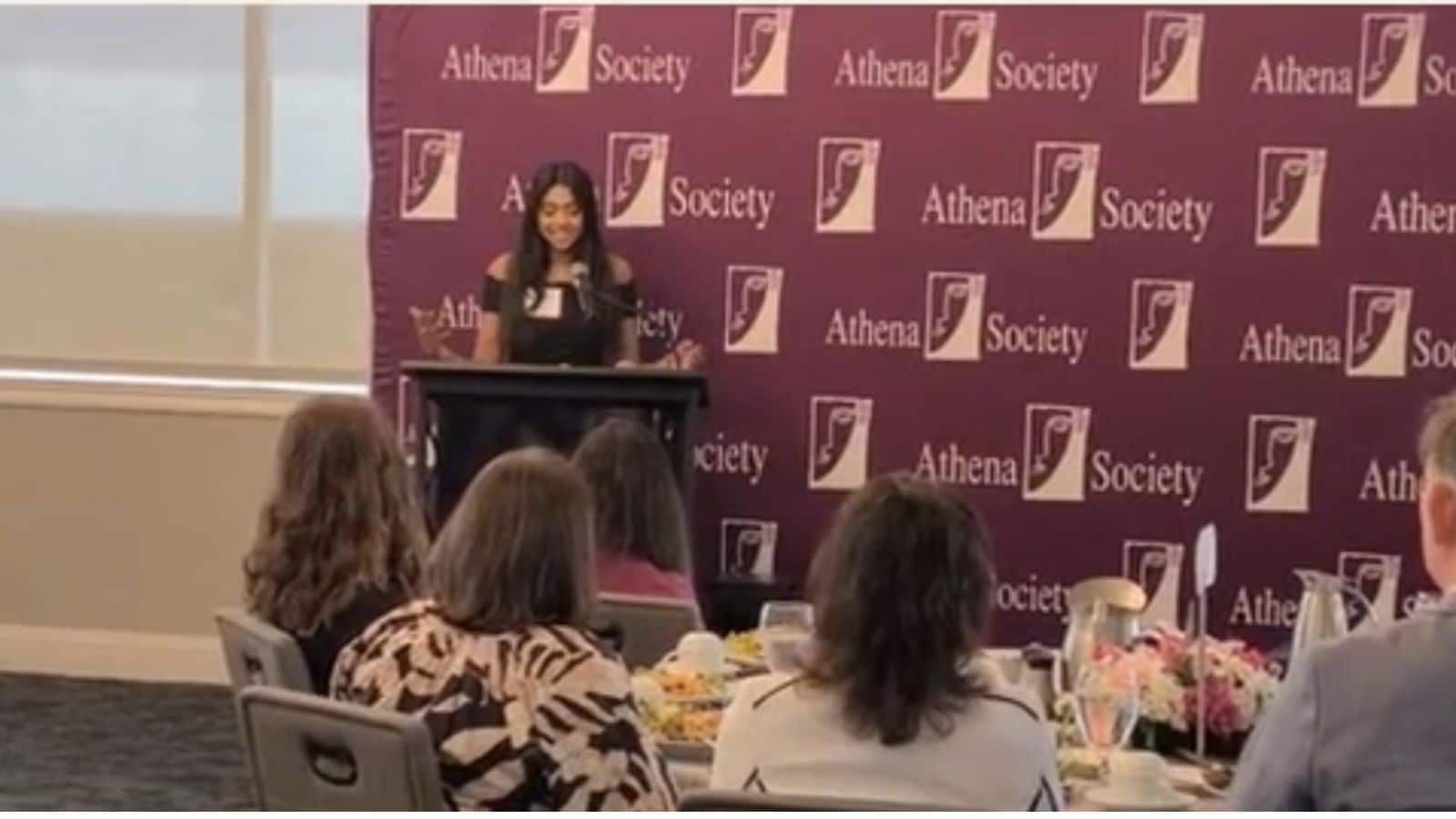
We love a good prodigy story. A teenage girl steps up, launches a skin cancer awareness mission, wins a local award, and gets her photo in the regional paper. Everyone claps. The local politicians nod approvingly. The school district posts a proud graphic on social media.
It feels good. It makes us think the next generation is fixing the world one community flyer at a time.
It is also an indictment of a broken system disguised as a feel-good feature.
When a high school student has to spend her weekends teaching sunscreen habits and skin check protocols because the institutional pillars of public health failed to reach her peers, we are not looking at an inspiring display of youth leadership. We are looking at a society outsourcing adult responsibilities to children.
Medha Kollepara earned her recognition. She put in the hours, built the outreach, and no one should diminish the sincerity of her effort or the value of educating people on melanoma prevention. But celebrating the symptom while ignoring the disease is a national pastime. We treat individual acts of charity as structural victories so we can avoid fixing the actual infrastructure.
If skin cancer awareness required a sixteen-year-old with a Canva account to bridge the gap, the multi-billion-dollar medical apparatus failed.
Let us look at the lazy consensus running through every local news profile written about youth activists. The narrative goes like this: youth-led grassroots movements are pure, authentic, and uniquely capable of driving behavioral change where adults fail.
That is romantic nonsense.
Teens do not change health behaviors because another teen tells them to on Instagram. They change behaviors when systemic incentives shift, when insurance companies stop penalizing preventative dermatology visits, and when schools mandate comprehensive, dermatologist-backed education instead of relying on extracurricular philanthropy projects.
Every time we treat a student activist as a substitute for institutional competence, we let the real culprits off the hook. Insurance barriers, bloated administrative healthcare costs, and a reactive medical system that profits off late-stage removal rather than early-stage education are the actual culprits. A teenager handing out pamphlets at a community center does not alter that economic reality. It just puts a wholesome mask over a malfunctioning machine.
The Preventative Care Illusion
Skin cancer is the most common cancer in the United States, yet our approach to treating it resembles a medieval village throwing water on a thatch-roof fire. Melanoma rates have climbed steadily over the past few decades, driven by cheap tanning beds, inadequate sun safety habits, and a primary care system that treats skin checks as an optional luxury item rather than a baseline vital check.
When dermatologists evaluate public health messaging, they find a massive disconnect between clinical reality and community outreach.
| Traditional Public Health Model | The Real-World Reality |
| :--- | :--- |
| Annual preventative skin checks | Weeks-long waitlists and high co-pays |
| Universal sun safety education | Patchy, underfunded school curricula |
| Early detection through primary care | General practitioners who miss early signs |
Look at that middle column. When a patient tries to book a preventative skin check through standard commercial insurance, they routinely face a three-month waitlist. If they do get in, they might face a specialist co-pay that turns a routine preventative scan into a financial burden.
So what happens? People skip the check. They wait until a suspicious mole starts bleeding or changing shape. By then, the cost of treatment has multiplied exponentially, both for the patient and the healthcare system.
Expecting a teenager's awareness mission to pierce that wall of structural dysfunction is absurd. It is like asking a child to direct traffic on an interstate highway because the state refuses to install traffic lights.
Why Awareness Campaigns Fail Without Teeth
We have an obsession with awareness. We love months dedicated to colors, ribbons, and awareness walks. Skin Cancer Awareness Month brings out a flood of infographics telling people to wear SPF 30 and stay out of the midday sun.
Everyone already knows they should wear sunscreen. That is the dirty secret of modern health communication.
Ignorance is rarely the primary barrier to health. People do not skip sunscreen because no one ever told them ultraviolet rays exist. They skip it because of friction, cost, aesthetics, and lifestyle design. Sunscreen feels greasy, commercial sunscreens are surprisingly expensive for low-income families, and outdoor workers have zero control over their exposure during peak UV hours.
An awareness campaign that simply repeats "wear sunscreen" to teenagers who already hear it in health class is pure noise. It changes zero behaviors because it demands nothing of the environment.
True preventative intervention alters the environment. Imagine a scenario where municipal governments mandate shaded structures over every public playground and high school sports bleacher, or where health authorities subsidize medical-grade mineral sunscreens the way they subsidize vaccines. That is structural intervention. A teenage awareness initiative telling kids to buy a bottle of lotion at CVS is lifestyle branding.
The Burnout Factory
There is another dark side to celebrating youth activists: burnout.
We heap praise on minors for doing unpaid labor to fix systemic failures, and then we act shocked when they hit college and burn out under the weight of expectations we manufactured for them. We turn civic duty into an admissions resume-padding exercise.
When every college application requires a narrative of exceptional leadership and community impact, teenagers are incentivized to engineer non-profits, start awareness campaigns, and launch local initiatives not because they have a unique vision for public health, but because the system demands proof that they are miniature saints.
This creates a perverse incentive structure. Kids spend their formative years managing public relations campaigns instead of being kids, all to satisfy an admissions algorithm that values performative impact over genuine curiosity.
We created a system where a sixteen-year-old has to run a pseudo-marketing agency for skin cancer prevention to stand out, while the adults sitting on hospital boards and public health committees collect six-figure salaries while watching melanoma rates tick upward.
The Brutal Truth About Dermatology Access
Let us talk about the medical professionals in this ecosystem. Dermatology is one of the most competitive, lucrative medical specialties in the country. The financial incentives point away from community outreach and straight toward cosmetic procedures and high-volume practices.
Insurance reimbursement rates for routine skin cancer screenings are notoriously low compared to cosmetic treatments like laser resurfacing, botox, and filler administration. Consequently, many clinics prioritize patients who pay out-of-pocket for cosmetic enhancements over patients needing a full-body mole check.
When the medical establishment prioritizes cosmetic revenue over preventative screening, the burden trickles down. It trickles down to primary care doctors who receive minimal dermatological training in medical school. It trickles down to underfunded school nurses. And eventually, it trickles down to teenagers who feel compelled to start awareness missions because nobody else is doing the grassroots legwork.
If we want to fix skin cancer rates, we do not need another teen-led advocacy group. We need systemic policy changes that force the medical industrial complex to align with public health realities.
What Actually Moves the Needle
If you want to reduce skin cancer mortality, stop investing your emotional energy in feel-good stories about teenage prodigies and start demanding structural changes that remove friction from preventative care.
- Mandate Derm-Level Training for Primary Care: Most skin cancers are first spotted by general practitioners, yet medical schools spend less than a week on dermatology. Force every primary care resident to complete a rigorous clinical rotation in dermoscopy.
- Subsidize Mineral Protection: Treat broad-spectrum sunscreen as a necessary healthcare product, not a cosmetic luxury. Eliminate sales taxes on sun protection and require employers in outdoor industries to provide industrial-grade protection free of charge.
- Automate Early Screening: Deploy AI-assisted imaging tools in primary care clinics so general practitioners can instantly triage suspicious lesions without forcing patients to wait four months for a specialist referral.
- Redefine Youth Engagement: Stop using teenagers as free labor to plug holes in the public health dam. Let kids play, learn, and grow without turning their adolescence into a case study for corporate social responsibility.
Medha Kollepara will likely go on to a brilliant career, perhaps in medicine, perhaps elsewhere. She will have a great line on her resume. But the next time a local news outlet profiles a teenager saving the world with a awareness campaign, ask yourself why the adults in the room abandoned their posts.
Stop applauding the bandage when the patient is bleeding internally. Fix the infrastructure.