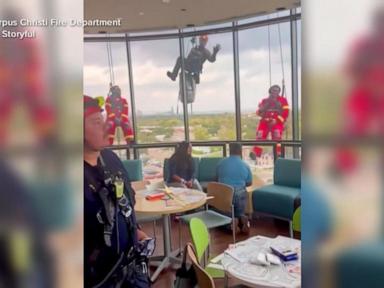
Every few months, a local news station runs the exact same segment. A ladder truck pulls up to a pediatric ward. A crew of municipal firefighters steps out, not in their bunker gear, but in cheap spandex Spider-Man and Batman suits. They rappel down the brick facade, wave through the glass, and hand out plastic stickers.
The anchor smiles. The comments section floods with heart emojis. Everyone agrees it is pure, unadulterated good.
Everyone is missing the point.
These viral stunts are not just harmless fun. When first responders dress up as fictional comic book characters to comfort sick or traumatized children, they actively undermine the exact psychological safety they are paid to provide. They trade real-world trust for a cheap dopamine hit on the evening news.
I have spent over a decade consulting on public safety communications and pediatric emergency readiness. I have watched well-meaning fire departments sink thousands of overtime hours and public relations budgets into theatrical gimmicks while ignoring basic principles of child psychology. The intentions are noble. The execution is backwards.
The Dangerous Blur Between Fiction and Rescue
Children under the age of eight do not process fantasy and reality the way adults do. Developmental psychologists call this the fantasy-reality distinction, and in young kids, the boundary is porous. When a child is hospitalized, injured, or trapped in a house fire, their baseline stress hormones are already redlining. Their cognitive load is maxed out.
Now introduce an adult authority figure wearing a fictional disguise.
A firefighter in full turnout gear—yellow coat, reflective stripes, heavy helmet, Self-Contained Breathing Apparatus (SCBA)—is a terrifying sight to a toddler if they have never seen it before. In a real fire, that firefighter sounds like Darth Vader and looks like an alien. Fire departments spend millions on fire prevention week specifically to demystify that gear so kids do not hide under beds when smoke alarms go off.
Putting a firefighter in a Superman costume does the exact opposite. It teaches a child that rescue comes from magic, capes, and corporate intellectual property. It dissociates the rescuer from their actual tools and uniform.
Imagine a scenario where a six-year-old spends two weeks in a pediatric oncology unit. During that stay, the local fire crew visits dressed as the Avengers. The child forms an emotional bond with "Captain America." Six months later, an electrical fire breaks out in that child's home. The bedroom fills with black smoke. A real firefighter kicks down the door in full bunker gear, carrying a Halligan bar and wearing a facepiece. The child does not see their friend from the hospital. They see a monster, because nobody showed them that the hero was the person under the turnout coat, not the person in the spandex.
The PR Trap of Viral Philanthropy
Let us be honest about why these events happen. They are rarely designed by pediatric mental health specialists. They are designed by public information officers (PIOs) and hospital marketing teams chasing earned media.
Local television news operates on a strict visual diet. A standard station tour where kids try on a real fire helmet and learn how to crawl low under smoke does not make the six o'clock broadcast. A grown man rappelling down a hospital wall in a Deadpool mask gets syndicated nationally.
This creates a perverse incentive structure:
- The Visual Bias: Media outlets reward novelty over utility. Departments learn that theatrical stunts generate positive press coverage, which helps during municipal budget negotiations and union contract talks.
- The Liability Blind Spot: Rappelling operations on civilian buildings require rigorous technical rescue certifications, anchor point engineering, and safety officers. Performing high-angle rope work in non-standard costumes—which lack the abrasion resistance and harness integration of certified rescue gear—introduces unnecessary physical risk for a photo op.
- The Resource Drain: Pulling an engine or ladder company out of service for four hours to stage a costume event means another station has to cover their response district. When that downtime is spent on genuine fire safety education, the trade-off makes sense. When it is spent on cosplay, the math falls apart.
What Child Life Specialists Actually Say
If you want to know what actually helps hospitalized children, stop asking fire chiefs and start asking Certified Child Life Specialists (CCLS). These are the clinicians trained specifically in the developmental impact of illness and injury.
According to standards established by the Association of Child Life Professionals (ACLP), effective pediatric intervention relies on predictability, honesty, and mastery. Sick children feel a profound loss of control over their bodies and their environments. Adults poke them with needles, move them from room to room, and speak over their heads in medical jargon.
Fantasy distractions provide a temporary sugar rush, followed by a crash. What children actually need is familiarization.
When a firefighter arrives in authentic, clean station wear or turnout gear, and lets a child touch the heavy fabric, hear the hiss of the air regulator, and hold a real flashlight, something profound happens. The child gains mastery over a real-world object. They learn how the world actually works. They learn that ordinary human beings—teachers, nurses, paramedics, firefighters—are the ones who show up when things go wrong.
You do not need a radioactive spider bite to save someone's life. You need training, cardiovascular endurance, and a working knowledge of building construction. Telling kids that heroes wear capes erases the quiet, unglamorous competence of the actual job.
Dismantling the Common Defenses
Whenever I bring this up at fire service conferences, the pushback is immediate and predictable. Here is how the standard arguments hold up under scrutiny.
"They are sick kids—just let them have one day of fun."
Fun and psychological preparedness are not mutually exclusive. Kids love real fire trucks. They love sirens, brass nozzles, and thermal imaging cameras. A thermal camera—which lets a child see their own heat signature on a screen in glowing orange and blue—is infinitely cooler to an eight-year-old than a guy in a store-bought Batman mask. Reality, when properly presented, is fascinating enough on its own.
"It builds community trust in underserved neighborhoods."
Community trust is built through consistency, cultural competence, and showing up when cameras are not rolling. Wearing a costume creates a barrier between the responder and the community. If a department wants to build trust, they should send firefighters in uniform to read books at local elementary schools, install free smoke detectors in low-income housing, and eat lunch in the neighborhood without a press release attached.
"You are overthinking a nice gesture."
In emergency services, details matter. Nobody says "you are overthinking it" when an engineer checks the pressure gauge on a pump panel or a paramedic double-checks a pediatric medication dosage. Emotional and psychological safety deserves the exact same precision as physical safety. Good intentions do not neutralize bad methodology.
The Nuance: When Costume Visits Work (And Why Most Fail)
To be fair, there is a narrow lane where these visits do not cause harm—and I have seen a few departments execute it properly.
First, the setting matters. In a long-term pediatric rehabilitation facility—where children are recovering from severe burns or spinal cord injuries—the patients already know the medical and fire staff intimately. They have spent months working with them. In that specific context, a holiday costume event is clearly understood by the children as a game played by adults they already trust.
Second, the transition must be visible. The most effective pediatric educators never appear in a mask. If a costume or gear is involved, the child watches the adult put it on and take it off. The adult maintains their real voice and real identity the entire time. The message is explicit: I am Firefighter Miller, and I am wearing this to make you laugh today.
Most viral hospital stunts violate both rules. They ambush acute-care patients with masked strangers who stay in character, sign autographs under fictional names, and vanish back into a ladder truck.
A Better Playbook for First Responders
Fire departments and hospital foundations do not need to cancel their outreach programs. They just need to stop outsourcing their credibility to Hollywood. If a department wants to make a lasting impact on hospitalized kids, they should scrap the spandex and run this play instead:
- Bring the Real Gear, Clean and Unmasked: Show up in crisp Class B uniforms or pristine, non-contaminated turnout gear. Let kids inspect the equipment at eye level. Keep helmets off during initial introductions so children can read facial expressions—human brains rely on facial micro-expressions to assess threat levels.
- Partner Directly with Child Life Teams: Before scheduling any visit, have the fire prevention officer sit down with the hospital's Child Life Director. Ask what specific fears the current patient population is dealing with. Tailor the visit to address those anxieties directly.
- Use Real Tools for Interactive Demos: Bring a thermal imaging camera, a stethoscope, or a battery-powered extrication tool (operated safely by professionals). Let kids push the buttons. Give them agency.
- Ban the Press Release: Run the visit without notifying local news stations. When the cameras are gone, the performance stops, and real human connection begins. Firefighters talk differently to kids when they are not worried about soundbites.
- Leave Something Real Behind: Instead of cheap plastic superhero trinkets, leave a junior fire marshal badge with the child's actual name written on it, or a signed photo of the crew standing in front of their actual rig. Anchor the memory in reality.
The Cost of Cheap Applause
The fire service has spent two centuries earning one of the highest public trust ratings of any profession in the world. People let firefighters into their homes at three in the morning on the worst days of their lives without asking for identification, purely because of the uniform and the truck parked outside.
Every time a crew trades that uniform for a comic book costume to chase a viral video, they dilute that brand. They teach the next generation that real courage needs a fictional wrapper to be worth celebrating.
Kids facing serious illness or trauma do not need a fictional character from a movie studio to come save them. They need to know that real, flesh-and-blood adults with heavy boots, real tools, and steady hands are standing right outside their door, ready to do the work.
Take off the masks. Put the turnout gear back on. Let the real heroes do the job.