Every entertainment outlet on the internet just published the exact same obituary, and every single one of them missed the point.
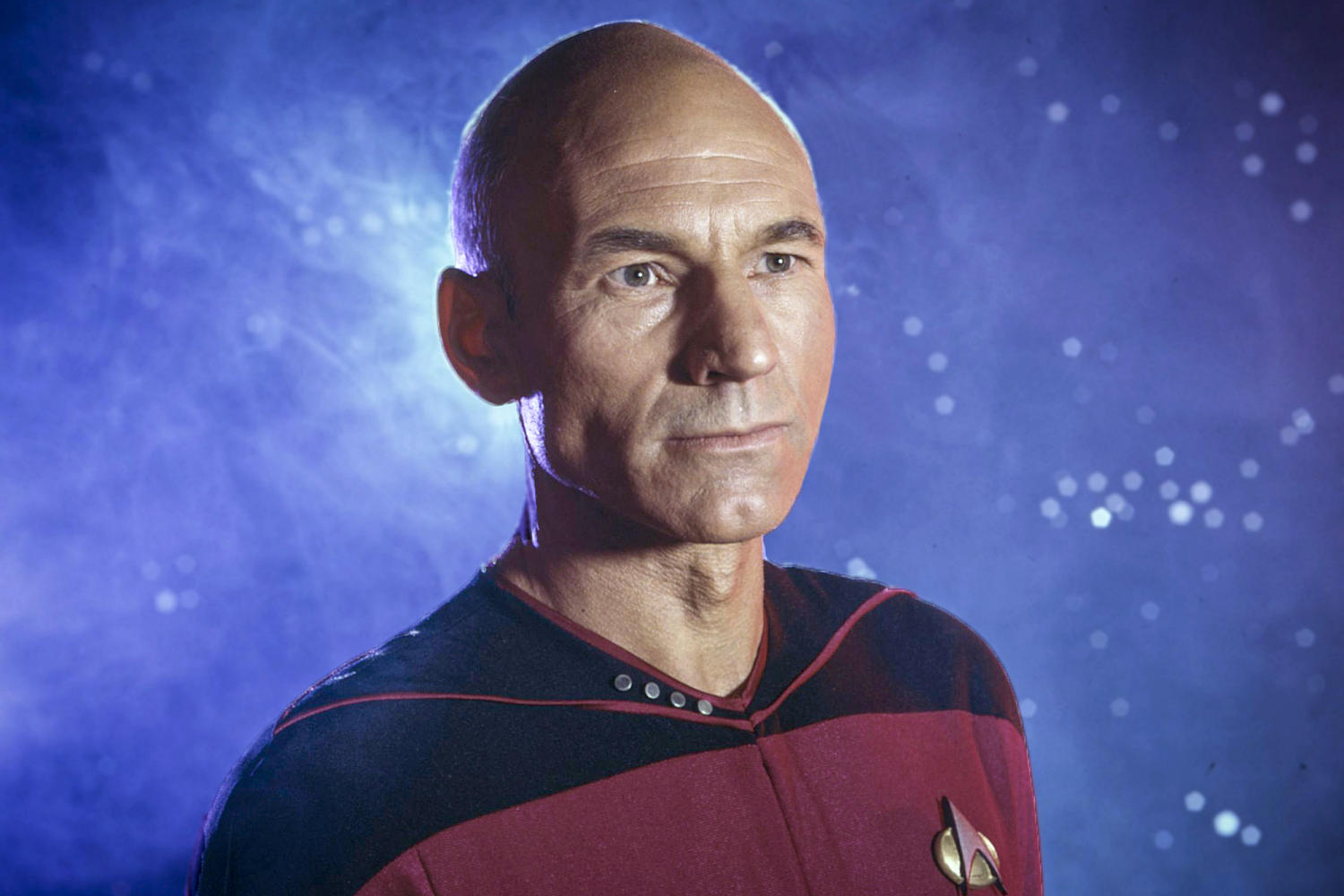
They slapped "Star Trek" and "X-Men" into the headline, dug up a few stock photos of a bald man in a spandex jumpsuit or a wheelchair, and called it a day. That is the lazy consensus of modern pop-culture journalism. It treats a titan of the Western stage like a mere action-figure model who happened to speak with a nice British accent. Also making news in related news: What Most People Get Wrong About Patrick Stewart Following Reports of His Death at 86.
If you think Patrick Stewart’s career is defined by Jean-Luc Picard and Charles Xavier, you do not understand acting, and you certainly do not understand the man himself.
The mainstream press loves a neat, two-franchise summary because it sells clicks to nostalgia addicts. What they leave out is that Stewart spent nearly three decades mastering the most brutal, unforgiving medium on earth before a single Hollywood casting director knew his name. He didn't bring prestige to sci-fi and comic book movies by accident. He brought the full, terrifying weight of the Royal Shakespeare Company into television studios and green-screen soundstages that had no idea how to handle him. Further details regarding the matter are explored by The Hollywood Reporter.
The Myth of the "Sci-Fi Icon"
Let’s dismantle the primary premise of every standard tribute piece making the rounds right now.
The narrative goes like this: Patrick Stewart was a struggling stage actor who got lucky when Gene Roddenberry cast him in Star Trek: The Next Generation in 1987, turning him into a household name.
Wrong. Completely backwards.
By 1987, Stewart was already an Associate Artist of the Royal Shakespeare Company. He had worked alongside Peter Brook, arguably the most radical and influential theater director of the twentieth century. In 1970, Stewart starred in Brook’s legendary production of A Midsummer Night’s Dream—a production that stripped away centuries of Victorian theatrical baggage and redefined modern staging. He had played Claudius, Oberon, Shylock, and Enobarbus on stages where there were no second takes, no ADR looping in post-production, and no stunt doubles.
When he walked onto the set of The Next Generation, he wasn't saved by Hollywood. Hollywood was saved by him.
I’ve spent twenty years watching studio executives throw hundreds of millions of dollars at CGI spectacles, only to watch those movies collapse because the actors couldn't sell a single line of exposition without sounding like they were reading a cereal box. In 1987, Star Trek: The Next Generation was a syndicated gamble with terrible early scripts and cheesy plastic sets. By all metrics, it should have died in season one.
It survived because Stewart refused to play it as camp. He treated technobabble about "reverse polarity" and "subspace anomalies" with the exact same gravitas he gave to King Lear. He stood on that bridge, planted his feet, and projected his voice to the back row of a theater that didn't exist.
The Brutal Reality of Classical Training vs. Modern Screen Acting
Most modern film actors rely on what industry insiders call "micro-naturalism." They mumble. They squint. They let a $100,000 cinema lens do the heavy lifting while they whisper into a boom mic three inches above their heads.
Put ninety percent of today's A-list movie stars on the stage at Stratford-upon-Avon without a microphone, and they would be eaten alive before intermission.
Classical theater training—the kind Stewart forged in the 1960s and 70s—is an athletic discipline. It requires total control over breath, posture, vocal resonance, and emotional stamina across a three-hour performance, eight shows a week. You cannot hide behind an editor's cut. You cannot ask the director to "fix it in the mix."
Here is the nuance the obituary writers missed: Stewart’s genius wasn't just that he could do Shakespeare. Plenty of British actors can recite iambic pentameter. His genius was tonal translation.
He understood how to scale down a theatrical performance for a close-up camera without losing a single ounce of authority. Look at his stillness. Watch any scene of him as Professor X in X-Men or Logan. He is sitting in a chair, physically restricted from using half his body to express emotion, yet he commands the entire frame against actors twenty years younger and twice his size. He achieves that through vocal modulation and eye focus—skills hammered into him over decades of live theater, not learned on a soundstage.
Dismantling the "Typecasting" Fallacy
If you look up "People Also Ask" queries about Patrick Stewart, you inevitably run into variations of the same tired question: "Did Patrick Stewart hate being typecast as Captain Picard?"
The question itself is flawed because it assumes he was ever actually typecast.
Typecasting happens when an actor has one gear, hits a lucky break, and spends the rest of their life playing variations of that single note until the phone stops ringing. Stewart never had one gear.
While the public was busy buying Picard action figures, Stewart was actively sabotaging his own clean-cut image. Consider his range outside the two franchises everyone keeps mentioning:
- Gurney Halleck in Dune (1984): Before Picard, he was playing a battle-scarred warrior-troubadour in David Lynch’s surrealist sci-fi epic, wielding a baliset and a knife with equal ferocity.
- King Leondegrance in Excalibur (1981): Covered in mud and chainmail in John Boorman’s brutal Arthurian masterpiece.
- Macbeth (2010): Rupert Goold’s modern-dress adaptation set in a Stalinist underworld, where Stewart turned the Scottish king into a terrifying, paranoid butcher—a performance that earned him a Tony nomination and proved he could still out-act almost anyone on Broadway.
- Darcy Banker in Green Room (2015): If you still think of him as a benevolent space diplomat, watch Jeremy Saulnier’s punk-rock siege thriller. Stewart plays the cold-blooded, soft-spoken leader of a neo-Nazi skinhead gang in the Pacific Northwest. There is no theatrical booming voice here. There is no nobility. He is quiet, pragmatic, and utterly terrifying.
- Walter Blunt in Blunt Talk (2015–2016): A cocaine-snorting, self-destructive British cable news anchor losing his mind in Los Angeles.
He didn't escape typecasting. He weaponized his public persona against the audience. He knew you expected Captain Picard—the moral compass of the universe—and he used that expectation to make his villains twice as disturbing and his comedic turns twice as absurd.
The Downside of the Stewart Approach
To be completely honest about the mechanics of his craft, the "Stewart method" isn't without its flaws, and blindly copying it will ruin a young actor's career.
When you bring towering classical authority to genre material, you run the massive risk of tonal mismatch. If the rest of the cast isn't operating on your level, or if the script is genuinely garbage, your gravitas can accidentally highlight how stupid the material actually is.
In the early seasons of Star Trek: The Next Generation, Stewart’s rigid theatrical discipline sometimes made him look stiff compared to the looser, more American television style of his co-stars like Jonathan Frakes or Brent Spiner. Stewart himself admitted years later that he initially hated the relaxed atmosphere on set and tried to lecture the cast on professionalism—a move that nearly alienated him from the entire crew before he learned to loosen up.
Furthermore, extreme vocal precision can occasionally border on the self-aware. When Stewart did voice work for American Dad! as CIA Deputy Director Avery Bullock, the entire joke relied on the absurdity of that magnificent, Shakespearean baritone uttering absolute filth. It worked brilliantly because Seth MacFarlane wrote specifically for that contrast. Put that same voice in a mediocre drama without self-awareness, and it risks sounding pompous.
What Actors and Creators Should Actually Learn From Him
Forget the sentimental tributes. If you work in entertainment, writing, or any creative industry, Stewart’s 86-year run offers a ruthless blueprint for longevity that completely contradicts modern career advice.
1. Never Play Down to the Material
Modern Hollywood is plagued by "ironic detachment." Actors wink at the camera so the audience knows they're smarter than the silly comic book movie they're getting paid $10 million to star in. It ruins the suspension of disbelief and insults the paying customer. Stewart never winked. Whether he was performing Hamlet or voice-acting a literal pile of poop in The Emoji Movie, he committed one hundred percent. Respect the work, or don't cash the check.
2. Build Your Foundation Where Nobody Is Watching
Today, young actors want a Netflix series six months out of acting school. They want immediate visibility. Stewart spent decades in regional repertory theater in England—places like Manchester, Bristol, and Stratford—earning peanuts and mastering his craft out of the public eye. When the spotlight finally hit him at age 47, he was indestructible. If you build your foundation in obscurity, nobody can tear you down when you finally reach the top.
3. Weaponize Your Own Reputation
Once you achieve a certain level of fame, audiences put you in a box. Most people spend their lives complaining about the box. Smart operators use the box as a Trojan horse. Stewart took the goodwill he earned from playing humanity’s greatest fictional leaders and used it to get financing for dark, uncomfortable, independent projects like Green Room and Match.
4. Age Without Apology
Hollywood treats aging like a terminal disease, especially once an actor crosses sixty. Stewart didn't fade into cameo appearances or nostalgic convention circuits. He leaned directly into physical vulnerability. His performance in Logan (2017)—playing a dementia-ridden, frail, profanity-spewing Charles Xavier—is widely considered the finest acting in any comic book film ever made. He stripped away every ounce of the dignified elder statesman persona and showed the raw, ugly reality of a brilliant mind rotting away.
The Real Obituary
When future film and theater historians look back at Patrick Stewart, they won't care about box office numbers or how many convention autographs he signed.
They will look at an artist who bridged two worlds that elitists swore could never mix. Before Patrick Stewart, "serious" British classical actors treated American science fiction and comic book adaptations like career suicide—something you did strictly for a quick paycheck while keeping your name off the press tour.
Stewart proved that high art and mass entertainment aren't enemies. He proved that an audience watching a syndicated sci-fi show on a Tuesday night deserves the exact same technical excellence, vocal power, and emotional truth as a patron paying three hundred pounds for a front-row seat at the Royal Shakespeare Theatre.
He didn't become a legend because he played a starship captain and a mutant professor. Those roles became legendary because Patrick Stewart bothered to show up and act them.


