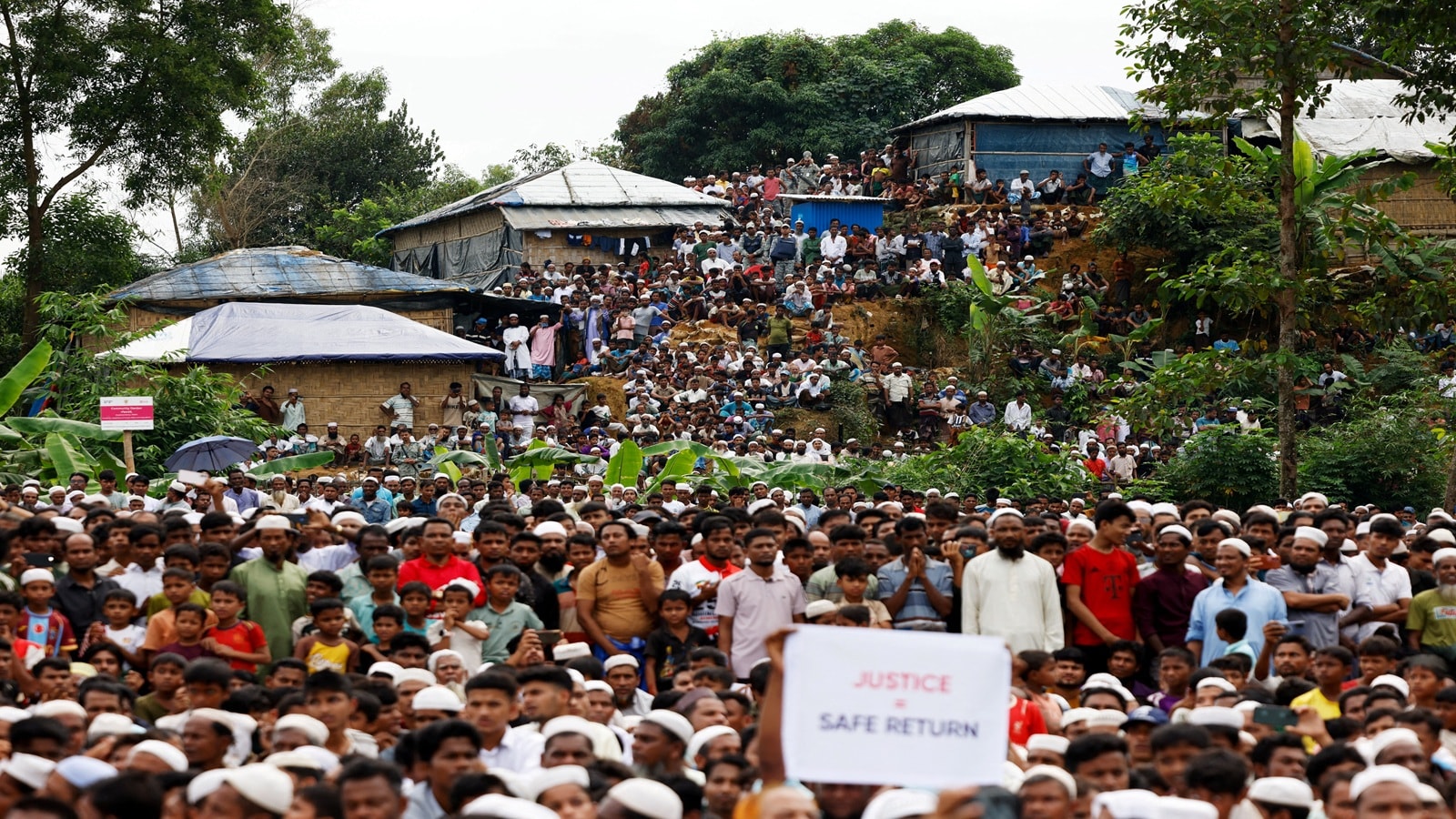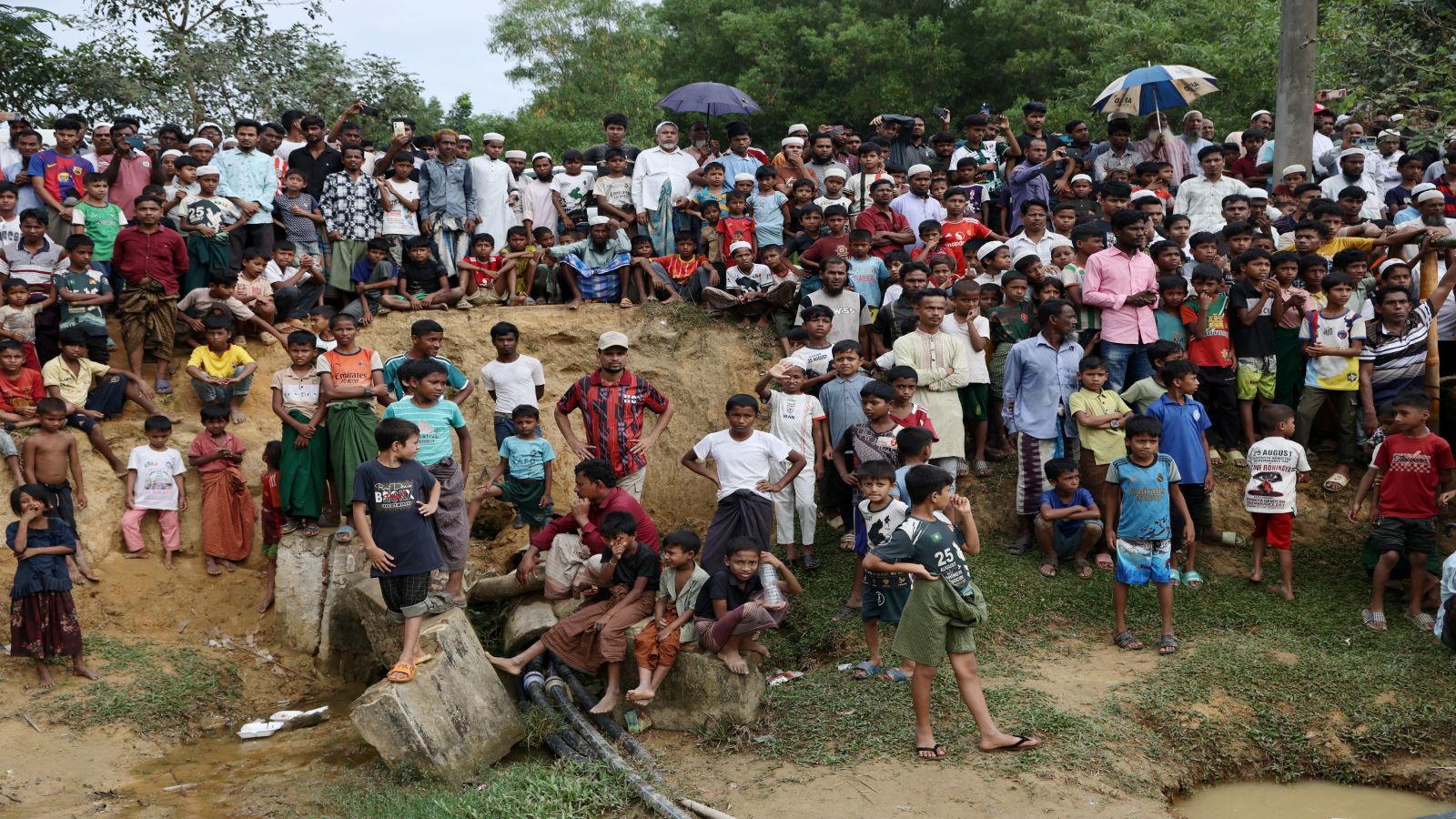
Humanitarian aid is addicted to the temporary. Walk through the muddy, terraced hills of Kutupalong in Cox's Bazar, Bangladesh, and you will hear the same soothing, tragic refrain from every international non-governmental organization on the ground. They call it a "long way to go." They point to the bamboo shelters, the recurring cholera outbreaks, the funding shortfalls, and the sheer, crushing weight of nearly a million Rohingya refugees packed into a few square kilometers of deforested hillside.
They are describing a crisis. They are wrong. For a closer look into this area, we recommend: this related article.
When a crisis lasts nearly a decade, it stops being an emergency and becomes a municipality. The lazy consensus among frontline medical observers—typified by recent dispatches from Médecins Sans Frontières (MSF) highlighting deteriorating health metrics and donor fatigue—frames Cox's Bazar as a failing triage tent that simply needs more bandages, more cash, and more patience until repatriation magically happens. That framing is not just outdated. It is actively harmful. By clinging to the fiction of temporariness, the international aid apparatus and host governments have engineered a permanent underclass denied the single most effective public health and economic intervention in human history—the legal right to build, trade, and belong.
The Architecture of Artificial Helplessness
Let us look at the mechanics of a refugee camp. Standard humanitarian doctrine treats displacement like a house fire. You rush in with water, put out the flames, set up a temporary shelter, and wait for the family to rebuild. For broader background on this issue, comprehensive analysis can be read on The Guardian.
In Cox's Bazar, the house burned down in August 2017 when the Myanmar military launched brutal clearance operations in Rakhine State. Nine years later, the fire trucks are still parked on the lawn, blocking the driveway, and the firefighters refuse to let the family pour concrete for a new foundation.
Under Bangladeshi policy, the Rohingya are officially classified as "Forcibly Displaced Myanmar Nationals" rather than refugees. The distinction is bureaucratic, yet the physical consequences are brutal. Permanent structures are banned. Brick and mortar are prohibited. Shelters must be constructed from bamboo and tarpaulin—materials designed to rot in the monsoon rains and burn in the dry season.
When MSF doctors lament that skin diseases, respiratory infections, and waterborne illnesses remain stubbornly endemic despite years of clinical intervention, they are diagnosing the symptom while ignoring the zoning code. You cannot medicate your way out of an architectural mandate that forces human beings to live in biodegradable tents. If you ban concrete, you guarantee damp floors. If you guarantee damp floors, you guarantee pneumonia and fungal infections.
I have watched multilateral donors pour hundreds of millions of dollars into annual "shelter upgrades" that consist of handing out fresh bamboo poles and plastic sheeting every twelve months. In any private sector supply chain, spending capital on assets with a twelve-month depreciation cycle when permanent materials exist is called malpractice. In the aid sector, it is called a "Joint Response Plan."
Why Repatriation Is a Dangerous Hallucination
Every major policy paper on Cox's Bazar begins with the same ritualistic incantation: safe, voluntary, and dignified repatriation to Myanmar is the ultimate goal.
Stop saying it. It is a lie, and everyone sitting in Geneva, Dhaka, and Yangon knows it.
Myanmar is locked in a multi-front civil war. The military junta has lost vast swaths of territory to ethnic armed organizations, including the Arakan Army, which now controls much of Rakhine State. Neither the junta nor the insurgent groups have demonstrated the political will or administrative capacity to guarantee citizenship, land restitution, or physical safety for the Rohingya. Even if a ceasefire materialized tomorrow, the villages the Rohingya fled were bulldozed years ago to make way for military bases and state-backed resettlement projects.
Yet, the diplomatic fantasy of imminent return dictates every single decision made inside the camps. Because the refugees are supposedly leaving "soon," they cannot have formal secondary schools teaching the Bangladeshi national curriculum. Because they are leaving "soon," they cannot hold formal work permits. Because they are leaving "soon," they cannot open bank accounts or legally own a SIM card.
Imagine a scenario where a mid-sized city of 950,000 people—roughly the population of Austin, Texas, or Stockholm—had its entire economy declared illegal overnight. Imagine telling every resident that they must survive entirely on monthly food vouchers worth roughly twelve dollars per person, supplemented only by black-market labor and cash-for-work stipends capped at a few dollars a day.
You would not need a degree in macroeconomics to predict the outcome. You would get a shadow economy dominated by armed gangs, rampant extortion, human trafficking, and a generation of young men with zero legitimate prospects. That is not a failure of policing. It is the inevitable equilibrium of a command economy designed to prevent self-reliance.
The Medicalization of a Political Failure
Frontline medical organizations do heroic work in impossible conditions. When diphtheria broke out in 2017, or when scabies swept through the camps infecting nearly forty percent of the population in recent years, clinical teams worked around the clock. Nobody questions their stamina or their compassion.
The flaw lies in the narrative they export to Western donors. By framing the situation primarily through the lens of clinical scarcity—we need more funding, more clinics, more mental health counselors—the aid industry inadvertently lets political leaders off the hook.
Consider mental health, a frequent talking point in recent dispatches from the camps. Doctors note soaring rates of depression, anxiety, and suicide attempts among Rohingya youth. The proposed solution is almost always an expansion of psychosocial support programs and trauma counseling.
Let us be brutally honest. You cannot therapy someone out of a cage.
When a twenty-year-old man has spent his entire adolescence behind barbed wire, barred from university, barred from formal employment, and barred from traveling outside a designated perimeter without a pass, his despair is not a chemical imbalance. It is a rational response to captivity. Treating existential captivity with group counseling is like handing out ibuprofen for a broken leg while refusing to remove the heavy machinery crushing the bone.
Economists who study forced displacement, notably Alexander Betts and Paul Collier in their landmark work Refuge, have demonstrated across multiple continents that refugees thrive when given economic agency and sink into dependency when warehoused. Look at Uganda's settlement model. Despite being a low-income country with immense domestic pressures, Uganda grants refugees the right to work, freedom of movement, and plots of land to cultivate. The result is not economic collapse for the host nation; it is vibrant cross-community trade, higher local tax revenues, and dramatically lower rates of aid dependency.
Cox's Bazar is the exact inverse. It is a laboratory for what happens when you optimize for containment rather than integration.
Dismantling the Common Myths About Cox's Bazar
When policymakers and the public search for answers about the Rohingya crisis, they usually ask the wrong questions. They fall into traps laid by decades of outdated humanitarian messaging.
Is the main problem a lack of international funding?
No. Throwing more money into a broken structural model simply subsidizes the dysfunction. Over the past several years, the UN Joint Response Plan for the Rohingya humanitarian crisis has consistently faced funding gaps, often receiving only fifty to sixty percent of its requested budget. Aid agencies point to these shortfalls as the primary driver of malnutrition and deteriorating health.
The math does not hold up. Even if donors fully funded the roughly $850 million annual appeal tomorrow, the money would still be spent on importing food rations, maintaining temporary bamboo structures, and paying expatriate and national staff to manage a dependent population. A fraction of that capital, redirected into local infrastructure, joint agricultural ventures, and small-business credit lines for both Rohingya entrepreneurs and local Bangladeshi host communities in Ukhiya and Teknaf, would generate compounding returns. Money is not the bottleneck. Legal status is the bottleneck.
Would letting the Rohingya work destroy the local Bangladeshi economy?
This is the core political fear in Dhaka, and it rests on the "lump of labor" fallacy—the mistaken belief that there is a fixed amount of work in an economy, so every job taken by a newcomer is stolen from a local.
In reality, the influx of nearly a million people has already transformed the economy of southeastern Bangladesh, just in the worst possible way. Because the Rohingya cannot work legally, they work illegally. Thousands slip out of the camps daily to take under-the-table jobs in construction, fishing, and agriculture at wages far below the local market rate. This depresses wages for poor Bangladeshi laborers while generating zero tax revenue for the state.
Formalizing refugee labor—by creating special economic zones around Cox's Bazar where international garment manufacturers and agricultural processors can legally employ both locals and Rohingya at regulated minimum wages—would immediately eliminate the black-market wage undercut. It would attract foreign direct investment, boost Bangladesh's export capacity, and turn a fiscal drain into an industrial engine.
Are the camps actually temporary until the political situation in Myanmar stabilizes?
History says otherwise. According to data from the United Nations High Commissioner for Refugees (UNHCR), the average duration of major protracted refugee situations globally is now well over twenty years. Look at Dadaab in Kenya, established in 1991. Look at the Palestinian camps in Lebanon and Jordan, standing since 1948.
Treating a multi-decade demographic reality as a short-term pit stop is administrative negligence. Every year spent pretending the camps are temporary is a year lost to illiteracy, preventable chronic disease, and social fragmentation.
How to Actually Fix a Protracted Displacement Crisis
If you want to dismantle the misery in Cox's Bazar, you have to stop treating it like a charity project and start managing it like an urban planning and economic development challenge. That requires three radical shifts that will make traditional humanitarians deeply uncomfortable.
Abolish the Ban on Permanent Materials
Transition immediately from annual bamboo-and-tarpaulin handouts to multi-story, climate-resilient masonry housing. The terrain in Cox's Bazar is steep, prone to catastrophic landslides during the monsoon, and desperately short of flat land. Building upward with brick and concrete reduces the environmental footprint, stops the annual destruction of surrounding forests for bamboo, eliminates damp-floor respiratory illnesses, and gives families actual dignity. If the concern is that permanent buildings signal permanent settlement, remember that buildings do not stop people from moving if peace ever comes; they simply keep them alive and healthy in the meantime.Replace Food Vouchers with Unrestricted Cash and Banking Access
The World Food Programme's e-voucher system was a step up from physical sacks of rice, yet it remains paternalistic. It dictates where refugees can shop and what they can buy, trapping capital inside closed-loop outlets. Transitioning to unrestricted mobile money transfers, paired with legal access to formal banking and microfinance, unleashes local entrepreneurship. People know what their families need better than a procurement officer in Rome. When refugees spend cash in local Bangladeshi markets, local farmers, shopkeepers, and transporters get rich. Shared prosperity is the fastest antidote to host-community resentment.Build a Dual-Track Industrial Zone
International donors—specifically the World Bank, the Asian Development Bank, and Western bilateral agencies—should stop writing blank checks for consumables and instead finance a massive infrastructure and industrial corridor in the Cox's Bazar district. The condition for this capital must be clear: Bangladesh grants work permits and freedom of movement within the district to the Rohingya, and in exchange, the international community underwrites new ports, roads, power grids, and tariff-free export status for goods produced in the region. It worked in Jordan under the 2016 Jordan Compact for Syrian refugees; adapted properly to local conditions, it can work in Bangladesh.
The Uncomfortable Trade-Offs
Let us not pretend this path is painless or guaranteed to succeed without friction. Transitioning from humanitarian containment to economic integration carries real, undeniable downsides that advocates often sweep under the rug.
First, political backlash in the host country is fierce. Bangladesh is a densely populated nation facing its own severe climate vulnerabilities, inflation, and political instability. Any politician in Dhaka who champions permanent housing or formal work permits for a million non-citizens risks immediate electoral suicide. External donors cannot simply lecture Bangladesh on human rights while refusing to resettle more than a tiny fraction of the refugees themselves. The hypocrisy of Western nations demanding open borders in South Asia while fortifying their own frontiers is not lost on anyone in Dhaka.
Second, urbanization creates permanent winners and losers. If you open the camps to formal commerce and property development, the most entrepreneurial and well-connected Rohingya families will rapidly accumulate wealth, while the elderly, disabled, and traumatized will still require a robust social safety net. Inequality inside the camps will spike, replacing the grim egalitarianism of universal rations with the messy stratification of a real city.
Third, integration inevitably weakens the political leverage for repatriation. Myanmar's generals—or whoever eventually rules Rakhine State—would love nothing more than for Bangladesh and the international community to permanently absorb the Rohingya, effectively completing the ethnic cleansing started in 2017. Critics of local integration rightly point out that making life livable in exile reduces the urgency to force accountability at home.
Stop Managing Decline
Those risks are real. Yet they pale in comparison to the certainty of our current trajectory.
Right now, the world is paying nearly a billion dollars a year to maintain an open-air waiting room where children grow up without schools, adults rot without work, and doctors are reduced to patching up preventable diseases caused by the very policies meant to keep people safe.
Calling it a "long way to go" implies we are walking down the right road and simply need to walk further. We are not on the right road. We are running on a treadmill, burning billions in fuel, exhausting the runners, and going nowhere. Tear down the barbed wire, bring in the concrete, open the bank accounts, and let the people build their city.