Every late October, the travel press dusts off the exact same headline. Mexico comes alive during annual Day of the Dead celebrations. You have read that piece a hundred times. It paints a glowing, sanitized picture of a country throwing a massive, joyous street party where marigolds rain from the sky and smiling locals welcome foreign cameras with open arms.
That narrative is a lie. Worse, it is an active threat to the very culture it claims to celebrate.
If you book a flight to Oaxaca or Pátzcuaro expecting a colorful festival, you are not participating in a cultural exchange. You are intruding on a funeral. While standard travel guides treat Día de los Muertos as the ultimate bucket-list carnival, the reality on the ground is fracturing under the weight of its own aesthetic appeal. The glossy travel industry has successfully rebranded a deeply personal, somber, and sacred indigenous vigilance into a commercialized Halloween knockoff for affluent foreigners.
The Manufactured Spectacle of the Parade
Let us dismantle the biggest myth first. You have seen the photos of the massive, sprawling Day of the Dead parade in Mexico City, complete with towering skeleton puppets and elaborate face paint.
It is fake.
Before 2016, Mexico City did not have a Day of the Dead parade. That event was invented out of thin air by the Mexican tourism board after executives saw the opening sequence of the 2015 James Bond film Spectre. Hollywood producers fabricated a fictional parade for a movie, tourists started flying into the capital asking where to see it, and the government obligingly built a replica to capture the revenue.
When travel writers gush about "centuries-old traditions" while publishing photos of a parade younger than a ten-year-old smartphone, they expose their total ignorance. They are selling you a corporate theme park ride disguised as indigenous heritage.
I have spent over a decade working in sustainable tourism development across Latin America, and I have watched this exact pattern hollow out authentic communities. When a quiet, private ritual becomes an international media darling, the economics of the region shift overnight. Local artisans stop making traditional alfeñiques (sugar skulls) for family altars and start mass-producing cheap plastic trinkets for cruise ship passengers. Hotels triple their rates, pricing out domestic Mexican travelers who are actually trying to return home to visit their families.
Grief Is Not a Spectator Sport
To understand why the "Mexico comes alive" trope is so offensive, you have to understand the actual mechanics of the tradition.
Día de los Muertos is not a celebration of death as an abstract concept. It is a reunion with specific, beloved dead people. According to pre-Hispanic Nahua cosmology blended with Spanish Catholicism, the souls of the departed are granted permission to return to the earthly plane once a year.
- November 1 (Día de los Inocentes): Dedicated to the souls of deceased children.
- November 2 (Día de los Muertos): Dedicated to deceased adults.
Families spend weeks preparing ofrendas (altars) in their homes and cleaning the graves of their relatives. They cook the specific meals their dead loved ones enjoyed in life. They buy expensive bundles of cempasúchil (Mexican marigolds) because the pungent scent and bright orange color are believed to guide the spirits back to their families.
Then, on the night of November 1, families go to the cemetery. They sit on the cold dirt beside the graves. They pray. They drink mezcal. They cry. They wait in the dark for their dead mother, brother, or child to visit them.
Now, imagine a scenario where your grandmother passed away six months ago. You and your family are sitting beside her headstone at 2:00 AM, weeping quietly and sharing memories. Suddenly, forty strangers wearing matching tour-group lanyards push through the bushes. They shove DSLR cameras six inches from your mother's face, firing off blinding flashes to get a "candid" shot of authentic grief for their Instagram reels. They step over your cousin's grave to get a better angle of the candles.
That is what happens every single year in places like San Andrés Mixquic, Janitzio, and Xoxocotlán.
Travel blogs frame this as "immersive cultural travel." In reality, it is grief tourism. When you walk into a municipal graveyard with a camera, you are turning a family's most vulnerable night of the year into an unpaid performance.
The "Disneyfication" of Indigenous Cosmology
Anthropologists and Mexican cultural critics have been sounding the alarm on this for years. Dr. Claudio Lomnitz, a renowned anthropologist at Columbia University who literally wrote the definitive book on the subject (Death and the Idea of Mexico), has extensively documented how the state and commercial interests weaponized death imagery to build a marketable national brand.
The international success of Pixar's Coco in 2017 poured gasoline on an already raging fire. While the film was respectful and visually stunning, it flattened a wildly diverse set of regional traditions into a single, easily digestible aesthetic.
Mexico is not a monolith. The way a Purépecha family in Michoacán honors their dead looks nothing like the Hanal Pixán (Food of the Souls) practiced by Maya communities in the Yucatán Peninsula, where bones are literally exhumed, cleaned, and wrapped in newly embroidered cloths.
Yet, modern travel marketing erases these distinctions. Everything gets reduced to La Catrina face paint—an image originally created by printmaker José Guadalupe Posada in the early 20th century to satirize upper-class Mexicans who were ashamed of their indigenous roots and tried to dress like Europeans. The irony is staggering. Today, wealthy tourists paint their faces like La Catrina to feel connected to indigenous Mexican culture, completely unaware that the skeleton was drawn to mock people exactly like them.
Answering the Questions Travel Blogs Won't Touch
When people search for information about visiting Mexico during this period, they usually ask the wrong questions because they are operating from a flawed premise. Let us fix that.
"What is the best place to see Day of the Dead in Mexico?"
You are asking where to go to watch something that was never meant to be watched. If you want a public festival with music, costumes, and performances, go to Mexico City for the parade or attend the organized theatrical events at Xcaret in the Riviera Maya. Those are explicitly built for entertainment. Do not go to rural cemeteries in Oaxaca or Michoacán looking for a show. If you do not have a personal invitation from a local family, you do not belong in their graveyard after dark.
"Is it disrespectful for tourists to paint their faces like sugar skulls?"
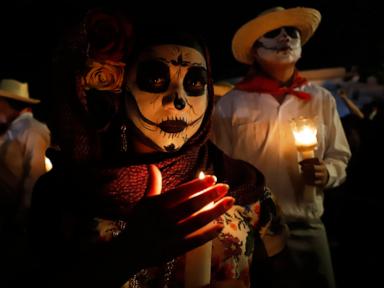
Context dictates everything. If you are at a public plaza party in Guadalajara or a bar in Roma Norte, painting your face is fine; it is part of the contemporary urban festival atmosphere. If you paint your face like a skeleton and walk into a traditional indigenous cemetery during a candlelight vigil, you look like a clown crashing a wake. Locals rarely paint their faces at the cemeteries. They are there to mourn and commune, not to cosplay.
"How can I experience authentic Day of the Dead respectfully?"
Stop trying to force your way into the intimate spaces. Authenticity does not require you to violate someone's privacy. You can experience the profound beauty of the season without stepping foot in a cemetery. Walk through the public markets in late October. Buy marigolds, pan de muerto (bread of the dead), and copal incense from local vendors—putting money directly into the hands of the people sustaining the agricultural and culinary supply chains of the tradition. Visit the public ofrenda installations in city squares, such as the massive altars erected in the Zócalo in Mexico City or outside churches in Puebla. These are explicitly built for public viewing and civic pride.
The Uncomfortable Truth About Travel Ethics
I have to be honest about the flaw in my own argument: tourism dollars matter.
If every foreign visitor boycotted Oaxaca in November, thousands of hotel workers, drivers, restaurant owners, and artisans would take a massive financial hit. In regions with limited industrial infrastructure, cultural tourism is an economic lifeline. Telling travelers to stay home entirely is naive and unhelpful.
The solution is not absence; it is friction.
Modern travel culture demands frictionless access. We expect to pay for a plane ticket and immediately gain VIP access to every corner of a foreign society. We treat local traditions like amenities included in our resort fee.
To save Día de los Muertos from becoming a hollow shell of itself, travelers need to accept boundaries. Communities in Mexico are already beginning to enforce them. In recent years, several towns around Lake Pátzcuaro and in the Central Valleys of Oaxaca have banned photography in cemeteries, restricted alcohol sales, or closed off their graveyards entirely to non-residents on the night of November 1.
Good. They should.
How to Actually Navigate Mexico in Early November
If you are determined to travel to Mexico during this season, ditch the standard influencer itinerary and follow a strict code of conduct.
- Stay out of rural cemeteries at night. Visit during the late afternoon on October 31 or November 1 if you want to see the floral arrangements and grave decorations. Leave before sundown so families can have their night in peace.
- Leave the professional camera gear at the hotel. If you must take a photo of a public altar, ask permission first. Never, under any circumstances, photograph people praying, crying, or sitting at a grave. Put your phone in your pocket and use your eyes.
- Spend your money where the culture actually lives. Skip the foreign-owned boutique hotels and international tour operators that extract wealth from the region. Hire local, certified guides who belong to the communities you are visiting. Eat at family-run fondas and buy crafts directly from the workshops of the artisans who made them, rather than middleman souvenir shops.
- Learn the actual vocabulary. Stop calling everything a "sugar skull" or a "Halloween party." Understand what an altar de muertos represents. Learn the significance of the four elements on an ofrenda: water to quench the spirits' thirst, wind represented by papel picado, earth represented by the harvest foods, and fire from the candles lighting their way home.
The Reality Behind the Marigolds
The next time you read a glossy travel article claiming that Mexico "comes alive" during Day of the Dead, look closely at the photos accompanying the text. Look past the bright orange flowers and the flickering candles. Look at the faces of the elderly women sitting on the dirt beside the graves.
They are not smiling for the camera. They are exhausted, cold, and lost in memory, holding onto a fragile bridge between the living and the dead for one single night before the barrier closes for another year.
Stop treating their grief like your entertainment.