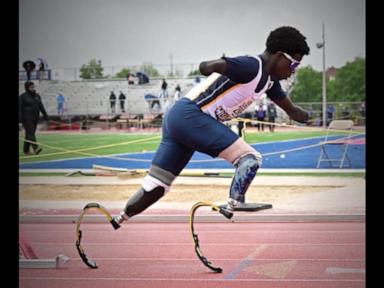
We love a good track and field prodigy story. The media feeds us a steady diet of rising high school juniors chasing impossible times, wrapping their early morning training sessions in a blanket of heartwarming narrative. They run past the stopwatch, we swoon, and everyone pretends we are watching the birth of an Olympic champion.
It is a comforting illusion. It is also a massive lie.
The lazy consensus in sports journalism is that early dominance predicts long-term greatness. If a sixteen-year-old drops a blistering time on the oval, the sports complex erupts in applause and starts engraving their name on future podiums.
I have spent two decades analyzing athletic development pipelines, watching millions of dollars and countless hours of raw human potential get funneled into teenage phenoms. Do you know where most of those high school phenoms are by the time they hit twenty-five? Burned out, broken down, or walking away from the sport entirely.
Stop cheering for the junior year record-breaker. You are celebrating the symptom of a broken system that destroys athletes before their prime.
The Peak Too Early Trap
Let us look at the actual physiology of athletic maturation. A high school junior who dominates the 400 meters or the hurdles often has one massive advantage: relative age and early puberty.
Growth rates in teenagers are wildly uneven. A runner who hits their adolescent growth spurt at fourteen develops fast-twitch muscle fibers, coordination, and raw power years ahead of their peers. Against a field of late developers, that athlete looks like a demigod. Coaches salivate, training loads ramp up to elite senior levels, and the teenager starts running year-round.
What happens when the rest of the field catches up biologically around age nineteen or twenty? The former phenom plateaus. Their physical advantage was never superior skill or elite genetic ceiling; it was just a calendar head start.
Exercise science literature calls this the relative age effect and early specialization trap. When you push a growing body through high-volume, high-intensity intervals before the skeletal system is fully fused, you invite stress fractures, tendonitis, and systemic burnout. I have watched elite youth programs treat human teenagers like disposable machinery, wringing out their peak performance years before their brains have even finished developing.
The Myth of the Prodigy Pipeline
People love to point to generational outliers as proof that early specialization works. They cite the rare exceptions who dominated at sixteen and swept gold at twenty-two. That is survivorship bias at its finest. For every one superstar who makes that trajectory look seamless, there are thousands of discarded teenagers whose hips, shins, and spirits gave out by college sophomore year.
Imagine a scenario where a sixteen-year-old runner is told to dial back the intensity, skip the brutal year-round club circuit, and play soccer or basketball instead. Every traditional coach would lose their mind. They would scream about lost momentum and missed scholarship opportunities.
Yet, data from multi-sport endurance athletes shows precisely the opposite. Cross-training builds resilient tendons, prevents repetitive motion trauma, and builds a broader athletic foundation. The obsession with single-sport mastery at the high school level is driven by anxious parents and college recruiters looking for immediate ROI, not long-term athletic health.
Why We Refuse to Look at the Data
The sports industrial complex relies on the narrative of the teenage prodigy. It sells shoes. It fills stadium seats for state championships. It gives local news stations an easy, feel-good segment to air between commercials for car dealerships.
Admitting that early track times mean almost nothing for senior-level international success ruins the romance. It forces us to confront the ugly truth that our youth sports infrastructure is designed to exploit teenagers for immediate entertainment rather than nurture them for sustainable careers.
If you really care about an athlete's future, stop measuring their worth by what they do on the track as a junior. Measure it by whether they still love the movement, still have a healthy skeleton, and still have room to grow when the real competition begins in their twenties.
Real greatness is not born in a high school heat. It is forged by the athletes who survive the meat grinder of youth sports with their bodies intact and their hunger still burning.
Stop clapping for the child. Start demanding a system that protects the adult they are going to become.