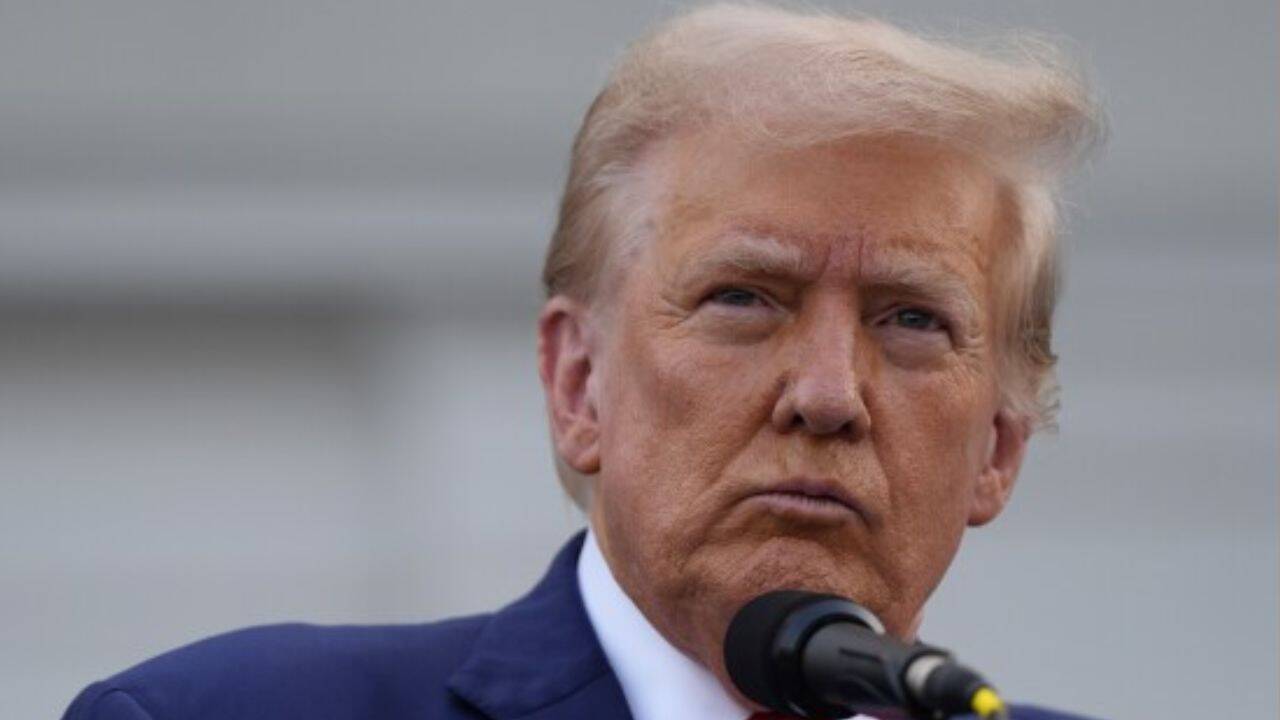
The conventional narrative being peddled across international media desks is wonderfully neat. Donald Trump picks up the phone, flashes his dealmaker credentials, and single-handedly halts an imminent Israeli air campaign against Iranian nuclear and military infrastructure. It reads like a cheap political thriller written for an audience that prefers simple heroes and villains over structural reality.
It is also completely wrong.
When reports surfaced claiming that Israel had a strike package dialed up for October and scrubbed it because of pressure from Washington, analysts rushed to frame it through the tired lens of American dominance over regional allies. That interpretation misses the entire mechanical reality of modern military deterrence and allied signaling.
I have spent years watching defense policy discussions devolve into playground politics. Observers treat sovereign states like puppets on strings, assuming that a phone call from an incoming or former president alters multi-billion-dollar strategic calculus on a whim. Strategic planning doesn't work that way. Intelligence assessments, tanker availability, ordnance supply chains, and weather windows dictate campaign timelines—not campaign speeches.
To understand why the October strike narrative falls apart, you have to look past the political theater and examine the actual incentives driving Jerusalem and Tehran.
The Lazy Consensus Of American Hegemony
The core assumption behind the popular reporting is that Israel wanted to strike, America said no, and Israel obeyed out of deference. This is diplomatic fan fiction.
Look at the operational constraints. Operating deep inside Iranian airspace requires a massive, complex architecture of electronic warfare, aerial refueling, and Suppression of Enemy Air Defenses packages. These are not assets you dust off on a Tuesday afternoon because you are feeling bold. They require precise synchronization with broader regional posture shifts.
When military planners talk about holding back a strike, they are rarely cowering under foreign orders. They are recalculating effectiveness. If a strike achieves tactical surprise but leaves strategic gaps—or if the target set hasn't matured to a point where the damage outweighs the inevitable retaliation cost—the operation gets postponed.
Attributing every postponement to Washington's veto power flatters American egos while absolving regional actors of their own calculated decision-making. Israel acts in accordance with its own security doctrine, which is ruthlessly pragmatic. If pausing an operation serves a tactical or political advantage at home, the pause happens regardless of who is occupying the Oval Office or campaigning outside it.
The Intelligence Reality Nobody Wants To Admit
Let us address what was actually happening in October. The intelligence community in both the United States and Israel operates on cold probability matrices, not emotional impulses.
When a state contemplates striking heavily fortified underground enrichment facilities, the operational calculus boils down to three variables: penetration capability, retaliatory cost, and second-order regional escalation. In October, the regional chessboard was already saturated with proxies, ballistic missile batteries, and shifting air defense rings.
A hasty strike risks a messy outcome. A messy outcome is worse than no strike at all because it burns your operational element of surprise while failing to achieve strategic decapitation.
I have seen defense analysts confuse temporary tactical standdowns with permanent strategic cave-ins. When military leadership decides to wait, they are usually waiting for better intelligence, upgraded ordnance, or a more vulnerable posture from the adversary. Iran's defensive posture in autumn was active, jittery, and heavily reinforced. Punching into that environment without optimal conditions is military malpractice.
To claim that an external political figure forced a halt ignores the internal debates raging inside the Israeli security cabinet. Those debates are driven by generals looking at satellite imagery and fuel tonnage calculations, not by frantic messages from political operators thousands of miles away.
The Dangerous Myth Of The Quick Fix
The underlying danger of the narrative that Trump stopped the strike is that it reinforces a dangerous public misconception: that foreign policy is managed by strongmen pressing big red buttons or stopping them at the last second.
This view strips agency from every other player in the Middle East. It treats Iran as a passive target waiting for permission to be hit, and Israel as a subordinate proxy waiting for permission to defend itself. Both propositions are laughable to anyone who studies the region with open eyes.
Iran's nuclear program is decentralized, hardened, and deeply embedded in civilian infrastructure. Dismantling it requires far more than a single night of airstrikes, no matter how well-executed. Any military planner worth their salt knows that a half-measures strike only validates the adversary's paranoia while accelerating their race toward a weapon.
If the strike was delayed or canceled, it was because the cost-benefit analysis at that specific moment did not close the loop. It had nothing to do with diplomatic magic wands.
What Actually Happens Next
When people misunderstand how and why military operations are paused, they misread future escalation risks. They assume that peace or conflict hangs on the personal whims of individual leaders rather than the brutal logic of regional power balances.
The security architecture of the Middle East is hardening, not softening. Deterrence is maintained through capability and resolve, not phone calls. As long as Iran continues its regional ambitions and nuclear development, the debate inside military command centers isn't about whether to act, but when the cost of waiting exceeds the cost of moving.
Stop looking for theatrical saviors in geopolitical crises. Watch the logistics, watch the intelligence feeds, and watch the cold math of national survival. That is where history is actually written.